

Iran and Oman said over the weekend that negotiations over the shipping corridor were close to completion. Oman also called on all sides to halt military activity in the strait area to create room for an agreement.
The main sticking point remains Tehran’s price for reopening the strait. Iranian Foreign Minister Araghchi rejected a return to direct talks with the United States, saying Washington was still violating the temporary peace understanding the two sides signed in June. Tehran’s demands include lifting the maritime blockade, withdrawing U.S. forces deployed around Iran, removing sanctions, unfreezing assets, compensating war losses, and ending military action against Iran and its regional allies.
Those demands had previously been seen more often in nuclear agreement talks. They are now being placed ahead of any reopening of the strait. Iran’s Revolutionary Guard said it would keep control of the strait until all conditions were accepted. A previously discussed traffic management arrangement involving Iran, Oman, and the United States has also been put on hold for several days and still requires approval from Iran’s top decision-making level.
Trump lowers the tone as Washington waits on economic pressure
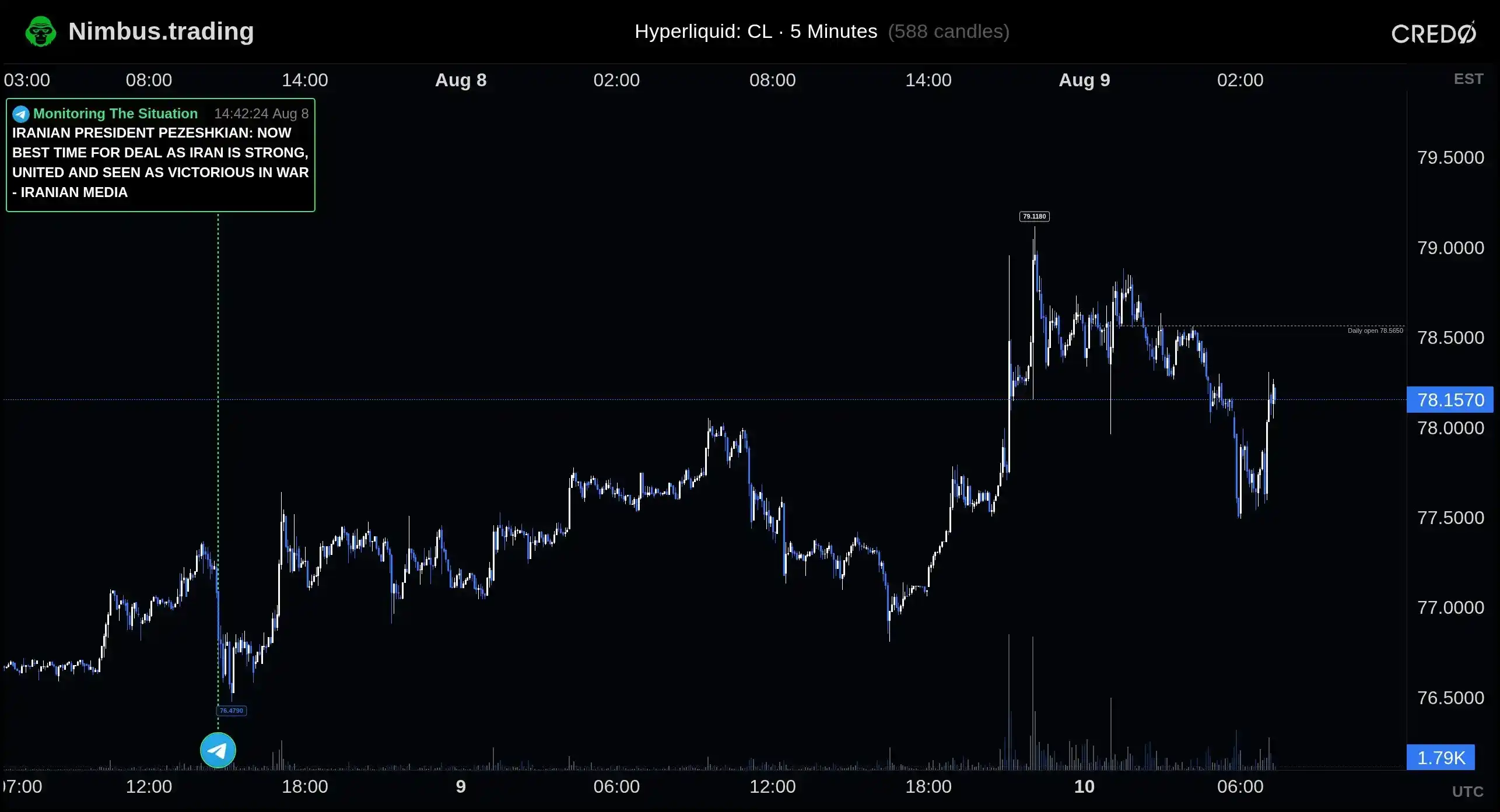
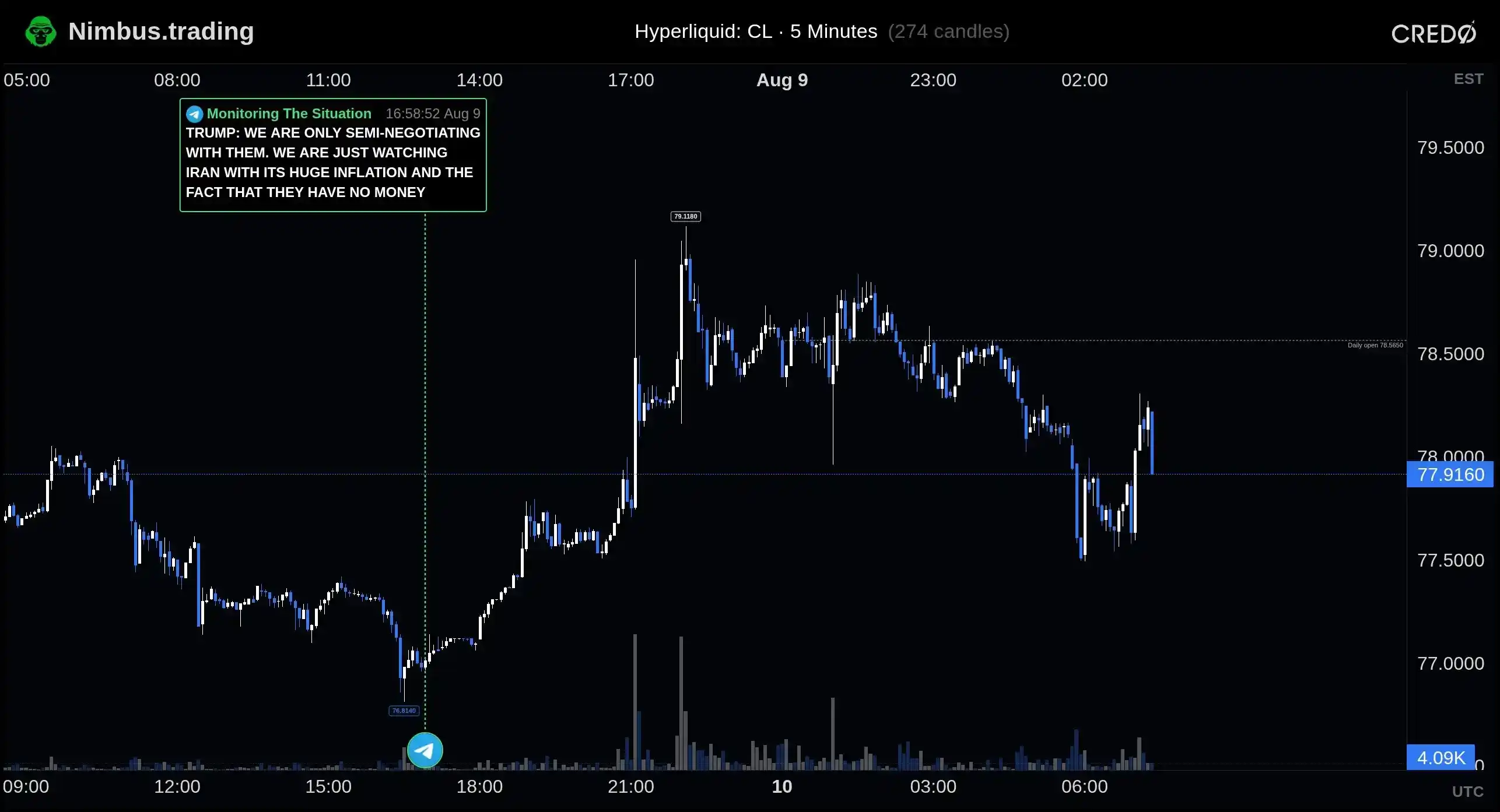
Trump said on Sunday that the United States was handling the Iran issue quietly and that the two sides were only in "semi-negotiations." According to the report, Washington is now choosing to watch Iran’s high inflation and funding pressure while continuing to rely on the maritime blockade.
The diplomatic opening has not closed, but both sides are waiting for the other to make the first concession. At the same time, the Houthis claimed an attack on the Saudi refinery at Jizan, while the United Arab Emirates said a vessel belonging to one of its national oil companies had been attacked by Iran.
Oil dips, then climbs; stock indexes stay steady
At 10:20 p.m. on Saturday, Iranian President Pezeshkian said Iran was strong, united, and viewed as the winner of the war, adding that this was the best time to reach a deal. CL then moved lower in a short swing and touched about $76.48 at the low, but quickly recovered the decline.
By early Monday, Trump’s "semi-negotiations" comment was seen as added confirmation that Washington had shifted from military escalation to waiting for economic pressure to take effect. Oil later rose to around $79.12.
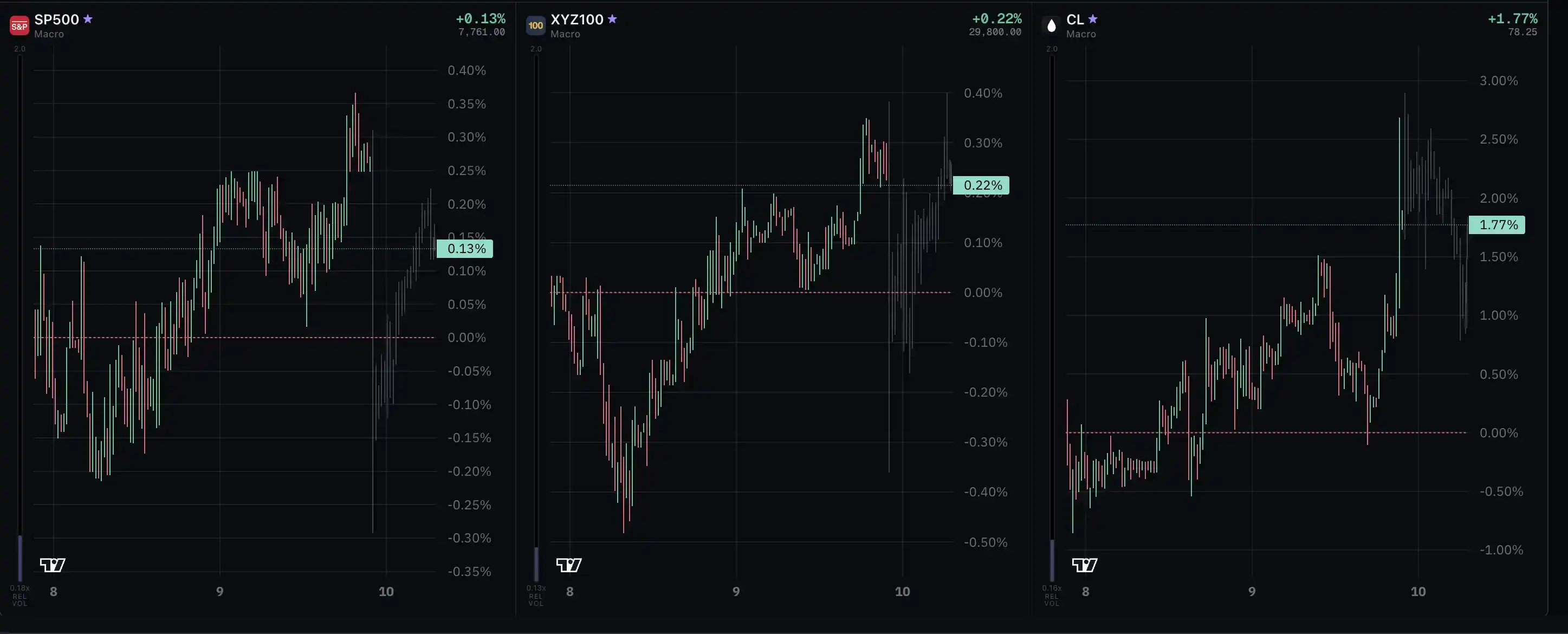
The two major equity indexes were broadly stable. The SP500 gained 0.13%, while the XYZ100 added 0.22%. Both indexes finished higher even as crude oil moved up.
Mixed semiconductor names, stronger optical communications and crypto-related stocks
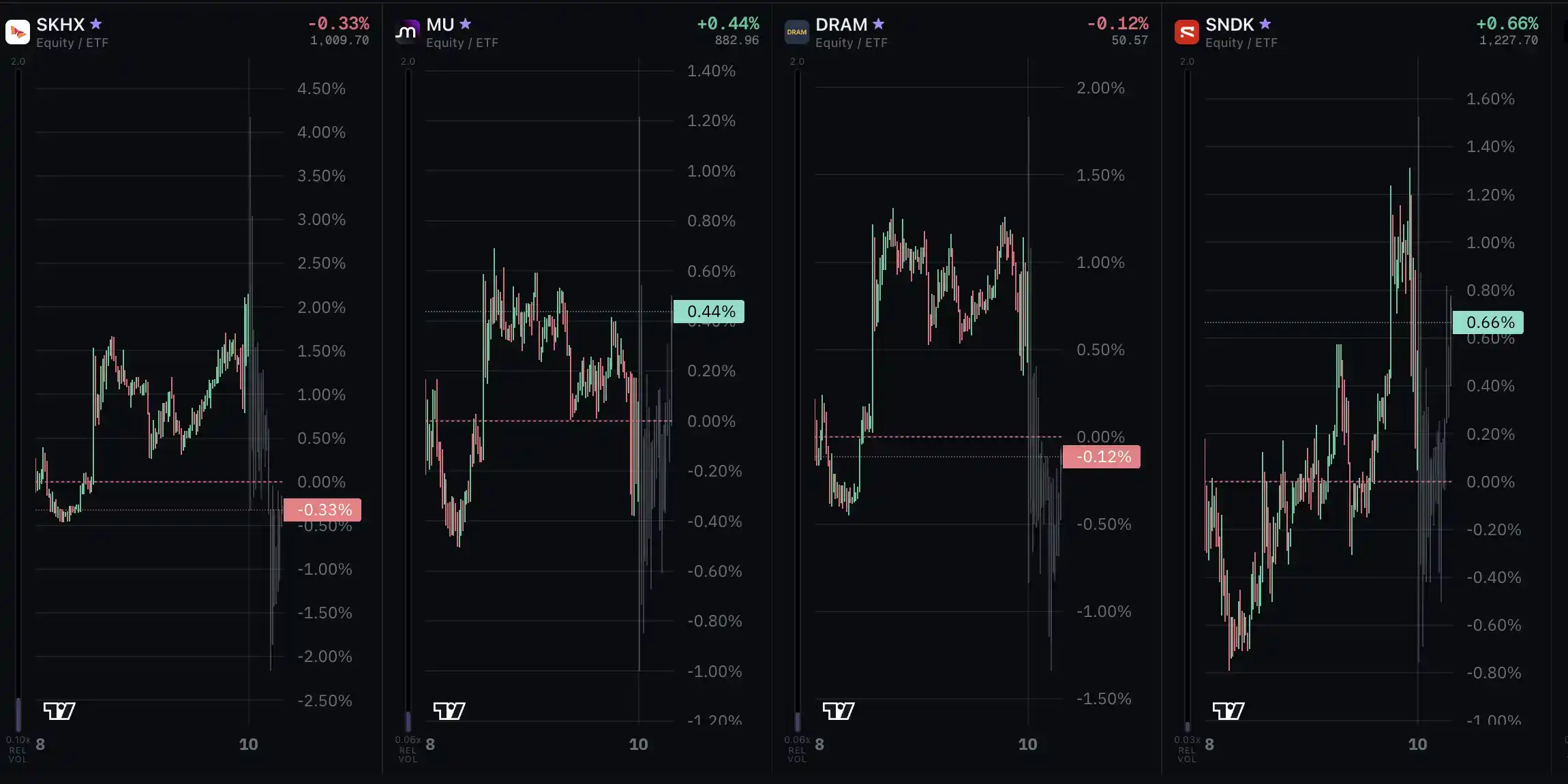
Individual stocks were mixed. In memory-related names, Micron rose 0.44% and SanDisk added 0.66%, while SK Hynix and DRAM fell 0.33% and 0.12%, respectively.
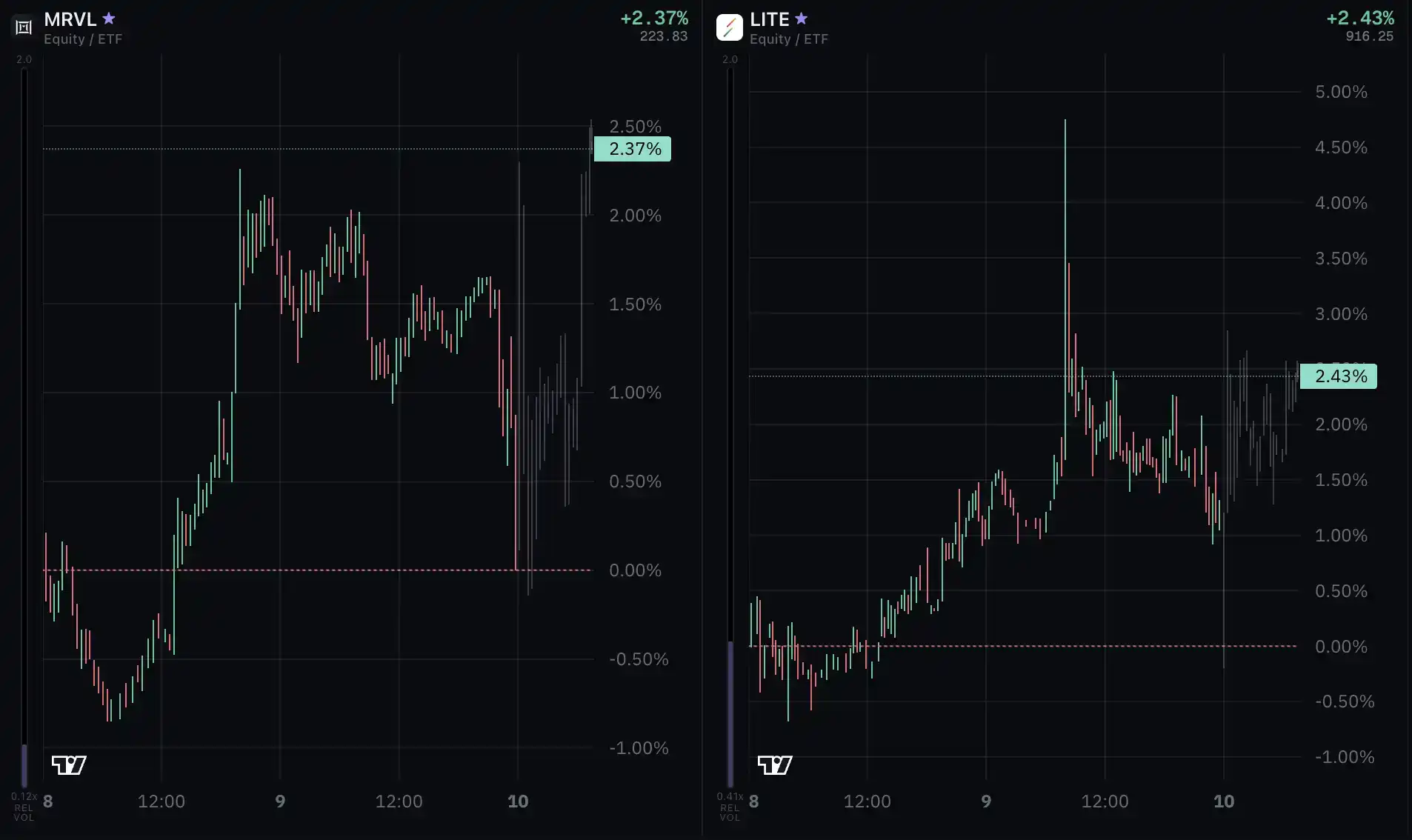
Optical communications was the strongest segment, with MRVL and LITE both up about 2.4%.
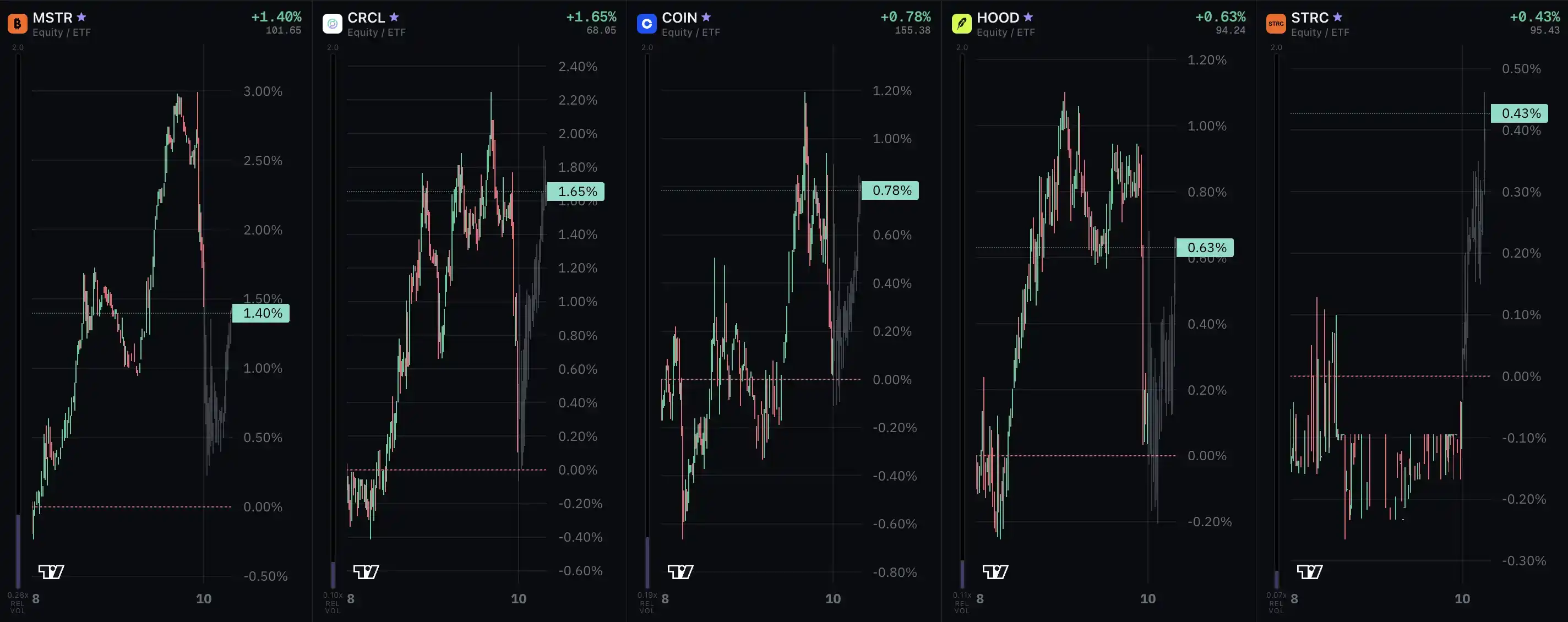
Crypto-related stocks opened higher, gave back ground, and then rebounded in premarket trading. MSTR, CRCL, COIN, HOOD, and STRC all ended higher. STRC extended its advance and moved back above $95.
Natural gas posts the biggest futures gain
In commodities futures, gold, silver, and copper all rose over the weekend and then traced out V-shaped rebounds after the market open. Gold gained 0.29%, silver rose 1.09%, and copper added 0.98%.
Natural gas posted the largest gain, rising 3.10% after the open. The report said the main driver was a hotter medium-term weather outlook. A heat dome over the U.S. South and East Coast is expected to last into the second half of August, lifting expectations for gas-fired power demand.
Localized pipeline maintenance, a slight decline in dry gas output, and high utilization at LNG export terminals also tightened supply-demand conditions at the margin.