
Iran and the United States are giving conflicting accounts of whether any negotiations are taking place, with the prospect of reopening the Strait of Hormuz still hanging in the balance. China Central Television reported on Aug. 10 that U.S. President Donald Trump said in an interview on Aug. 9 that he is handling the Iran issue "quietly." Xinhua reported the same day that Iranian Foreign Minister Abbas Araghchi flatly rejected the idea that direct talks are underway, saying, "At present, there are no negotiations between Iran and the United States," and that exchanges of information are being conducted through intermediaries.
The gap between the two public positions is stark. Neither side is openly acknowledging a breakdown, but neither is clearly saying talks are moving forward. The question of whether the Strait of Hormuz will reopen remains unsettled.
The strait carries about one-fifth of global oil and gas shipments. Since the U.S. and Israel launched war against Iran on Feb. 28 this year, the strategic waterway has in practice been largely closed, and oil prices have swung sharply. Brent crude finished last week above $83 a barrel, with the market continuing to bet on some form of negotiating progress.
Trump says economic pressure remains the main lever
In the interview, Trump said, "We are only in a 'half-negotiation' with them. We are just watching the situation in Iran. They are facing severe inflation and they are short of money." He also described Iran's economy as "very bad" and said it "doesn't even have the money to pay the military." According to Trump, the U.S. naval blockade has deepened Iran's economic crisis.
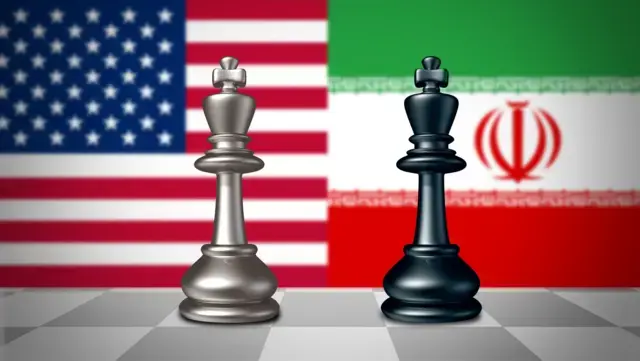
Trump compared the current U.S.-Iran situation to "a chess game" and said, "Things will work out." His comments pointed to a preference for stepping up economic pressure rather than launching another large-scale military operation.
That message tracks with Trump's back-and-forth posture in recent weeks. Citing Bloomberg, the article said Trump halted a new military strike plan again over the weekend, with the stated reason that "talks had made progress." In the previous weeks, he had repeatedly threatened large-scale airstrikes on Iran and then called them off.
Iran says U.S. breaches of the memorandum rule out renewed talks
According to Xinhua, Araghchi laid out Tehran's immediate reason for refusing to resume negotiations. He said, "Before the United States stops violating the memorandum of understanding and remedies the relevant breaches, Iran believes the two sides do not have the conditions to restart negotiations."
In June this year, Trump and Iran signed a ceasefire memorandum of understanding intended to open the strait and clear the way for deeper talks. The U.S. later said the agreement collapsed because Iran continued attacking passing vessels. Iran, for its part, blamed the breakdown on U.S. violations.
Araghchi also said mediators are still trying to find a path to restart talks, adding that "some intermediary countries are working to rebuild the basis for negotiations."
Iran sets out six conditions for reopening the strait
On Aug. 8, Iran's state news agency IRNA reported that Ali Akbar Ahmadian Zolghadr, secretary of Iran's Supreme National Security Council, set out six conditions for reopening the Strait of Hormuz:
- Never threaten Iran.
- End all aggression against Iran and its allies.
- Lift the naval blockade and withdraw military forces from around Iran.
- Compensate Iran for all war losses.
- Remove all sanctions on Iran.
- Unconditionally unfreeze all frozen Iranian assets.
Zolghadr said, "These are the demands of the Iranian people, who have been chanting in squares and streets for 160 days. The Supreme National Security Council will never retreat, whether in war or in negotiations."
The Wall Street Journal reported that the council is dominated by hardliners and reports directly to Supreme Leader Ayatollah Ali Khamenei. The report said the conditions do not represent the formal position put forward by Iran's negotiators, and they are plainly not an acceptable starting point for Washington, but they show that the Islamic Revolutionary Guard Corps is setting a very high bar for any eventual deal.
The same report said Iranian diplomats have been more pragmatic in actual contacts with mediators, focusing mainly on lifting the naval blockade, restoring sanctions waivers for oil exports, and unfreezing billions of dollars in Iranian funds.
Shipping-lane deal with Oman is said to be close, but separate from reopening
Xinhua reported that Araghchi said talks between Iran and Oman on defining a new shipping lane in the Strait of Hormuz are "going well and have entered the final stage," adding, "I believe we are very close to reaching an agreement."
He immediately drew a line between that process and a broader reopening. Adjusting maritime routes, he said, is a technical and legal issue and does not mean the Strait of Hormuz is being reopened. Even if an agreement is reached, whether the strait opens will still depend on other conditions being met, including compensation by the United States for violating the memorandum of understanding.
A draft Iran-Oman agreement would create a new route in the strait, with the inbound lane placed closer to Iran and the outbound lane closer to Oman, while Iran would exercise oversight over inbound vessels. Iran is also insisting that any agreement bar U.S. Navy warships from transiting the strait.
U.S. officials have already told mediators that Washington will not accept Iranian restrictions on traffic through the strait or any transit fees, the article said.
Oman said its talks with Iran are moving ahead in a "positive and constructive atmosphere" and called on all parties to suspend actions in the strait to leave room for diplomacy.
Fighting pressure builds as U.S. military strains come into view
Bloomberg reported that Yemen's Houthi forces claimed on Aug. 9 that they had attacked Saudi Aramco's refinery in Jizan. Saudi authorities had earlier reported a fire at the facility, but said it was quickly brought under control and caused no casualties. It was at least the second attack on the refinery in the past month.
Xinhua also reported that U.S. Vice President JD Vance described the U.S.-Iran conflict on Aug. 8 as being in the "middle game," saying the fighting was "clearly no longer in the opening stage" and that Washington was using diplomatic, economic and military tools together. He said the key issue is whether Iran is willing to make the "necessary long-term changes" and added, "If Iran is unwilling, the United States will continue to apply pressure."
Separately, CNN reported that Chairman of the Joint Chiefs of Staff Dan Caine recently told senior White House officials including Vance and Secretary of State Marco Rubio that an "off-ramp" should be found for the Iran war, and that airstrikes alone were unlikely to achieve all military objectives. CNN also said that since the conflict began, the U.S. military has used nearly four-fifths of its THAAD interceptor inventory, about half of its Patriot interceptors, and nearly half of its Tomahawk cruise missiles.
Bloomberg added that any agreement involving the Strait of Hormuz would require approval from Supreme Leader Khamenei. Khamenei has not appeared in public since the war began, but he said on social media on Aug. 9 that he had met with President Masoud Pezeshkian and that they discussed the war and the economy.