
The Internal Revenue Service can now see more of Americans’ crypto sales than before. For many taxpayers, that has not made filing easier.
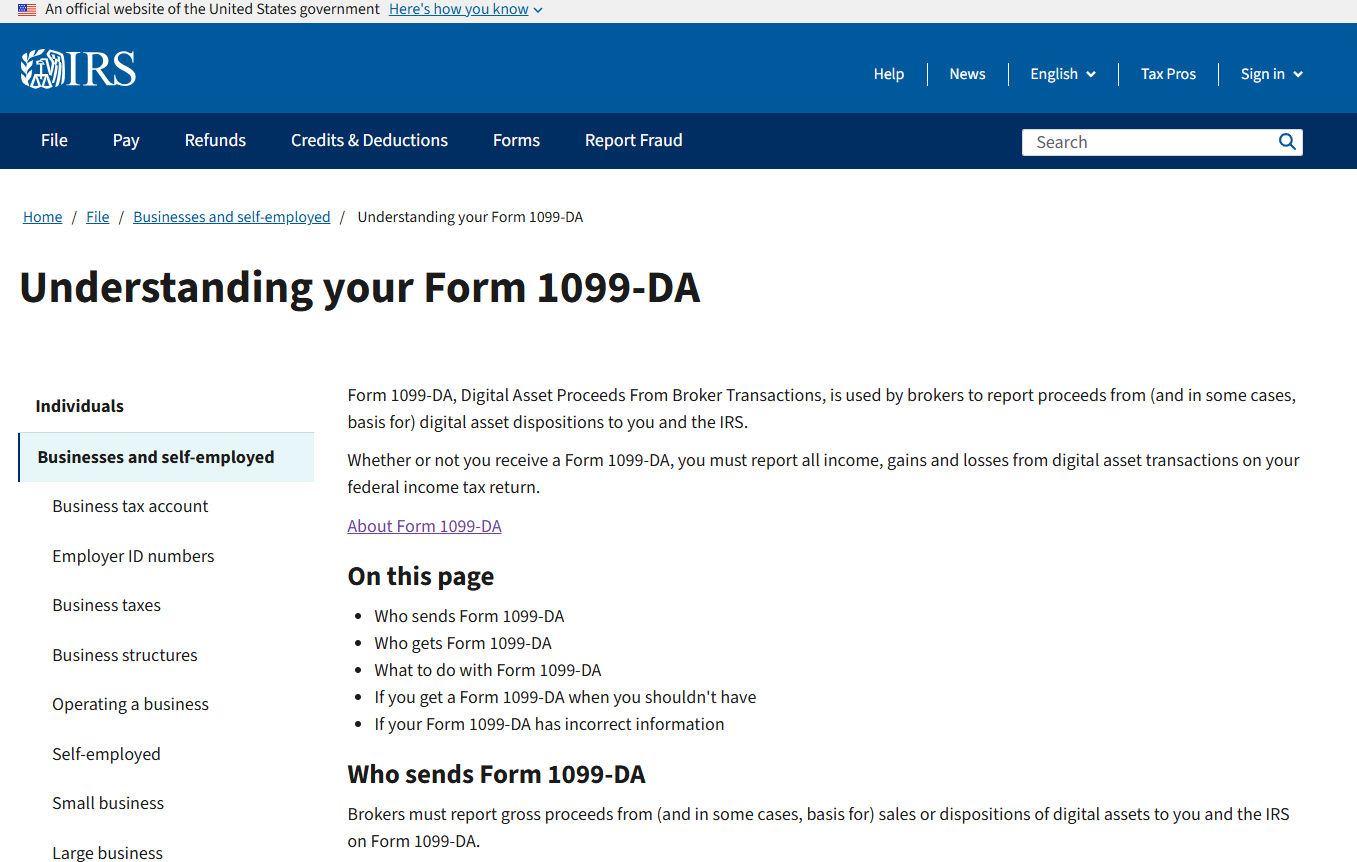
Under the new rules, brokers generally had to report gross proceeds from certain digital asset sales for the 2025 tax year. In many cases, they did not have to report cost basis — the amount a taxpayer originally paid for the asset. That leaves taxpayers to calculate gains and losses on their own, a manageable task in a simple trade but a much heavier lift for active traders moving assets across platforms and wallets.
An August survey of 1,000 US crypto investors by Awaken Tax found that 21% of respondents who had filed, or planned to file, a tax extension were still waiting for information they needed from an exchange or crypto platform. Another one in five said their Form 1099-DA — the form brokers use to report certain digital asset sales — was incomplete or that they were unsure whether it accurately reflected their transactions.
The figures come during the first filing season under the new reporting framework. Taxpayers who filed for an extension have until Oct. 15 to submit their returns.
What Form 1099-DA shows — and what it does not
In a basic example, the math is easy: buy Bitcoin for $9,000, sell it for $10,000, and the gain is $1,000.
But a 2025 Form 1099-DA may show the $10,000 in proceeds without the $9,000 cost basis needed to calculate that gain. If the taxpayer does not already know what they paid for a specific crypto asset, the calculation can become difficult very quickly.
Chris Herbst, managing director of CountDeFi tax reporting, told Cointelegraph Magazine, 「For an active trader, that number can be many times their real gain, because each sale is counted at full value with no cost against it.」
That is the core issue. The IRS can see the sale, but the taxpayer still has to determine what was actually earned.
Herbst added, 「The gap is real, but it is a record-keeping gap on the taxpayer side as much as a reporting gap on the exchange side.」
Taxpayers therefore still need their own records to fill in the missing pieces, and those records may span multiple exchanges, wallets, trades and years.
When exchange forms do not match transaction histories
Tax professionals say problems are already showing up when taxpayers try to reconcile the new forms with their own records.
Sharon Yip, founder of Crypto Tax Advisors, said her firm has found discrepancies between clients’ 1099-DAs and the crypto tax reports prepared for them.
According to Yip, some forms did not include all trades clients made during 2025, and exchanges also used different formats for customer statements. She said some exchanges reported cost basis on certain trades but not others, even though basis reporting was not mandatory for 2025.
She said, 「It’s very confusing for recipients to understand how to reconcile their 1099-DAs when compared to the crypto tax report they should use to file their tax return.」
Yip also gave a stablecoin example. One of her firm’s clients had more than $300,000 in stablecoin trades on an exchange in 2025, but the exchange’s 1099-DA showed less than $100,000 in total stablecoin proceeds.
Some issues begin even before taxpayers start calculating gains. Andrew Duca, founder of Awaken Tax, said the firm saw customers receiving 1099-DAs relatively late in the filing season.
「Because this regulation is new, a lot of exchanges are still trying to figure it out,」 he said, pointing to Kraken, which he said 「didn’t send any forms to users until two weeks before the tax deadline of April 15.」
Duca also cited a Kraken 1099-DA from around the same period that showed no reported transaction information.
Kraken did not respond to Cointelegraph Magazine’s request for comment.
What taxpayers still need to keep
The new forms were never meant to replace taxpayers’ own records. The IRS says taxpayers must report digital asset income and gains or losses whether they receive a 1099-DA or not.
Where basis is not reported, taxpayers are expected to use their own records to complete their returns. That becomes complicated when crypto assets move frequently between platforms.
A taxpayer might buy Bitcoin on one exchange, transfer it to a private wallet, move it to another exchange and sell it there. The second exchange may not have the information showing what the taxpayer originally paid.
Herbst said taxpayers need 「the full transaction history from the day the account opened」 from exchanges. That includes trades, fees, deposits, withdrawals and transaction identifiers such as the wallets involved.
He said basis follows the asset as it moves between platforms, which means one missing piece of transaction history can affect a gain calculated years later on another exchange.
More IRS data does not mean less work for filers
Andrew Gordon, executive director of Digital Asset Tax Action, said taxpayers are 「constantly」 struggling to reconcile 1099-DAs with their own records during the 2025 filing season.
He said most crypto tax software does not have tools to import and reconcile 1099-DA information. Even among the few that do, users still need manual entry because brokers did not provide the 2025 forms in a machine-readable format.
For active traders, Gordon said, manual entry can mean hundreds of separate entries. He argued that brokers should provide a machine-readable file alongside every 1099-DA so the information can flow directly into tax software.
He also said exchanges should maintain complete transaction histories, including acquisition dates, amounts paid, fees and transfers.
His concern is that greater IRS visibility does not translate into a complete tax calculation for the taxpayer.
Duca also warned that taxpayers should not blindly copy numbers from a 1099-DA onto a tax return. Instead, he said, they should compare the form against their complete transaction history rather than automatically accepting the figures shown.
Will 2026 ease the process?
More rule changes are coming even as taxpayers work through the 2025 season.
From 2026, brokers must generally report cost basis for covered digital assets. That should give taxpayers more information to calculate gains and losses. Even so, assets transferred to a broker from another exchange or wallet may still fall outside those requirements.
The IRS may know more about crypto trades than before. For taxpayers trying to determine what they actually owe, keeping records is still essential.