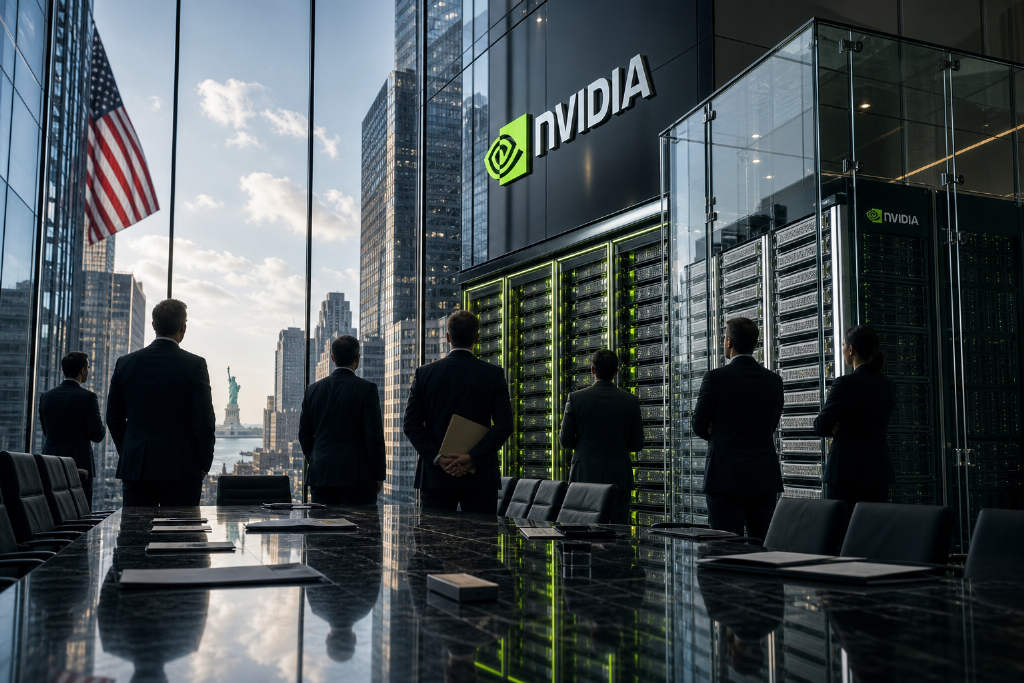
ChainCatcher, citing China Central Television Finance, reported that Jensen Huang this week appeared alongside six Wall Street asset-management giants to support a push to turn AI computing power into a standalone asset class. The move was described by analysts as an extension of Huang’s own idea of “token economics,” and as a sign that the AI boom is moving beyond a race over technology into a contest over capital.
The plan has also drawn investor concern. According to the report, questions emerged around “circular financing” and debt risk tied to the latest structure. In response, Huang stepped in again to calm the market. He said Nvidia may offer a residual-value support mechanism of up to 25% for a single investment project, while stressing that each project would be evaluated carefully. The report said market sentiment eased somewhat after his remarks.
ChainCatcher, citing China Central Television Finance, reported that Jensen Huang this week joined six Wall Street asset-management giants in backing a proposal to make AI computing power a standalone asset class.
Analysts said the move reflects Huang’s effort to put his idea of “token economics” into practice. They also viewed it as a sign that the AI boom is spreading from a competition over technology into a competition over capital.
The latest plan, however, has raised investor concern over “circular financing” and debt risk. Facing those questions, Huang moved to reassure the market again. He said Nvidia may provide a residual-value support mechanism of up to 25% for a single investment project and would review each project carefully. Market sentiment eased somewhat after those comments.
This article was originally published by Bit.Fan. For more cryptocurrency news and market insights, visit www.bit.fan. Disclaimer:
The market information, project data, and third-party content displayed on this platform are for industry information sharing only and do not constitute any form of investment advice or return commitment.
Cryptocurrency trading carries high risks. Users should fully assess their risk tolerance and make independent decisions. All profits, losses, and legal responsibilities are borne by the users themselves.