
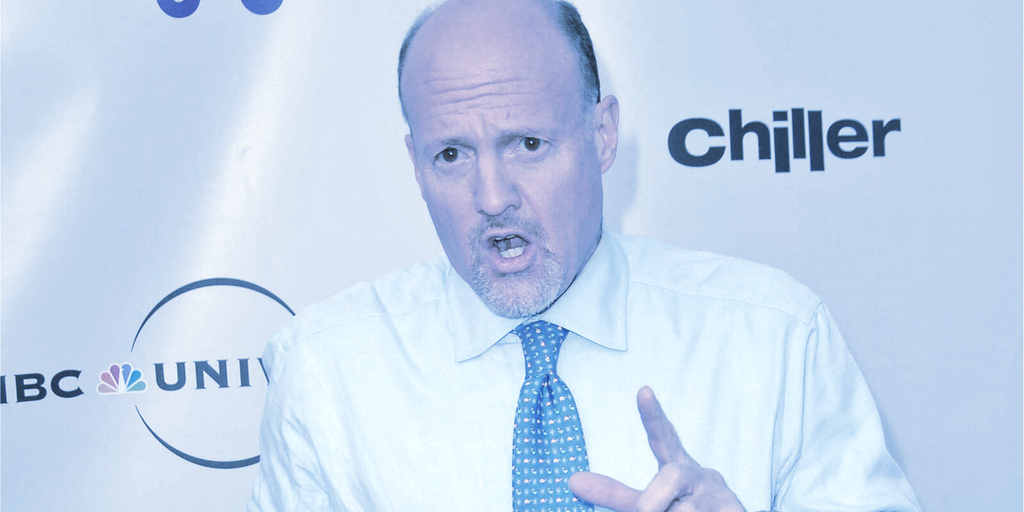
CNBC host and longtime crypto critic Jim Cramer says he is selling his Bitcoin because of the threat he sees from quantum computing, a call that was met with cheers across crypto social media and fresh jokes about the so-called inverse Cramer trade.
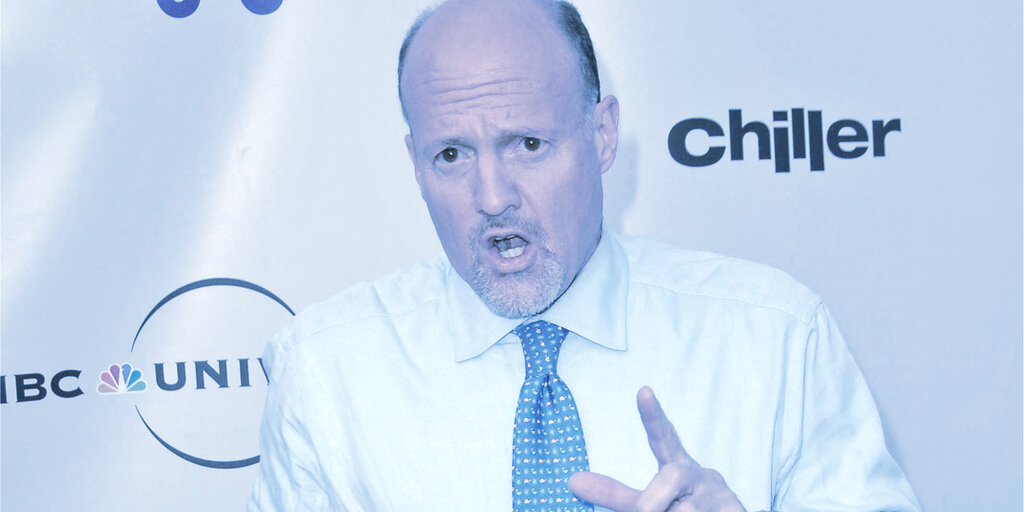
Late last week, Cramer asked IBM CEO Arvind Krishna during an interview whether he should be more careful, given his concern that quantum computers might one day be able to steal his coins.
Krishna answered: “I think that you should give yourself three or four years, and at that point, I would get rather paranoid about it.”
Cramer did not sound interested in waiting that long. Commenting on the interview, he said: “I realize I’m waiting. Ethereum, really, maybe even worse. So I think that people have to take this man seriously because they’re doing commercial quantum.” He added, “Arvind Krishna knows quantum incredibly. He knows Bitcoin and quantum. And I’m going to sell mine.”
Cramer then pressed the timeline point even harder: “He’s the man. Three, four years. David, you know when three, four years is going to happen? Like tomorrow.”
The clip spread quickly and crypto traders loved it
The video moved fast online, drawing 89,000 views on X and more than 9,000 on YouTube.
Replies from crypto users were openly celebratory. One of the top responses said, “Thank you Jim!” Another read, “Letssss goooooooooooo.” One user asked, “I thought he already did.”
Others treated the call as a textbook inverse-Cramer signal. One post read: “Every time Cramer says sell, I add to my position. Been doing it since 2018. The inverse Cramer index remains undefeated.”
That reaction reflects a joke that has been around for years but has also turned into a trading framework for some market participants: if Cramer says one thing, do the other.
At one point, somebody even built exchange-traded products around it. Tuttle Capital launched the Inverse Cramer Tracker ETF in 2023, designed to bet against his picks, alongside a Long Cramer fund built to follow them. Both products later shut down. The long version closed first. The short version followed in February 2024 with $2 million in assets.
Portfolio manager Matthew Tuttle said at the time: “We started it in order to point out the danger of following TV stockpickers, Jim Cramer specifically, and the total lack of accountability. We feel like we have accomplished that mission.”
Why the Bitcoin meme stuck
The staying power of the inverse-Cramer meme comes in large part from his Bitcoin record.
In December 2022, Cramer said he had sold everything and would not touch crypto “in a million years,” when Bitcoin was trading at $16,796. Over the next three years, the asset gained more than 400%.
He changed tone in January 2024, calling Bitcoin a “technological marvel” that is “here to stay.” He has also challenged people to bet against him and pushed back on claims that he called the top. Last Christmas, tracker Unbias logged his calls as fully bearish while Bitcoin was sitting near $87,500.
On the day he said he was selling, Bitcoin rose about 1.6%.
There is an important caveat. No one publicly appears to have confirmed the size of Cramer’s position, or even whether the holding exists at all. He has not shared any Bitcoin wallet addresses, which means there is no direct way to verify the claim on-chain.
The risk is real, even if the timing is disputed
The market may have turned Cramer’s exit into a punchline, but the research behind quantum computing is not fictional.
On July 30, researchers at IBM and the University of Chicago said they had demonstrated quantum advantage with something earlier milestones lacked: verification. Using 70 logical qubits and a new error-correction method, they completed a computation in about 15 minutes that classical methods cannot feasibly reproduce, then proved that the answer was correct. That is the “Chicago study” Cramer kept referring to, and it is the same work Decrypt previously examined in the context of Bitcoin.
Still, sampling circuits is not the same as breaking elliptic curve cryptography. Those are different technical problems, and the second would require machines well beyond anything that has been shown so far.
The exposure question, however, is not imaginary. Coinbase’s quantum advisory council estimates that roughly 7 million Bitcoin could eventually become vulnerable because of exposed public keys and address reuse. Ark Invest and Unchained have both described the threat as real but not imminent. Post-quantum standards already exist, and Bitcoin developers have spent years debating how they should be adopted.
So Cramer did not invent the concern. He seized on a legitimate long-term risk, then leaned into a timeline that remains open to debate. The market’s immediate answer was to buy the news of his exit.