
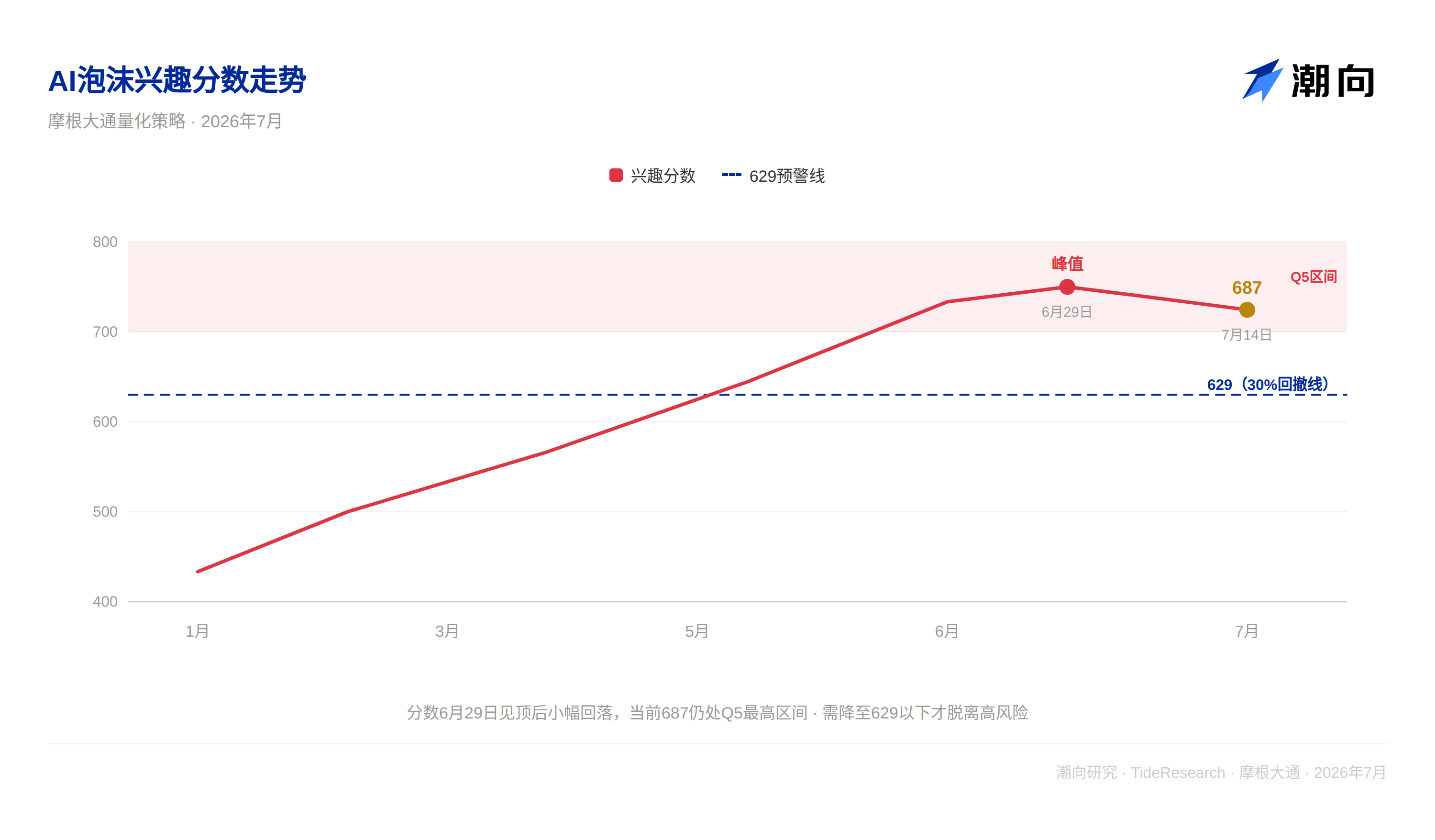
JPMorgan’s quantitative team says the warning signal around the AI trade is still active, and that buying the dip in AI semiconductor stocks before mid-August remains a high-risk move.
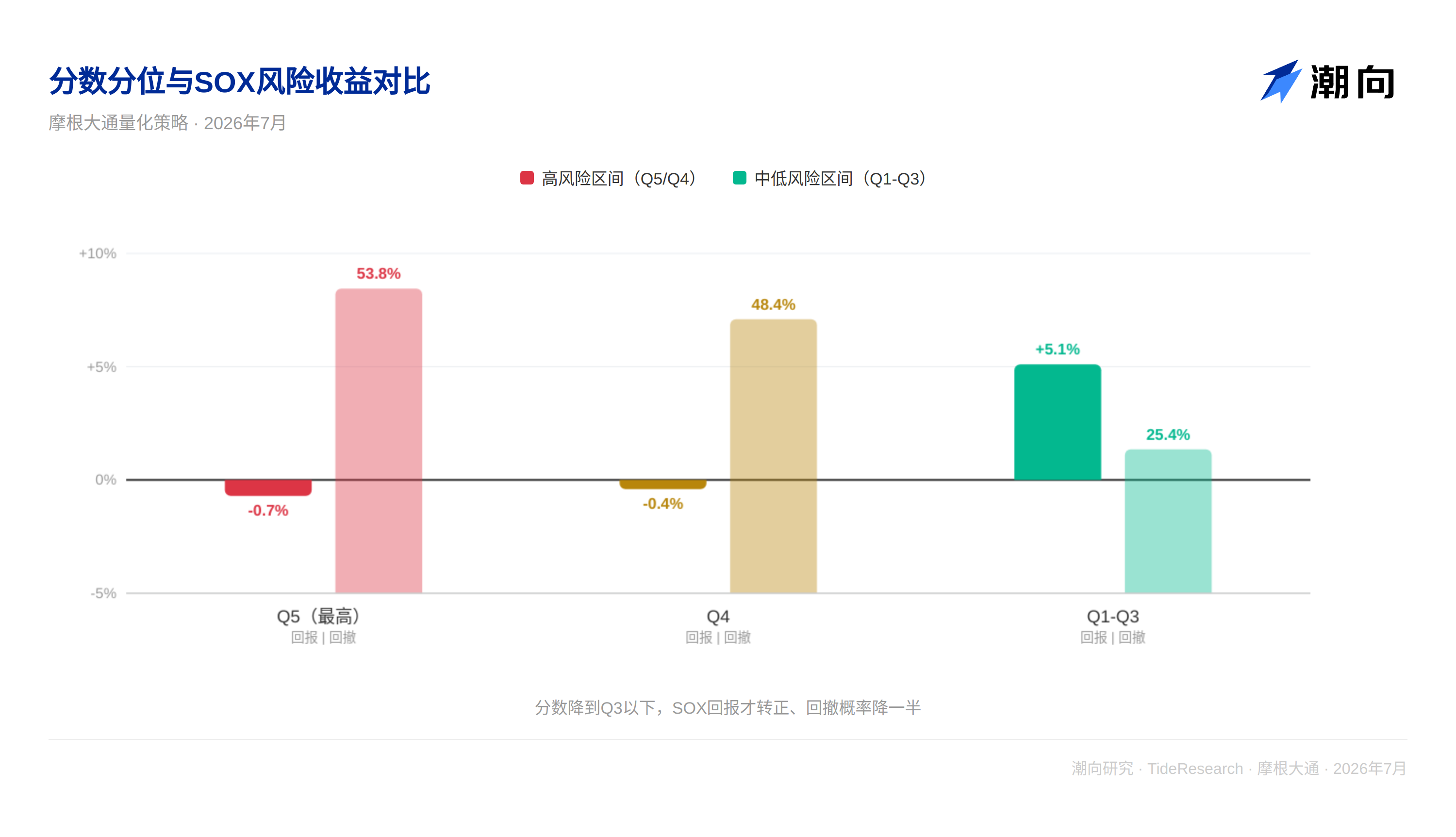
The bank’s view is built around an “AI Bubble Interest Score,” a model that tracks how intensely global media outlets discuss a negative AI bubble narrative rather than following stock prices directly. In the report discussed by TechFlowPost, the Philadelphia Semiconductor Index (SOX) has fallen about 19% since hitting a record high on June 22, putting it close to the 20% bear-market threshold. Even so, the bank says the sentiment washout is not finished.
How the signal works
According to the report, the score measures the amount of negative media coverage tied to the idea of an AI bubble. More negative coverage means higher market anxiety, and a higher reading.
JPMorgan’s historical review shows that this kind of anxiety usually takes 43 trading days to fade from peak to trough, or roughly one and a half months. This cycle peaked on June 29. Based on that pattern, the score may not bottom until around Aug. 12 at the earliest.
Direction alone is not enough, the bank said. The score has started to move lower, which is constructive, but the absolute level still matters. At 687, the indicator remains in the highest historical quintile, or Q5. In that zone, SOX has delivered an average 20-day return of -0.7%, while the probability of a drawdown stands at 53.8%. Only when the score falls into a mid-to-lower range does the picture improve, with average 20-day returns turning positive at +5.1% and drawdown probability dropping to 25.4%.
In practical terms, the alarm is easing, but it has not cleared.
Three levels JPMorgan is watching
JPMorgan translated the idea of an “all clear” into three specific thresholds:
- Below 629, the probability of a SOX drawdown falls to 30%.
- Below 560, that probability drops to 25%.
- Below 418, it declines to 20%.
From the current reading of 687, the score would need to fall another 8.5% to reach 629, 18.6% to reach 560, and 39.2% to reach 418.
The bank’s suggested framework is a two-stage entry. The first stage would come near 629, and the second near 560. Before that, the report says each rebound could still be pushed back by lingering fear around the AI bubble narrative.
Japan and the U.S. are not in the same phase
The report draws a distinction between Japanese and U.S. equities.
In Japan, positioning in AI momentum names is said to be close to the end of its adjustment phase. The Nikkei 225 has been weighed down by semiconductors, but TOPIX futures have remained relatively firm, with capital rotating from semiconductor names into banks, financials and materials. Commodity trading advisors, or CTAs, still hold long positions in TOPIX futures.
In the U.S., JPMorgan says the market looks more driven by narrative than by positioning. SOX has dropped about 19% from its June 22 peak, yet the AI Bubble Interest Score remains elevated at 687. That suggests investor anxiety is still centered on the idea that an AI bubble may burst, while positioning itself is a secondary issue.
Based on historical data, JPMorgan says the risk of further SOX downside stays elevated when the score has turned lower but remains at a high level. The real condition for a stronger rebound is not simply that “AI is back,” but that discussion of an “AI bubble” has largely cooled off.
What the report interpretation highlighted
The TechFlowPost piece says one of the most useful takeaways from the note is that it turns a vague market mood into three watch levels: 629, 560 and 418.
For U.S. equity investors, the interpretation says the quantitative warning has not been lifted and that now is not the time to add exposure. It suggests monitoring the score and only starting to consider phased entries after it falls below 629. Until then, PUT options or defensive sectors were cited as possible hedges.
For A-share investors, the article says sentiment in China’s AI segment is more fragile, with higher volatility in domestic AI groups such as optical modules and servers. It adds that JPMorgan’s two-stage entry framework may offer a reference point, though it should be adjusted for local policy conditions and the domestic computing-power theme. The piece also says the August earnings season may become a key window for China’s AI ecosystem to regain leadership.
The article notes that it is an interpretation by Chaoxiang Research of a third-party broker report from JPMorgan dated July 16, 2026. It adds that the ratings, target prices, earnings forecasts and related judgments cited in the piece are the views of the broker’s analysts and represent only the institution’s position, not that of Chaoxiang Research, and do not constitute investment advice.
It also states that markets carry risk, decisions should be made independently, and the article should not be used as a basis for buying or selling any security.