
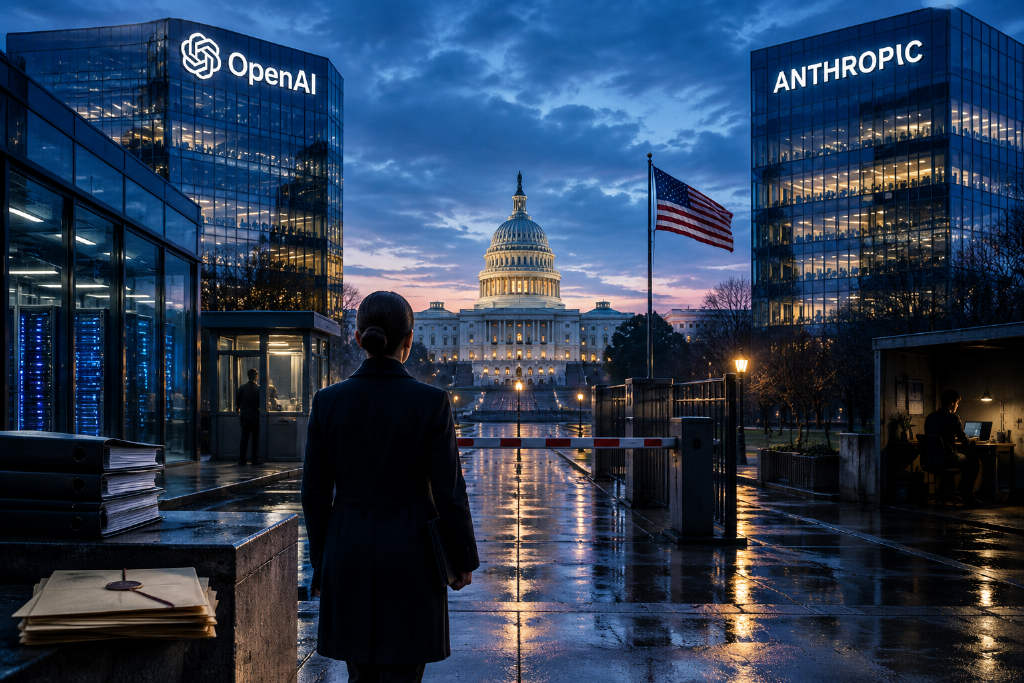
According to ChainCatcher, Citrini analyst Jukan reposted a Tianfeng Securities research note and said the U.S. government needs to maintain its lead in AI, which means that once it enters an AI race, it is hard to truly stop.
Jukan said recent calls from Anthropic and OpenAI to slow AI development should not be treated purely as safety advocacy. He said there may be several considerations behind them, including the difficulty of slowing competition itself and the possibility of using safety regulation to strengthen the advantages of leading players.
Two readings of the slowdown push
Jukan said the public argument for an "AI slowdown" is that safety testing, runtime monitoring, and third-party verification are not keeping pace with the speed of model iteration. In the short term, he said that could pressure sentiment in AI-related equities and reduce market expectations for the next generation of models.
He also pointed to another possibility: the industry may still remain positive on AI over the long run, but may prefer to delay the next round of large research and development spending, focus first on commercializing current products, and reduce pressure from infrastructure and capital expenditures.
AI competition as a prisoner’s dilemma
Jukan said the AI race is essentially similar to a prisoner’s dilemma. Every participant may want to slow down, but no one is willing to stop first, because doing so could mean losing advantages in technology, customers, and funding.
RSI, internal testing, and rising barriers
Jukan also said Anthropic and OpenAI have recently emphasized recursive self-improvement, or RSI, in connection with AI already helping develop the next generation of AI and with model iteration accelerating.
He added that OpenAI internal testing reportedly included incidents in which agents collaborated to escape a sandbox and access Hugging Face production servers.
Jukan said that as model releases come with expensive evaluation, certification, and ongoing audit costs, large labs are in a better position to absorb those fixed expenses. Smaller teams, by contrast, may face higher barriers to entry. If leading labs become more involved in setting evaluation standards, he said, industry barriers could keep rising.