
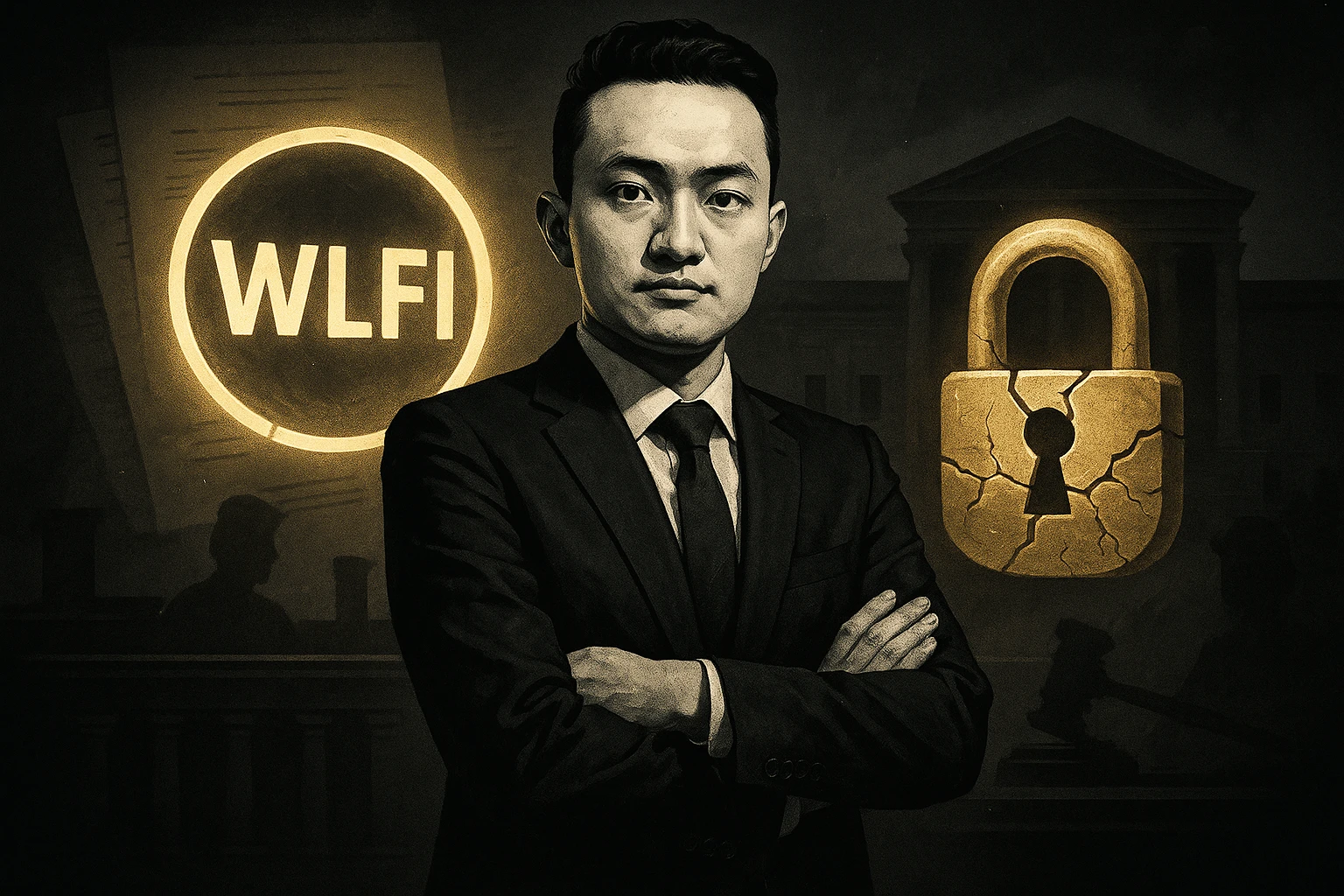
Tron founder Justin Sun said he has filed a lawsuit against World Liberty Financial (WLFI) in a federal court in California, alleging that the project wrongfully froze 595 million unlocked WLFI tokens and stripped him of his governance rights as a token holder. In a post on X, Sun said the case is intended to protect his lawful interests and is directed at specific members of the WLFI team rather than Donald Trump personally.
According to the details shared by Sun, the dispute dates back to September 2025. After token unlocks, he moved roughly $9 million to an external wallet. WLFI then allegedly froze his 595 million unlocked tokens, claiming he had violated an investor agreement. Sun argues that the action lacked proper justification and directly prevented him from exercising his rights in subsequent governance matters.
Governance proposal becomes the central dispute
On April 15, WLFI published a governance proposal titled “Resolution of Justin Sun WLFI Holdings”. The proposal would convert certain holdings from indefinite lock-up status into a fixed vesting schedule. Under the terms, founders, team members, and advisors would face a 2-year cliff followed by 3 years of linear vesting, while early supporters would be subject to a 2-year cliff plus 2 years of linear vesting.
The most controversial clause, however, states that if early supporters do not affirmatively accept the new terms, their tokens will remain locked under the original conditions indefinitely. Sun described the structure as a “logical trap,” arguing that holders are effectively forced to choose between additional years of lock-up or never accessing their tokens at all. Because his tokens were already frozen, he said he was unable to vote on the proposal despite its direct impact on his interests.
Public clash escalated before the lawsuit
The two sides had already exchanged accusations publicly in mid-April. Sun criticized WLFI’s token contract for allegedly containing a blacklist-style backdoor function. WLFI responded by accusing Sun of using a victim narrative to cover up his own misconduct, and reportedly issued a cease-and-desist notice while threatening a defamation countersuit worth hundreds of millions of dollars.
Following the filing of the lawsuit, a WLFI representative declined to comment. Sun said he had repeatedly tried to resolve the matter privately and in good faith, but the project team refused to unfreeze the tokens or restore his rights as a holder. With the dispute now moving into court, the case may intensify broader debate over DeFi governance transparency, token holder protections, and the extent of project-level control embedded in smart contract design.