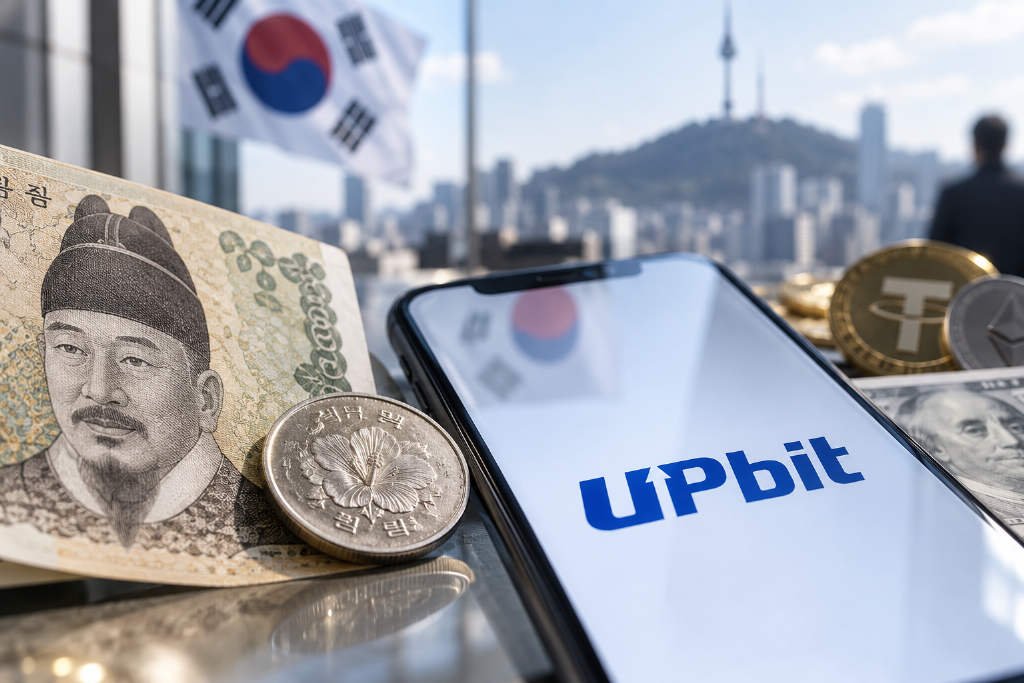
A joint report from Kaiko and Upbit says the Korean won accounts for roughly 25% of global fiat-denominated cryptocurrency trading volume, second only to the U.S. dollar at about 48.70%. The report also points to strong liquidity on Upbit, where a market buy order worth 10 million won typically sees buy-side slippage of 0.005% to 0.02%.
According to the report, South Korea’s crypto market still runs primarily on native fiat rails. KRW trading pairs dominate activity, while stablecoins such as USDT and USDC are used more as assets traded against the won than as the main settlement route. The report links that structure to the deep integration between Korean exchanges, real-name bank accounts, and KYC requirements, which lets users deposit and withdraw directly in won.
The authors say the opening for a won-backed stablecoin lies in on-chain settlement, cross-border payments, and DeFi. They add that such a product could help narrow premiums by improving the efficiency of value transfers across markets, though adoption would still depend on regulation, reserve standards, redemption rights, and exchange integration.
Kaiko and Upbit said in a recent joint report that the Korean won accounts for about 25% of global fiat-denominated crypto trading volume, ranking behind only the U.S. dollar at roughly 48.70%.
KRW pairs remain central in South Korea
The report said a 10 million won market buy order on Upbit typically faces buy-side slippage of 0.005% to 0.02%.
It also said South Korea’s crypto market is still dominated by native fiat trading. KRW pairs lead overall trading activity, while stablecoins such as USDT and USDC are used more as assets traded against the won than as the market’s main settlement rail.
Won stablecoin use case hinges on several conditions
According to the report, Korean exchanges are deeply integrated with the banking system through real-name accounts and KYC checks. That allows users to deposit and withdraw directly in won, reducing the need to use stablecoins as on- and off-ramp tools.
The report said the main opportunity for a won stablecoin would be in on-chain settlement, cross-border payments, and DeFi. It added that such a token could help narrow premiums by making cross-market value transfers more efficient. Adoption, however, would still depend on regulation, reserve standards, redemption rights, and exchange integration.
This article was originally published by Bit.Fan. For more cryptocurrency news and market insights, visit www.bit.fan. Disclaimer:
The market information, project data, and third-party content displayed on this platform are for industry information sharing only and do not constitute any form of investment advice or return commitment.
Cryptocurrency trading carries high risks. Users should fully assess their risk tolerance and make independent decisions. All profits, losses, and legal responsibilities are borne by the users themselves.