
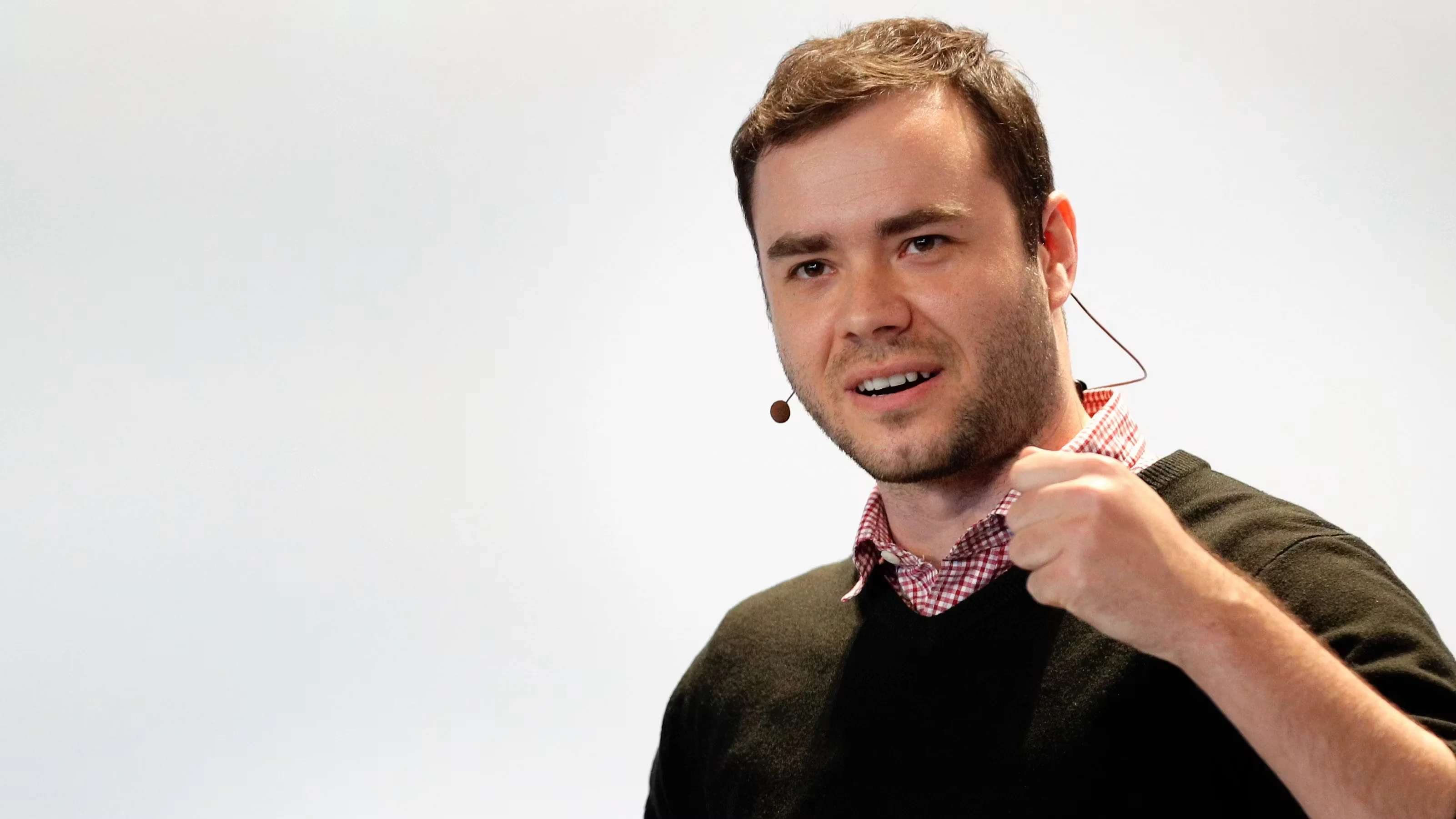
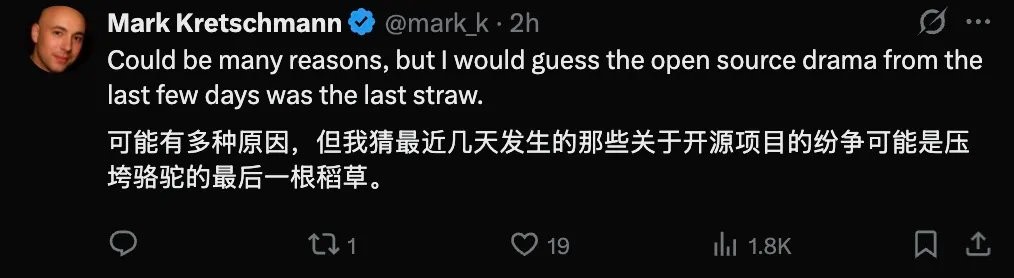
Andrej Karpathy said he has not left Anthropic after a change to his X profile set off a wave of rumors that he had exited the company barely two months after joining. Responding to a user who asked whether he had quit, Karpathy wrote that Twitter was circulating a "weird fake rumor." He added: "No, I have not quit. If I were going to quit, it definitely wouldn’t be by changing my profile bio. I’d at least post a 10-paragraph essay."
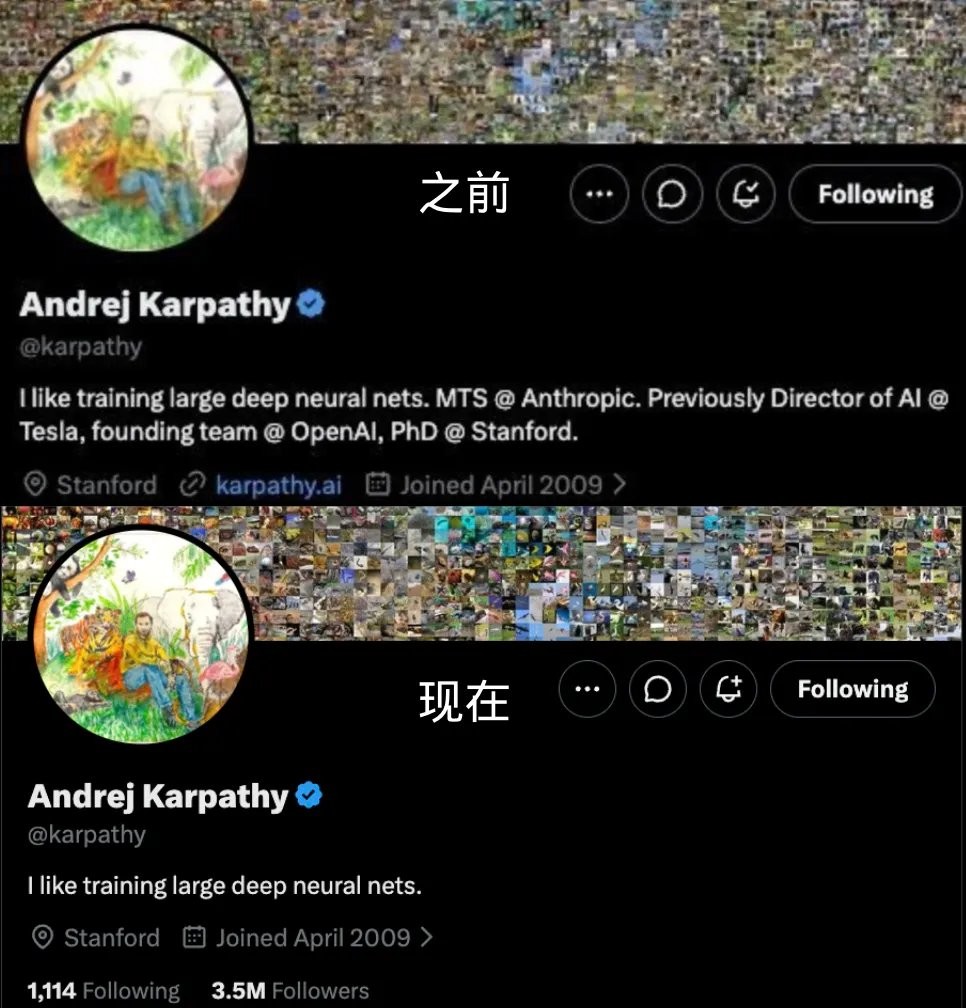
A bio edit turned into an exit rumor
The speculation began after users noticed that Karpathy had quietly removed Anthropic-related employment information from his X bio.
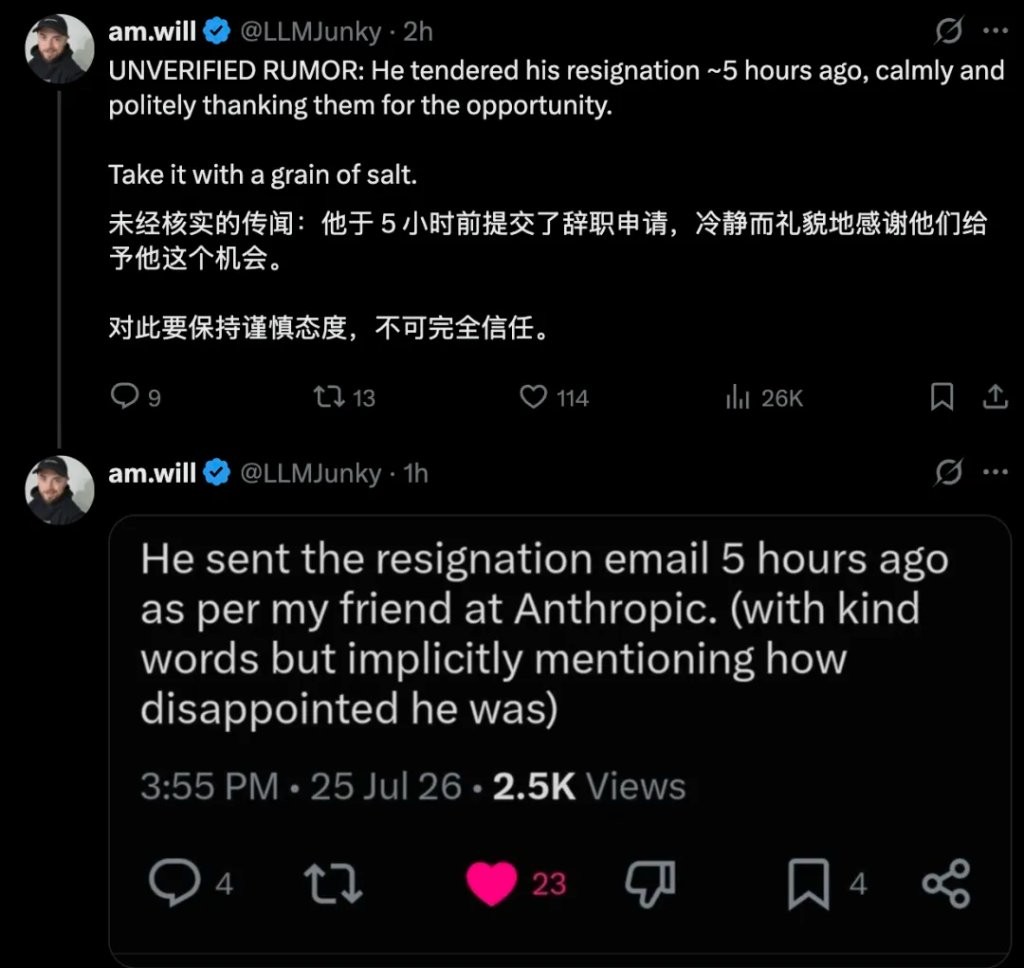
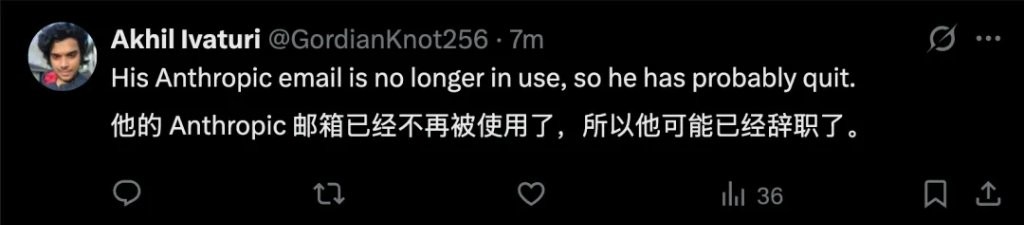
From there, posts on X quickly pushed the theory that he had already resigned. Some users shared what they described as internal information, claiming Karpathy had submitted a resignation hours earlier and had politely thanked Anthropic for the opportunity. Others said his Anthropic email appeared to have stopped working.
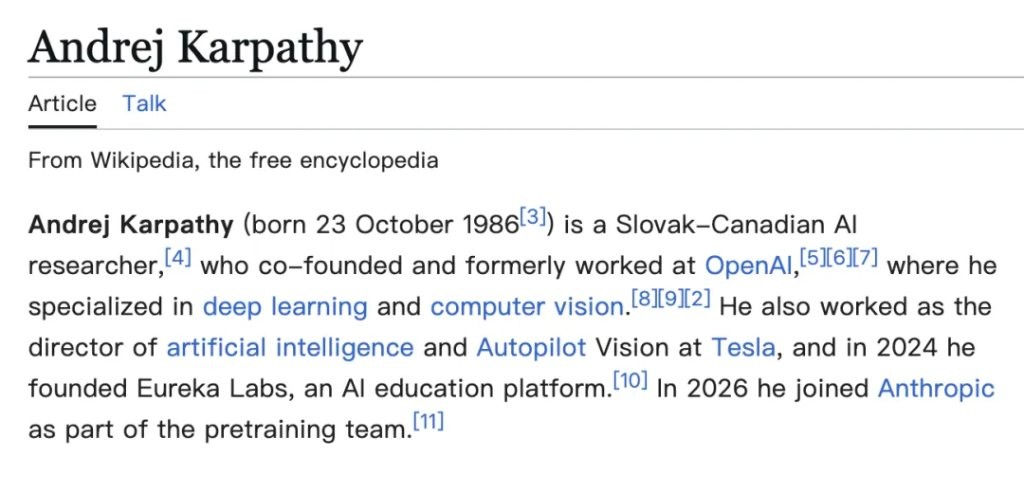
At that point, those claims remained at the level of screenshots and user posts. The source article said neither Karpathy nor Anthropic had issued a formal response while the rumor was spreading. It also noted that Karpathy’s Wikipedia entry still listed him as being at "Anthropic (2026–present)."
The timing overlapped with an open-weight dispute
The reaction was amplified by when it happened.
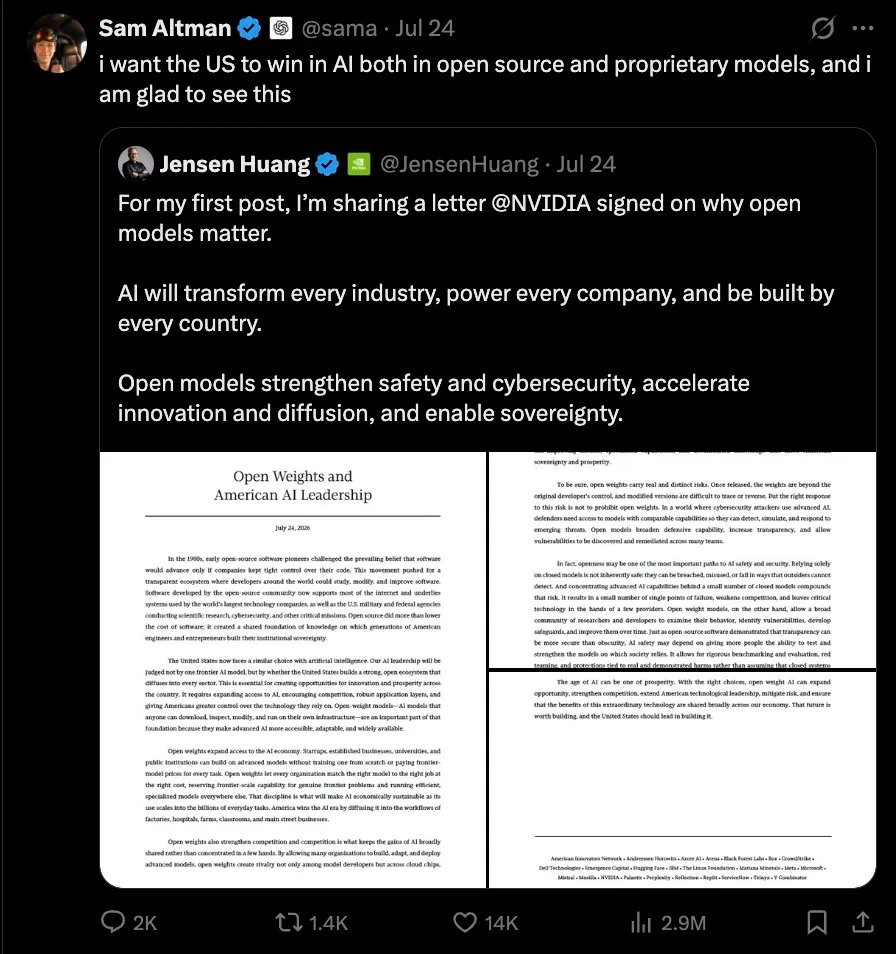
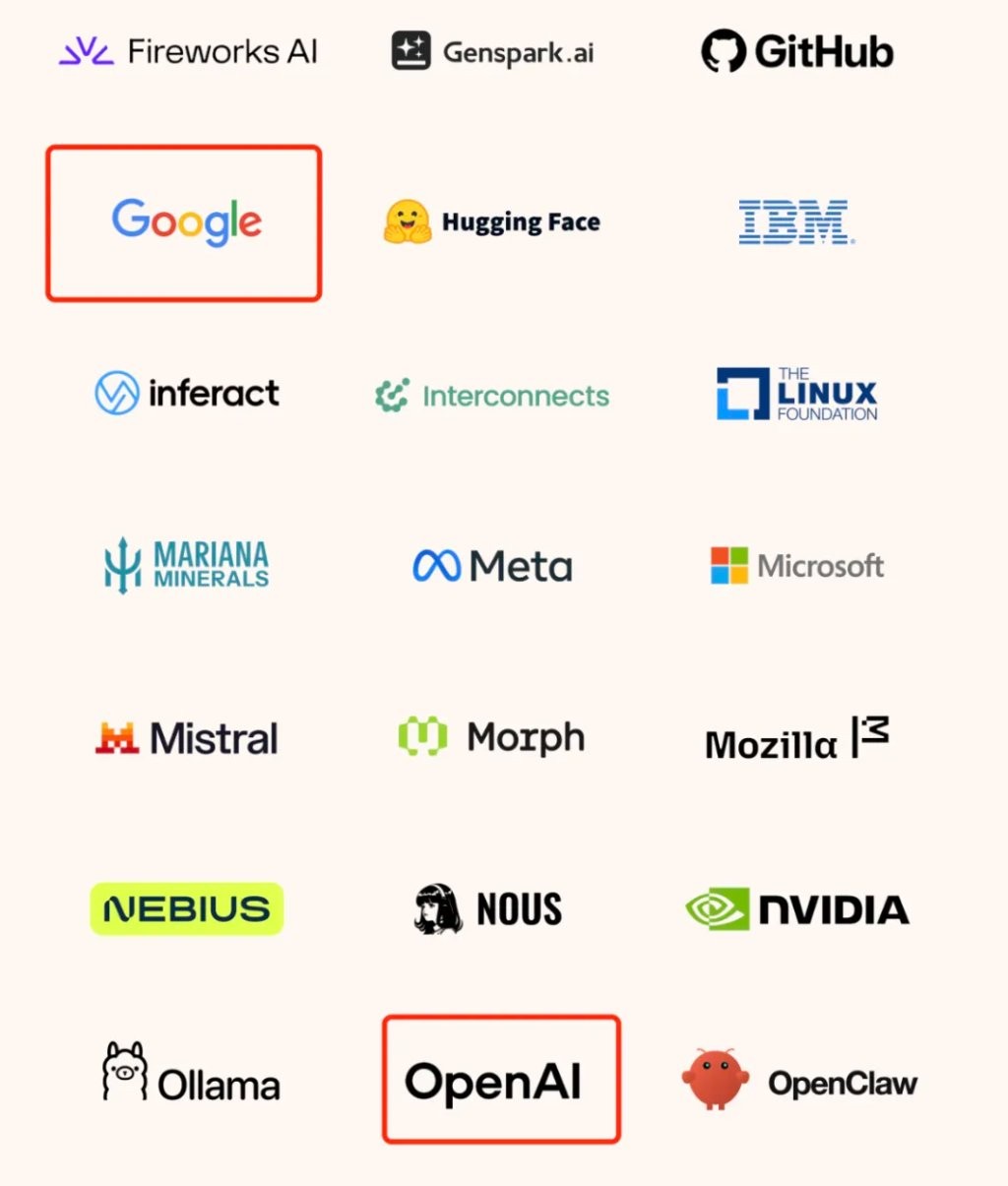
Two days earlier, Jensen Huang had published his first post after joining X: a joint open letter backing open-weight AI models. The letter was initially signed by 25 companies and organizations, including Nvidia, Microsoft and Meta. At first, OpenAI, Google and Anthropic were all missing from the list.
Sam Altman then reposted the letter, and OpenAI and Google were later added as signatories. As of the point described in the article, Anthropic still had not joined.
That sequence pushed some users to tie Karpathy’s profile change to Anthropic’s absence from the letter. Because Karpathy has long been associated with open-source contributions and AI education, some online commenters speculated that he may have hidden his employer in reaction to the company’s position. One joke cited in the article said he may simply have been ashamed of his employer.
The article also said an Anthropic employee pushed back against outside criticism by asking why Nvidia had not open-sourced CUDA and GPU drivers, and why Microsoft had not open-sourced Windows and Office.
Andrew Ng’s view, as quoted in the piece, was that any company has the right not to open-source its code, but that the issue is trying to stop others from open-sourcing while keeping your own work closed.
The article was explicit on one point: there is no confirmed causal link between Karpathy deleting Anthropic from his bio and Anthropic not signing the open-weight letter.
The first 68 days at Anthropic
Karpathy announced on May 19 that he had joined Anthropic as a technical staff member on the pretraining team led by Nick Joseph.
His stated mission matched the style that has long defined his work: build a new research team that uses Claude itself to accelerate pretraining research. In practical terms, that meant using AI to help research the next generation of AI and moving model development toward a more automated process. At the time, Karpathy said the coming years would be a key period for large model development and that he was excited to return to frontline research.
That announcement drew heavy attention. The source article said his post has now been viewed more than 27.7 million times.
Not long after joining Anthropic, though, Karpathy found himself near several public controversies.
The first came during the rollout of Claude Fable 5. Fable 5 went live on June 9, but within days it was disabled for various reasons, then went through a stretch of permissions being turned on and off again. The article did not place responsibility for that sequence on Karpathy, but said it still made the first flagship model launch after his arrival look less than smooth.
The second involved Claude Tag.
On June 23, Anthropic launched Claude Tag, putting Claude directly into Slack. Users could @Claude in the same way they would tag a colleague, allowing it to read channel context, break down tasks, call tools and continue working inside a team collaboration flow.
Karpathy praised the product and described it as the "third major redesign" of how people interact with large language models: from the original web chat box, to a personal agent model like Claude Code, and now to an agent that can operate inside a team workspace.
That framing drew criticism from some longtime followers. Some argued that a version of Claude inside Slack did not justify being called a third major paradigm shift. Others joked that Karpathy had gone from educator to company man after joining Anthropic.
The sharper criticism targeted the contrast with his earlier public persona. For years, Karpathy taught people how to build neural networks, Transformers and GPT-style systems from scratch, showing what was happening under the hood. Now, critics said, he was endorsing a closed product that did not disclose model weights, training data or implementation details. One line quoted in the article put it this way: "You used to teach us build from scratch, now you want us to blind trust vendor?"
Why a small profile change became a big story
The article argues that editing a social bio would not normally qualify as major news. With Karpathy, it does.
His background spans elite research, industry execution, open-source work and mass education. He studied under Fei-Fei Li at Stanford, where his PhD research sat at the intersection of computer vision and natural language processing, and he helped design and teach Stanford’s well-known deep learning course CS231n.
After graduation, he became one of OpenAI’s founding members. In 2017, he joined Tesla as head of AI, leading work on Autopilot computer vision, data labeling, neural network training and deployment until leaving in 2022.
In 2023, after ChatGPT ignited the latest large-model boom, he returned to OpenAI and built a new team focused on midtraining and synthetic data generation. In 2024, he left again and founded the AI education project Eureka Labs.
The article says what sets him apart is not only that resume, but also his role as an AI educator. From Stanford CS231n to his YouTube series "Neural Networks: Zero to Hero," and from micrograd to nanoGPT and llm.c, Karpathy has repeatedly tried to break complex AI systems apart and rebuild them with as little code as possible.
Those projects were not always aimed at immediate industrial use, but they helped many developers understand backpropagation, Transformers and large-model training for the first time. That history is why many people do not see him simply as an employee of one lab. They see him as a representative of open technical culture, minimal implementations and broad-based AI education.
More about public image than employment status
That is the frame the source article ultimately lands on. The more interesting part of this episode may not be whether Karpathy was leaving Anthropic, but the tension around how the public reads his identity.
On one side is a researcher who re-entered a top-tier lab to work on front-line large-model development. On the other is the version of Karpathy many followers still hold onto: the open-source teacher determined to explain every technical detail and to build things from scratch in public.
The article also noted that when Karpathy first announced his move to Anthropic, some users had already predicted he would leave within six months. What looked casual at the time was pulled back into circulation after the bio change.
On the factual question at the center of the rumor, Karpathy has now answered directly: he did not leave Anthropic. The larger discussion, though, did not come from the missing line in a profile alone. It came from years of expectations attached to one of the most closely watched figures in AI.