
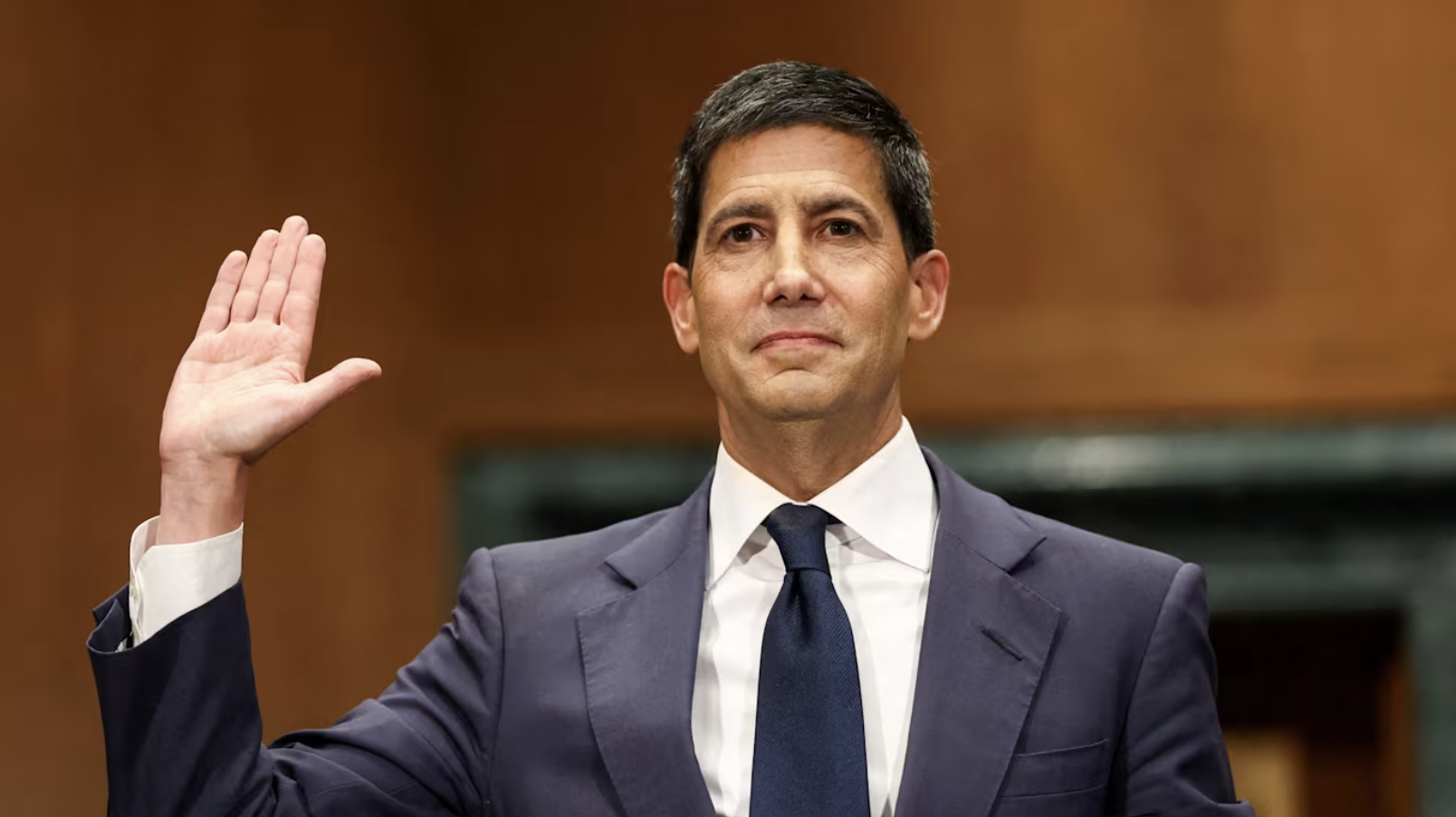
Federal Reserve Chair Kevin Warsh spent two days on Capitol Hill defending his independence, his communication philosophy and a set of internal reform plans that have already drawn scrutiny just seven weeks into his tenure.
Warsh appeared before the House Financial Services Committee and the Senate Banking Committee in his first congressional hearings since taking office. Democratic lawmakers pressed him on whether he could stay independent from the White House, how transparent the Fed would remain under his leadership, and why he had moved to launch several new internal working groups.
Because Warsh was selected by President Donald Trump, questions about his relationship with the administration surfaced immediately. Senator Elizabeth Warren of Massachusetts put the issue plainly during the hearing: “You have a hard fight ahead of you if you want to prove your independence.”
Trump has repeatedly and publicly pushed the Federal Reserve to cut rates, keeping the issue of central bank independence in sharp focus. In his prepared remarks and responses to lawmakers, Warsh said fighting inflation would come first and said he was fully prepared for any political pressure that might come later. At one key moment, he answered the criticism directly: “Trump picked an independent person to do an independent job.”
Independence and internal reforms drew the toughest questions
One of the most contested parts of Warsh’s early agenda was his plan to create an AI productivity and employment working group led by billionaire venture capitalist Marc Andreessen.
Representative Nydia Velázquez of New York accused him of outsourcing the Fed’s core responsibilities to what she described as an opaque and secretive task force. Senator Tina Smith of Minnesota took aim at the credibility of the effort, saying that letting people who could stand to profit heavily from AI lead such a group would be hard for ordinary Americans to trust.
Warsh pushed back by downplaying the group’s authority. He said the panel would serve only in an advisory role and that the Federal Reserve would remain the sole decision-maker on any policy changes.
His stance on forward guidance also came under fire. Warren and Representative Rashida Tlaib of Michigan argued that reducing public forward guidance could leave material information in the hands of the powerful. Warsh responded by saying the Fed would “never give special treatment to the powerful” and that policy decisions would be fully disclosed the moment they were made.
Five issues that stood out for markets
The hearings were tense, but they did not turn into a full-scale confrontation. Across the two days of testimony, five areas drew the most attention from market watchers.
Monetary policy
Warsh said very little about his immediate view on interest rates, which fit with his long-held position that the Fed should not signal its next move in advance. Even so, he made clear that interest rates remain part of the toolkit for bringing inflation down and said rates should be the main driver of monetary policy.
He also said policymakers should have full and active internal debate over how much force to apply and when to use particular tools.
Inflation
Warsh said he had “zero tolerance” for inflation and gave a firm commitment to restore price stability. He also tried to play down the significance of any one monthly CPI reading, saying policymakers should not overinterpret a single data point. His Tuesday testimony came after U.S. June CPI slowed more than expected.
“Some people may look at this morning’s data and say, ‘Well, mission accomplished, everything is fine,’” Warsh said. “I don’t see it that way.”
He said the labor market side of the Fed’s dual mandate looked fairly solid, while the price stability side looked much less satisfactory. He added that he was unhappy with all current inflation gauges, including the Dallas Fed trimmed mean measure, because they do not reliably capture underlying price pressure. In his view, the central bank needs new metrics to understand the underlying path of inflation.
Independence
Warsh repeatedly said political considerations would not enter into rate decisions. He told lawmakers that Trump had not tried to influence monetary policy and added, “Even if he did, I would keep my head down and do my work.”
He also said he would not feel uneasy if the president called him. On disclosure of his personal schedule, Warsh said he would follow the Federal Reserve’s established practice.
Artificial intelligence
On AI, Warsh argued that price increases tied to an AI buildout do not necessarily feed inflation. He said the effect differs from an external conflict because supply can respond. “I don’t think a one-time price change necessarily pushes up inflation,” he said.
Over time, he added, AI should lift both productivity and wages.
Fed reform
Warsh said he likes the existing structure of the Board of Governors and the regional Reserve Banks. Still, he argued that the policy framework needs change and that current practices deserve a fresh review.
He said sweeping reform is needed because past Fed policy is to blame for current inflation. Warsh also said the five working groups he has established will start from a blank slate and that he is willing to share their research and thinking on a regular basis before the end of this year.
Asked whether he would commit to a fixed standard for holding press conferences, Warsh said any future adjustment in Fed communication would not be designed to hide information.
First hearing cycle is over, but the credibility test remains
Under U.S. law, this type of congressional testimony by the Fed chair takes place twice a year. At the close of the first day, House Financial Services Committee Chair French Hil offered a light remark: “Folks, this is season one, episode one of Warsh at the Fed. We look forward to episode two.”
Warsh got through the first episode with polished answers and a relatively hawkish tone. Whether he can build and preserve the Fed’s credibility over the coming months will depend on how he handles inflation and political pressure in practice.