

Kimi released K3 in the early hours of July 17, setting off a fresh debate over how long premium AI pricing can hold. Axios said K3 is priced well below the high-end models it is challenging, putting new pressure on the expensive pricing strategies used by major U.S. AI companies.
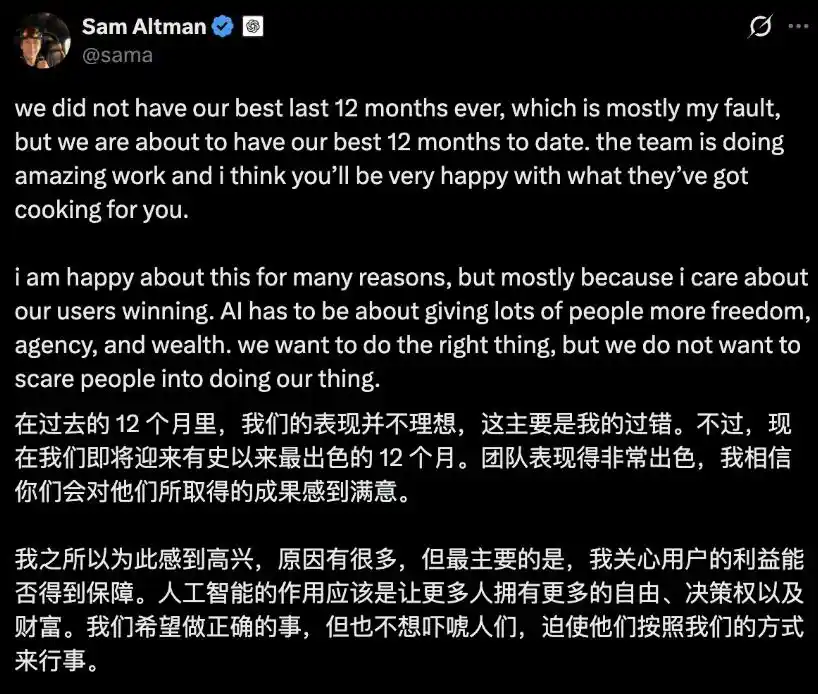
The timing lined up with an active fight between OpenAI and Anthropic over customers, usage, and attention. Earlier, OpenAI CEO Sam Altman posted on X that the company’s performance over the last 12 months had not been good enough and that the fault was mainly his. He then said OpenAI was about to enter “the best 12 months” in its history and that the team was starting to see results it felt good about.
OpenAI says active users jumped by 3 million in four days
That message quickly fueled speculation about what Altman was pointing to, with one of the most common reactions being whether a bigger model release could be close.
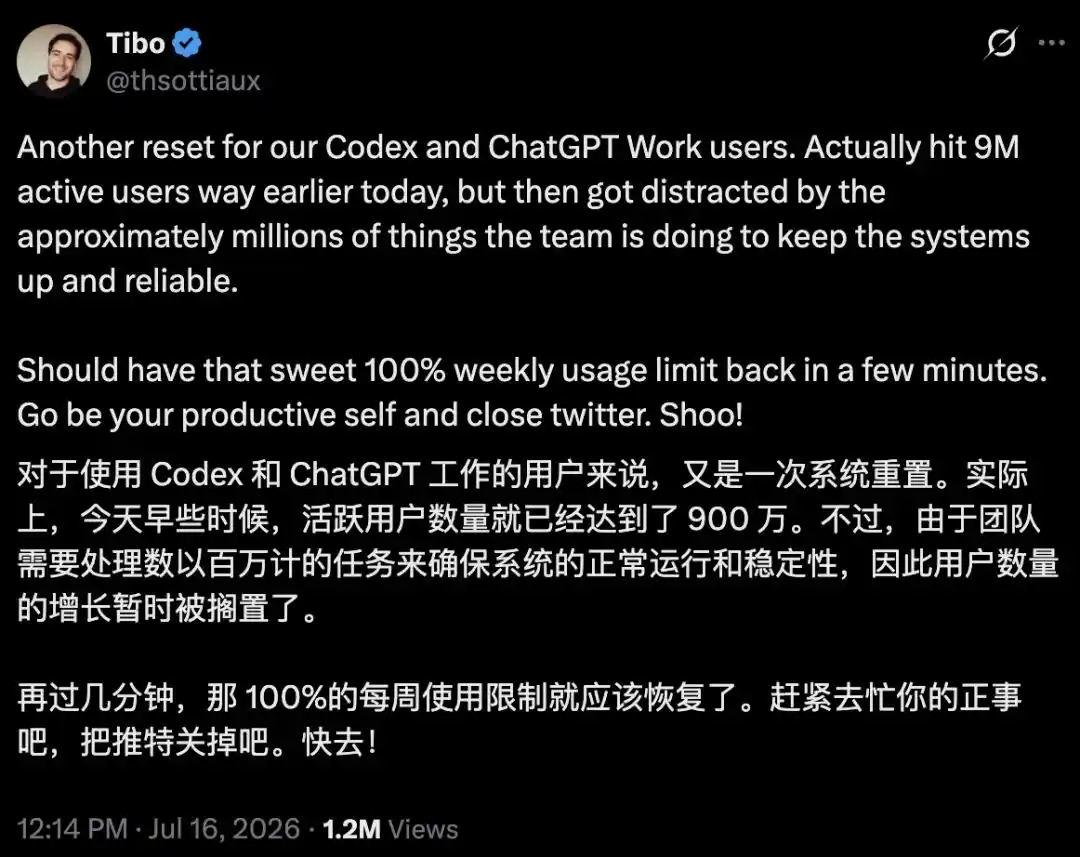
Another OpenAI executive added more immediate context. On July 16, Codex lead Tibo said Codex and ChatGPT Work had passed 9 million active users combined.
According to the figures cited in the source article, Codex had fewer than 1 million active users in February. The total then reached 6 million on July 12, 8 million on July 14, and more than 9 million by July 16. That amounts to 3 million additional active users in four days.
Tibo said the team had wanted to restore quotas earlier, but engineers were tied up handling “millions of tasks” so the system would stay stable and not fail under load. He added that quotas would be restored within minutes and told users to get back to work instead of staying on X.
The picture was clear enough: growth was running ahead of system capacity, and the engineering team was racing to keep up.
The article draws a parallel with comments made by Anthropic CEO Dario Amodei in May. At a developer event, he said the company had planned around 10x annual growth, but first-quarter revenue and usage were running at an 80x annualized pace, creating major compute strain. He joked that he hoped the 80x pace would not continue and that a return to “just 10x” would be easier to handle.
Both companies moved to loosen limits in the same week
Altman’s post came in the middle of a more tangible fight. After launching ChatGPT Work, OpenAI temporarily removed the five-hour usage limit for Plus, Pro, and Business users. It also reset user credits in several rounds. The source article says the company first did so for around 500,000 users and later expanded the move to 7 million users, effectively issuing another broad round of credit relief.
Anthropic responded with its own incentives. It extended paid access to Claude Fable 5 once again and raised Claude Code’s weekly quota by 50%, with both measures running through July 19.
On the surface, both companies were giving users more room to use their products. In practice, the fight was about keeping those users engaged for longer and collecting more real workloads in the process.
The source article frames this as an arms race for long-horizon task data in the agent era. The most valuable data is not a short prompt-and-response exchange, but the record of an AI agent working for hours on a real task. Looser quotas can drive more usage. More usage can produce more data. That data can then strengthen the product.
OpenAI’s CFO argues for a new AI metric
At the same time, OpenAI was trying to change how buyers think about AI economics.
On the same day as Altman’s post, OpenAI published an article by Chief Financial Officer Sarah Friar. She wrote that CFOs keep asking the same question: how can companies get more value from their AI spending? Her answer was a new yardstick, “Useful Intelligence per Dollar.”
Friar said software used to be measured mainly by adoption: seats purchased, active users, renewal rates. AI, in her view, should be measured more harshly, by how much work actually gets done.
She also challenged the idea that the lowest token price means the lowest cost outcome. A cheaper model might require more retries, more elapsed time, and more human review. A more expensive model might complete the task correctly in one pass. The relevant number, she argued, is the full cost per successful task.
The source article cites the formula this way:
- Total cost = (model call fees + compute resources + human review time + number of retries + rework cost) ÷ number of successfully completed tasks
That shifts the focus away from token price in isolation and toward the total cost of achieving an acceptable result.
Friar tied that framework to the GPT-5.6 family, which the article describes as Sol, Terra, and Luna, with Sol positioned as the flagship, Terra as the balanced option, and Luna as the high-speed, lower-cost version. She also described what “completion” means for different teams: a support team resolves a customer issue, an engineering team ships code that passes tests, and a legal team reviews a contract without errors.

OpenAI pressed the comparison while Anthropic widened access
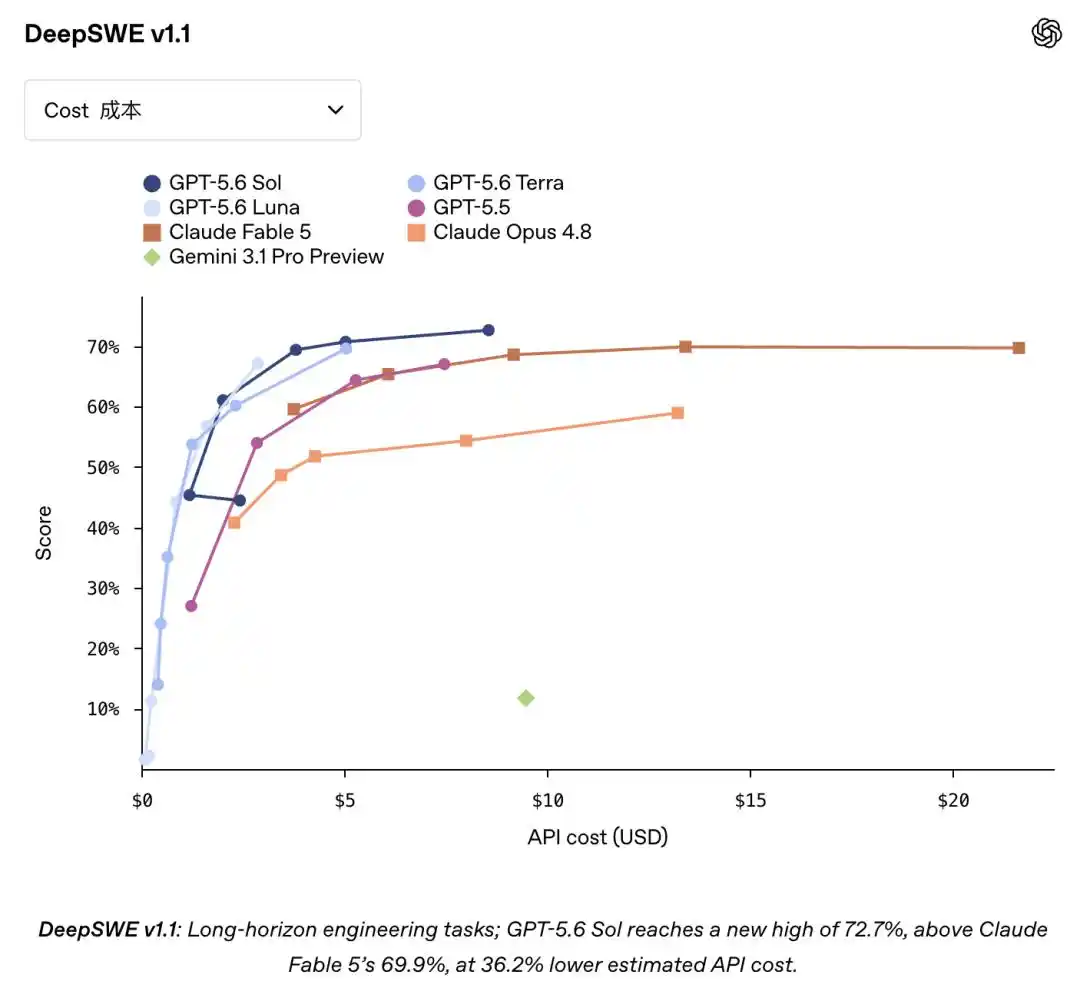
OpenAI also used that logic in direct comparisons with Anthropic. According to the figures cited in the source piece, GPT-5.6 Sol in its highest reasoning mode scored 72.7% on the long-horizon engineering benchmark DeepSWE v1.1, ahead of Claude Fable 5 at 69.9%. OpenAI also said estimated API cost was 36.2% lower.
The article adds that output tokens were reduced by 54% and estimated API cost fell by 36.2%. The broader message was straightforward: the real question is how much useful work a buyer gets for each dollar spent.
Anthropic, which was named in that comparison, took a different route at nearly the same time. It extended paid access to Claude Fable 5 again and raised Claude Code’s weekly quota by 50%, with both measures lasting through July 19. One company used charts to argue it was more cost-effective. The other opened the gate wider and let users test that proposition themselves.
That helps explain why both firms appeared willing to absorb operational strain in order to push usage higher. Heavy, real-world use is not just demand. It is also a competitive asset.
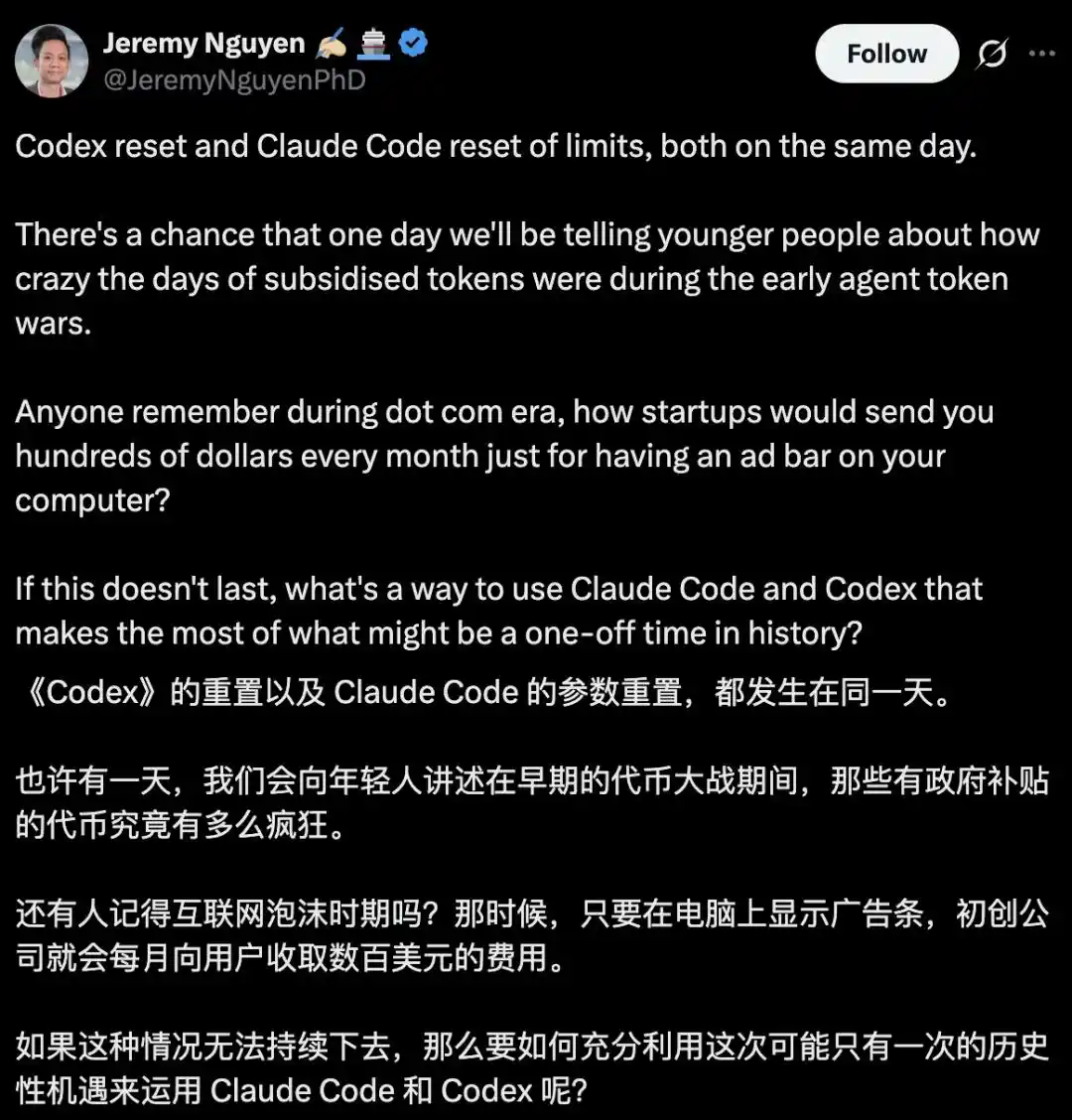
Economist Jeremy Nguyen, commenting on Codex and Claude Code resetting quotas on the same day, said people may one day look back on this early “agent token war” and remember how aggressively tokens were subsidized. He compared it with episodes from the internet bubble era, when some startups would effectively pay users hundreds of dollars a month to display advertising bars on their computers. His practical question was simple: if this window only happens once, how should users make the most of Codex and Claude Code while it lasts?
The contest is moving from model specs to workflow control
The source article argues that Anthropic struck first earlier this year. Claude Code gained traction with developers, and Cowork then pushed the agent model beyond programmers toward general knowledge workers, giving Anthropic an early position in AI office productivity.
OpenAI answered on July 9 with ChatGPT Work, a product positioned close to Cowork. It included Codex and also launched alongside GPT-5.6 Sol on the same day. The article gives an example: ask it to build a project tracker, and it returns a Gantt chart with 18 projects and 29 action items. That is no longer a chat response in the ordinary sense. It is task delivery.
What changed, the article says, was not simply the parameter count but the product form. Earlier versions of ChatGPT worked mainly as a question-and-answer system. Now a user can provide a goal, and the system handles task breakdown, tool use, files, and apps, then continues working for hours until the task is actually done.
OpenAI’s own wording, as cited in the source, is that ChatGPT is no longer just a machine for answering questions. It is becoming a partner for complex work.
The article also says OpenAI has been using ChatGPT Work and Codex internally across nearly 100% of teams, from finance to sales.
Compared with Anthropic, OpenAI also holds a clearer distribution advantage in the near term. Cowork requires users to download a desktop app. Folding agent capabilities directly into ChatGPT means more than 900 million weekly active users can access those tools inside an app they already know.
Altman has said usage of agentic products rose 2.5x week over week. In the source article’s reading, that curve is one of the reasons he sounded so confident about the coming year.
The article’s conclusion is that Altman may not be pointing primarily to a new model called GPT-6. The bigger bet may be a more complete shift in form: AI moving from answering questions to doing work on a user’s behalf. Friar’s “Useful Intelligence per Dollar” metric fits that transition. Once AI starts completing work directly, the market stops judging it mainly by parameters or token prices and starts judging it by tasks completed and cost incurred.
The source article cited public posts on X by Sam Altman and Jeremy Nguyen. It was originally published by the WeChat account Xinzhiyuan, written by ASI启示录 and edited by 元宇 Aeneas, and later carried by MarsBit.