
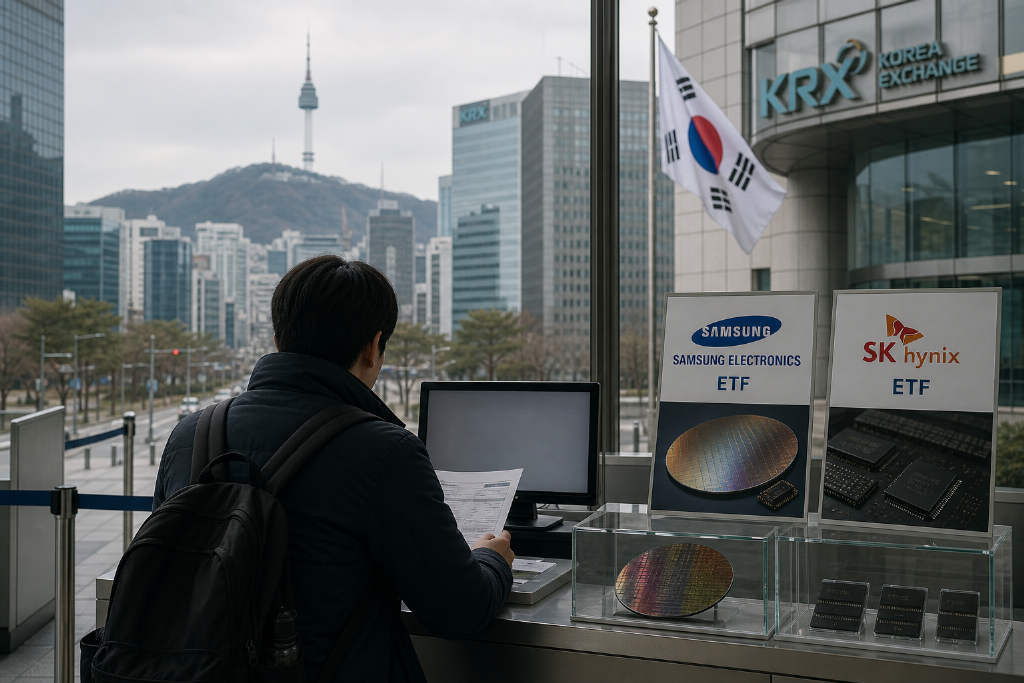
Turnover in 2x single-stock leveraged ETFs linked to Samsung Electronics and SK Hynix has fallen to 4% of its June peak, Bloomberg reported, and the products may record their first monthly net outflow since launch in August.
South Korea has been tightening trading rules since July. A mandatory paper-trading requirement that took effect on Aug. 19 is widely seen as a key factor behind weaker retail participation.
Paper-trading rules raised the barrier for retail investors
Under the new rules, investors must complete a five-day simulation trading course, download a desktop program that only runs on Windows, and use virtual funds to trade for at least one hour a day.
The system provides KRW 100 million in virtual capital to show the risks of leveraged products and "volatility drag." Investors must also meet a minimum cash deposit requirement of KRW 30 million. The Korea Exchange said it has no plan at this point to launch a mobile simulation trading platform.
The products had fueled heavy trading after their May launch
The leveraged single-stock ETFs tied to Samsung Electronics and SK Hynix were launched in May and were originally intended to draw retail money back into South Korea's domestic market.
At the height of the frenzy, turnover in those leveraged ETFs and the two chipmakers' shares together accounted for more than 80% of total trading on the Korean stock market, contributing to sharp price swings.
About $1 billion in August outflows, with assets cut by more than half
Data cited in the report show the ETFs posted combined net outflows of about $1 billion in August. Assets under management fell from a late-June peak of $11.4 billion to $5 billion on Aug. 27.
Beyond regulatory limits, concerns over heavy capital spending in the AI industry and uncertainty around commercialization triggered several rounds of global tech stock selling, which also weighed on the funds' asset base.
Rebecca Sin, an analyst at Bloomberg Intelligence, said the outflows could continue in the near term if regulators keep tightening the rules.
Cooling trading activity eased volatility
As trading slowed, market volatility also moderated. The volatility index for the Korea Composite Stock Price Index fell from 97 in late June to about 50, its lowest level in four months.
South Korea's benchmark stock index is up 61% this year, though it remains 25% below the record high reached two months ago.