
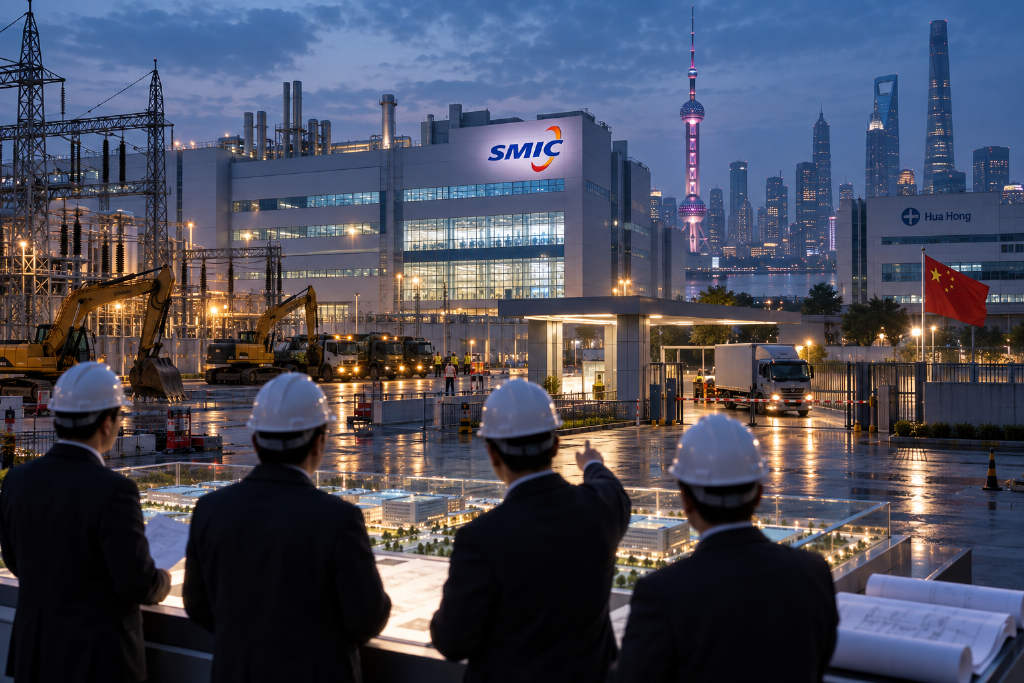
ChainCatcher, citing South Korea’s JoongAng Ilbo, reported that China’s semiconductor industry operates through a coordinated structure in which the central government, local governments, state-owned financial institutions and companies divide responsibilities across fundraising, factory construction and supporting infrastructure.
China’s state-backed funding structure
The report said Phase I of China’s National Integrated Circuit Industry Investment Fund totaled 138.7 billion yuan, Phase II reached 204 billion yuan, and Phase III came in at 344 billion yuan, bringing the combined amount to 686.7 billion yuan. The capital has been invested in companies including Semiconductor Manufacturing International Corp. (SMIC), Hua Hong Semiconductor and Yangtze Memory Technologies.
JoongAng Ilbo also pointed to ChangXin Memory Technologies, saying the company climbed to fourth place in global DRAM market share 10 years after its founding. Over the past three years, its net loss totaled 21.13 billion yuan, while research, development and equipment investment over the same period reached 185.2 billion yuan. The report added that state-owned capital from Hefei provided about 80% of the funding in the project’s early stage.
South Korea’s response plan
According to the report, the South Korean government plans to guide 622 trillion won in private investment by 2047. It also plans to offer 17 trillion won in low-interest loans and a 1.1 trillion won semiconductor ecosystem fund, though most of the financial burden would still be borne by companies.
Park Geon-soo, executive vice chairman of the Korea Semiconductor Industry Association, said semiconductors are an industry where stopping investment means falling behind in the next upcycle. He said research and development, equipment spending, and orders for materials, components and equipment should be maintained even during downturns, and called for long-term policy finance and tax support.
In JoongAng Ilbo’s framing, China is catching up through a state-level support system, and South Korea also needs a coordinated response involving the government, political circles, financial institutions and companies.