
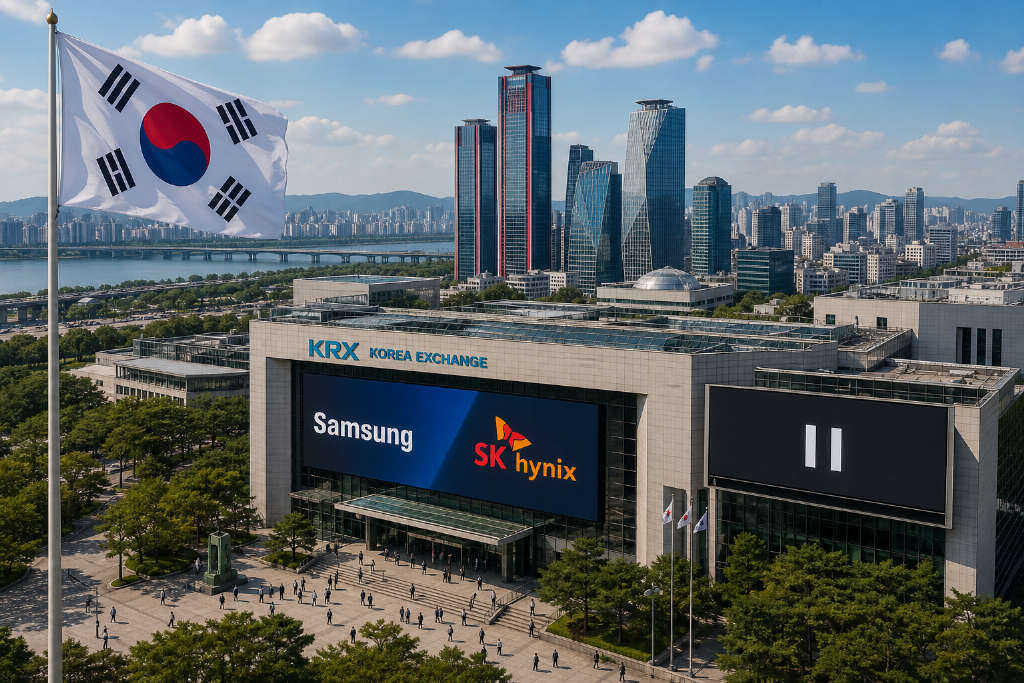
South Korean stocks rebounded sharply on Wednesday, with the KOSPI up more than 5% at 6848.81 at the time of writing. SK Hynix rose more than 12%, while Samsung Electronics gained more than 8%. During the session, the Korea Exchange triggered its Sidecar mechanism and suspended KOSPI program buy orders.
Related Hong Kong-listed products also moved higher. CSOP 2x Long Samsung Electronics was up more than 8%, and CSOP SK Hynix Daily Leveraged (2x) rose nearly 4%.
U.S. Treasury move helped lift risk appetite
The immediate catalyst came from a policy shift in the U.S. bond market.
On Wednesday, U.S. Treasury Secretary Scott Bessent said the size of each buyback operation for long-dated Treasuries with maturities of 10 to 30 years would be increased from $2 billion to at least $4 billion. The stated aim was to restrain Treasury yields, which had climbed to levels not seen in decades. After the announcement, the 30-year Treasury yield fell back to 5.18%, and the three major U.S. stock indexes ended the previous session with modest gains.
Analysts said the signal of a willingness to step in mattered more than the buyback amount itself. Matt Maley, chief market strategist at Miller Tabak, said the measure 「could boost risk asset prices in the short term」.
That shift in sentiment fed into a strong technical rebound in South Korean equities. According to Korea Exchange data for Aug. 20, as of 10 a.m., foreign investors were net buyers of KRW 682.341 billion, institutional investors bought a net KRW 750.326 billion, and retail investors were net sellers of KRW 1.445809 trillion.
SK Hynix buyback and cancellation plan added stock support
At the company level, SK Hynix provided another clear tailwind.
On Aug. 19, the company said it would repurchase and cancel about 24.07 million treasury shares over the next three months, for a total of KRW 40 trillion, or about $28.6 billion. The amount equals 3.3% of its outstanding shares. SK Hynix also raised its shareholder return target for 2025 through 2027 to more than 50% of cumulative free cash flow, adding that more dividend details will be disclosed with its third-quarter earnings report.
SK Hynix said the move reflected its view that the current share price does not fully capture the company’s value. It added that net cash stood at about KRW 69 trillion at the end of the second quarter, enough to support a large-scale shareholder return program.
Park Jun-young, an analyst at Hanwha Investment & Securities, said the KRW 40 trillion buyback was unlikely to be a one-off return measure. 「We expect the move to lead to a continued reduction in the share count and lift value per share,」 he said.
Samsung Electronics also drew support
Samsung Electronics was helped by a separate set of positive developments.
As demand surged, Samsung reportedly raised prices for some new advanced foundry service orders by as much as 15%, extending the pricing trend from memory into foundry. Samsung also said it would disclose details of this year’s and future shareholder return policy 「soon」. According to the report, the company plans to hold a board meeting within August to decide and announce a shareholder return program worth KRW 100 trillion, or about $71.9 billion, which would be the largest such plan in the history of South Korean corporations.
HSBC upgrades South Korea to overweight
South Korean stocks have already gone through an unusually volatile stretch this year. Driven by the AI memory supercycle and reforms under the so-called Value-Up program, the KOSPI briefly climbed above 9100 in June, an all-time high, with gains of more than 100% for the first half. Since late June, the market has retreated quickly on concerns over AI capital spending and profit-taking, and by late July it had pulled back by more than 30% from the peak. Even so, the KOSPI was still up more than 57% for the year, making it one of the best-performing major stock indexes globally.
Herald van der Linde, HSBC’s head of Asia-Pacific equity strategy, said the earlier sell-off had in effect cleared out a large amount of excess leverage. 「Volatility in the Korean stock market remains elevated, but it has come down from the highs,」 he said. HSBC has raised South Korean equities to overweight from neutral. The bank said that as long as domestic demand remains firm, mechanical selling by foreign investors should not be a major obstacle.
Separately, S&P raised SK Hynix’s rating to A- on the back of strong business momentum linked to artificial intelligence.
Memory supply outlook remains a central theme
SK Group Chairman Chey Tae-won said next year will see 「the most severe memory shortage」, arguing that new capacity will not be able to catch up with the pace of demand growth. TrendForce estimates that the global HBM market could expand 120% year over year in 2026, with a supply gap of 15% to 20%.
Bank of America channel checks also pointed to a continuing upswing in memory pricing. Spot NAND prices rose by as much as 10% in a single week, 1Tb wafer prices surged more than 500% year over year, and spot DRAM prices have now risen for 18 straight weeks.
Paul Meeks, head of technology research at Freedom Capital Markets, said AI-driven memory demand and long-term customer agreements continue to support industry fundamentals, though worries about rich valuations and a peak in the memory chip price cycle have amplified short-term volatility.
Market participants also warned that, after such a fast rise, stocks may face short-term profit-taking pressure. Third-quarter earnings delivery, the path of U.S. interest rates, and external disruptions could all add to volatility.