
This article was originally published by Bit.Fan. For more cryptocurrency news and market insights, visit www.bit.fan.
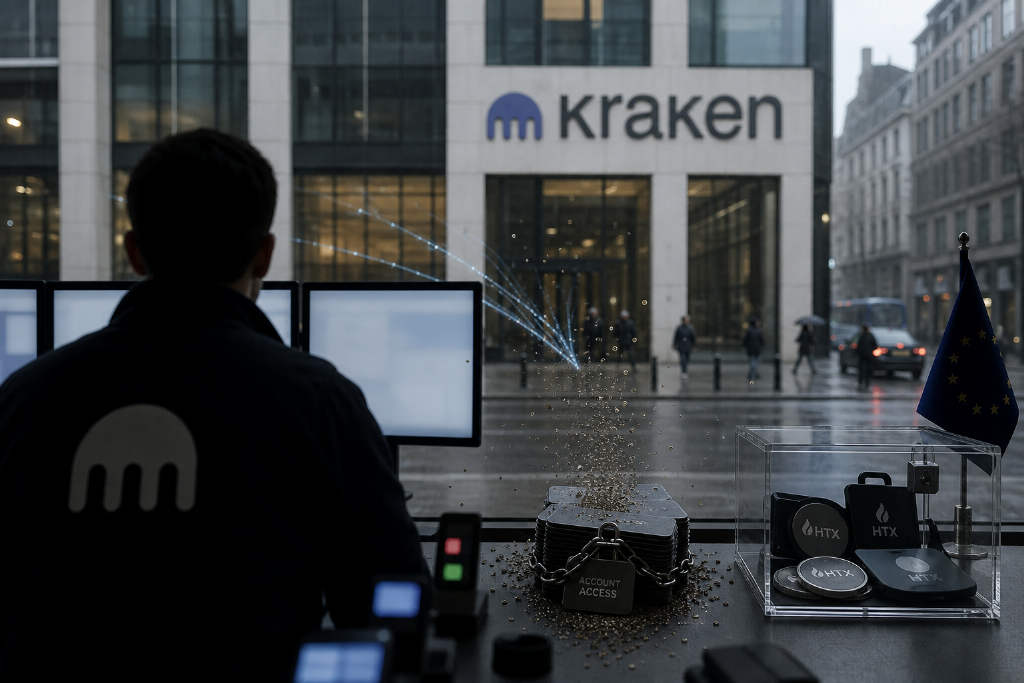
Kraken Says Nearly 12,000 HTX-Linked Dust Transfers Triggered User Account Locks
N
News EditorKraken said it was hit by a large dust attack between Aug. 17 and Aug. 24, when nearly 12,000 tiny transfers from HTX-linked wallets reached Kraken-related addresses. Some customer accounts were briefly locked after the compliance system flagged the activity. Kraken said accounts were restored after review and the sanctioned funds remain held. HTX denied that any official account was behind the transfers and said it is investigating whether the sending wallet was misidentified or whether a third party was involved. The episode highlights how sanctioned funds can be used to trigger compliance systems on public blockchains, turning screening tools into a target. It also comes against the backdrop of fresh sanctions on HTX by the U.K. and the EU in 2026, while a similar tactic had already been seen in 2022, when unknown actors sent Tornado Cash-linked ether to celebrity wallets.
Kraken said a dust attack sent nearly 12,000 tiny crypto transfers from HTX-linked wallets to Kraken-related addresses between Aug. 17 and Aug. 24, briefly locking some customer accounts.
According to blockchain analytics firm Arkham Intelligence, the transfers came from wallets linked to HTX, the exchange that has been sanctioned by the EU. Each transfer was worth only a few cents to a few dollars. Kraken told CoinDesk the pattern looked intentional, saying the attacker appeared to expect that any sanctioned funds reaching customer accounts would trigger a full account lock.
Dust attacks rely on a basic property of public blockchains: anyone can send crypto to any address without permission. In this case, the idea is to spread sanctioned funds in tiny amounts across many user addresses, then let compliance systems flag the chain links. On conservative settings, that can lead to account freezes even when the recipient did not ask for the transfer.
Kraken said its compliance team temporarily locked some accounts on the first day of the incident, then restored access after confirming there was no issue. The exchange also said the sanctioned funds were being held and would not be returned to customer accounts. Kraken said it is working with law enforcement to make sure the attack does not achieve its intended result.
HTX, formerly Huobi, denied that any official account was responsible for the micro-transfers. The platform said its internal review found no official account behind the activity and that it is still investigating whether the sending wallet was misidentified or whether a third party was involved. HTX is now advised by Justin Sun, co-founder of TRON.
The sanctions backdrop matters. In May 2026, the U.K. sanctioned HTX and froze assets, saying it had reasonable grounds to suspect the exchange had provided financial services to the Russia-linked payment network A7 and to the sanctioned exchange Garantex. HTX denied the allegation. In July 2026, the EU added HTX to a trading ban, and that ban took effect on Aug. 23, 2026, right in the middle of the dust-attack window.
This was not the first time sanctioned crypto was used this way. In 2022, an unidentified actor sent ether from the sanctioned mixer Tornado Cash to the wallets of several celebrities. U.S. enforcement later said it would not prioritize action against recipients of involuntary, small transfers who reported the issue late.
The episode shows the gap between policy and practice. Regulators may understand that dust attacks can be abused, but exchange compliance systems are often more cautious than enforcement guidance, leaving innocent users to absorb the first hit.
100
Disclaimer:
The market information, project data, and third-party content displayed on this platform are for industry information sharing only and do not constitute any form of investment advice or return commitment.
Cryptocurrency trading carries high risks. Users should fully assess their risk tolerance and make independent decisions. All profits, losses, and legal responsibilities are borne by the users themselves.