
Foresight News devoted the second entry in its "Crypto Story" series to Lazarus Group, the North Korea-linked hacking organization that has been tied to the Sony Pictures attack, the Bangladesh Bank theft and a string of crypto heists. The report says the group returned to the center of attention after Binance was hit in October 2026.
It begins with the biggest number in the story: $6.34 billion in digital assets stolen from Binance in October 2026, a record for the crypto industry. More than a month earlier, a Binance engineer had received what looked like a routine interview invitation on a job platform. The supposed employer arranged a video interview, followed by a second round with someone claiming to be the company’s CEO. Near the end, the candidate was sent a coding assignment and asked to download it onto a work computer.
According to a preliminary investigation released on Nov. 3, the recruiting company was entirely fabricated and the assignment contained malicious code. The attackers used it to gain access to the engineer’s machine, then on Oct. 20 moved laterally through Binance’s internal AI tools, obtained a deployment-system permission token and ultimately breached the wallet-signing system. Binance said it intercepted and froze about $2.85 billion, but the intrusion that began with a fake hiring process still became the largest theft the sector has seen.
The Federal Bureau of Investigation attributed the case to the North Korean hacking activity known as TraderTraitor, which the article describes as a core branch of Lazarus Group. On the same day Binance was attacked, Microsoft published a report saying North Korean hackers had fully folded generative AI into day-to-day operations. That included mass-producing fake recruiting firms, tailoring interview scripts and using open-source AI tools to assist exploitation work.
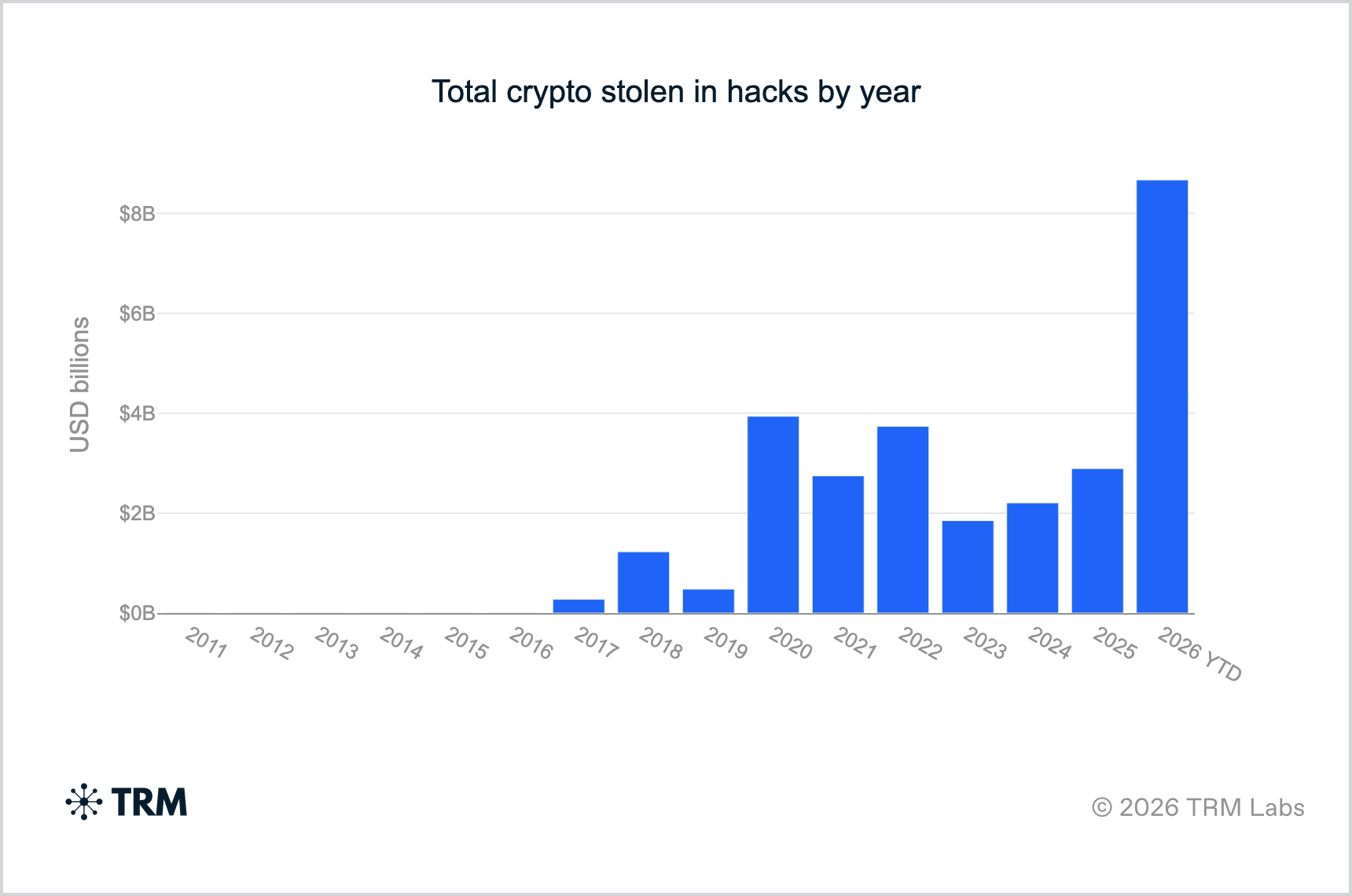
Foresight cites data from Chainalysis and the Korea Trade-Investment Promotion Agency showing that North Korean hackers stole at least $2.02 billion in crypto in 2025, equal to 4.3 times the country’s $469 million in goods exports that year. TRM Labs estimated that by October 2026, North Korean hackers had stolen about $12.8 billion in total. Out of the $8.7 billion lost globally to crypto hacks in 2026, North Korea accounted for 85%, up from 7% in 2020.
The article asks why Lazarus kept expanding even as law enforcement agencies pursued the group and sanctions intensified. It answers by tracing the people who were exposed, the structure behind the operations, the attack paths used against banks and crypto firms, and the routes stolen funds took after they left victim wallets.
How North Korean operators were exposed
Foresight says the real faces behind these "ghost programmers" are hard to see, but more than a decade of cat-and-mouse pursuit has produced a few cracks. The first appeared in a resume sent to Dalian, China, 15 years ago.
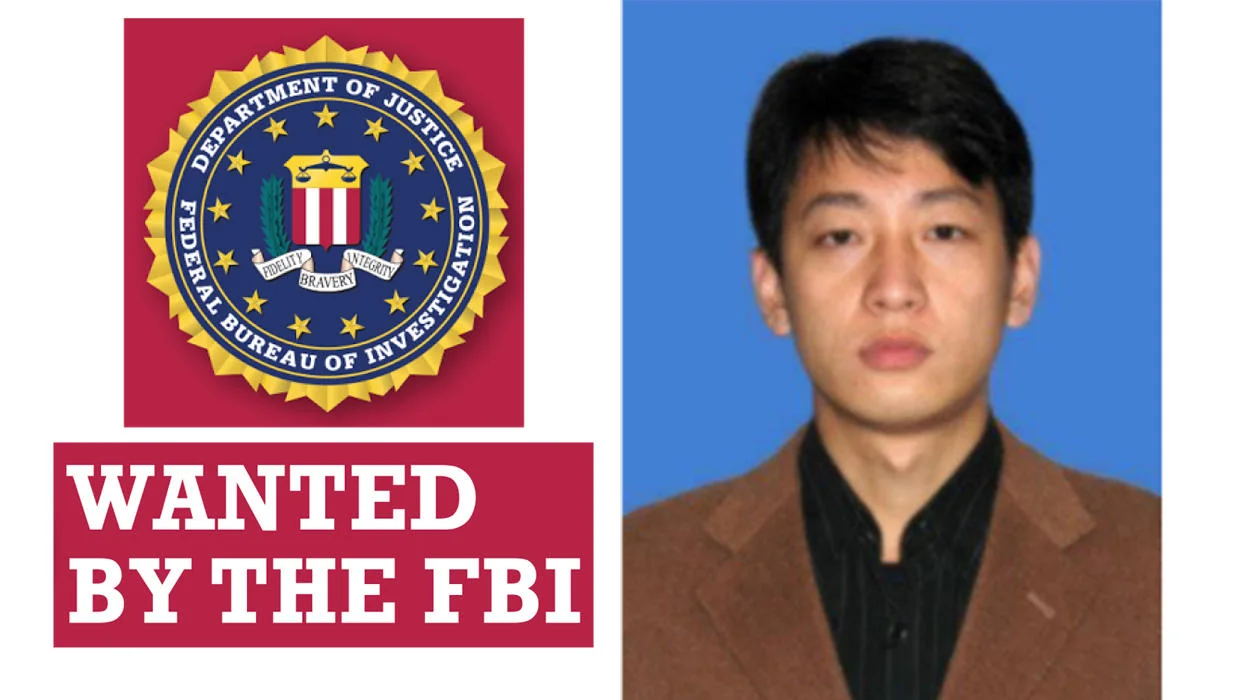
In January 2011, a North Korean company called Chosun Expo recommended a young developer from Kim Chaek University of Technology in Pyongyang, Pak Jin Hek, also written as Park Jin Hyok, to replace someone on a Dalian team at an overseas company. The resume said Park spoke English and Chinese, knew Java and had worked on online games. At the time, he looked like an ordinary overseas developer.
In an email in May 2011, he casually mentioned that by September he would have spent a full year in Dalian, that he planned to return to North Korea to get married and hoped to remain in the country long term. A few months later, he told the recipient he would be going back the following week.
Years later, while tracing the Sony Pictures attack, the $81 million theft from Bangladesh Bank and the WannaCry ransomware case, the FBI uncovered Park’s old work email. The report says he had not fully severed his identities. His everyday mailbox contained the address of an operational hacking account, "Kim Hyon Woo." Another work account had permission to open encrypted files stored in the hackers’ cloud environment, and some of the accounts shared the same devices and network addresses.
That overlap between ordinary life traces and operational infrastructure turned Park into one of the most recognizable faces on an FBI wanted poster. Reuters, citing defectors with computing backgrounds, reported that North Korean students with strong science and engineering talent are screened and then sent either into military cyber units or overseas assignments. By day, they work as outsourced coders earning foreign currency. By night, they operate as state-directed hunters online.
If Park still needed a physical overseas posting a decade ago, the next exposed infiltrator showed what disguise looks like in the AI era. In July 2024, U.S. cybersecurity company KnowBe4 hired a remote senior engineer. The applicant had stolen the identity of a legitimate U.S. citizen, used an AI-enhanced synthetic profile photo and passed four rounds of video interviews along with the full background check.
The problem surfaced only after the company shipped out a Mac work laptop. The delivery address turned out to be a laptop farm in the United States, set up to host machines for overseas hackers and make them appear to be operating from U.S. IP addresses. Less than 25 minutes after the computer was powered on, the "new employee" tried to deploy malware through a Raspberry Pi device, triggering endpoint alerts. When the security team called to verify the activity, the person stalled and then cut off contact. Mandiant and the FBI later identified the individual as a North Korean infiltrator.
By 2025 and 2026, with face-swapping tools and fake identities weakening standard background checks, some crypto projects resorted to a blunt screening method the article calls the "Kim Jong Un test." In April 2026, blockchain security investigator Tanuki42 published an 82-second remote interview clip. The applicant, using the name Taro Aikuchi and claiming to live in Meguro, Tokyo, handled technical questions smoothly. But when the interviewer suddenly asked him to repeat an insult directed at Kim Jong Un in order to rule out a North Korean operative, the supposed Japanese engineer visibly changed.
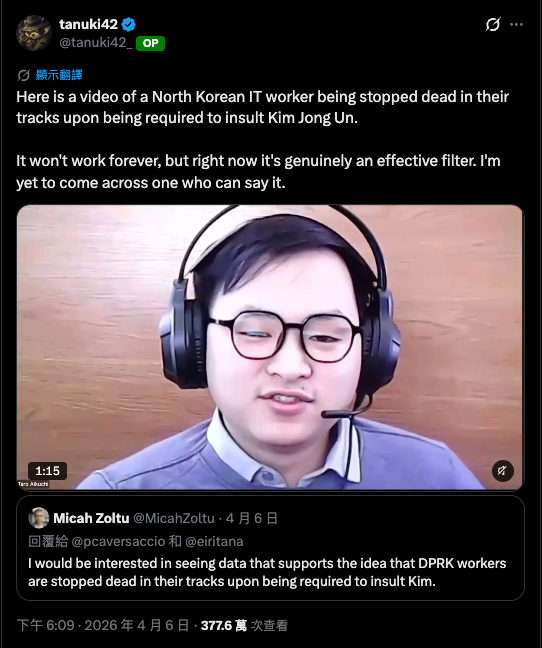
He first pretended the connection was unstable. After the interviewer pressed again, he fell silent and then abruptly disconnected. Within minutes, he changed his Telegram account, wiped records and deleted his LinkedIn page. Foresight says that even if these workers master blockchain code and AI deepfake tools, publicly insulting the country’s top leader remains a line they cannot cross under North Korea’s surveillance and collective-punishment system.
From Park Jin Hyok sharing email traces in a rented apartment in Dalian, to a fake American engineer who passed four interview rounds with AI help, to a "Tokyo developer" who dropped offline over a political taboo, the article uses three moments across 15 years to sketch one corner of the Lazarus iceberg.
Lazarus as more than a theft crew
The report then steps back to the group’s broader history. In November 2014, Sony Pictures suffered a destructive cyberattack that exposed unreleased internal material and executive emails. A group calling itself "Guardians of Peace" claimed responsibility. Sony was preparing to release The Interview, a film built around a fictional plot to assassinate the North Korean leader. In later charges, the U.S. Department of Justice said North Korea-backed attackers stole data, crippled computers and sent bomb threats to employees.
Months later, security firm Novetta led a cross-case malware analysis. Researchers found that some of the code used in the Sony incident came from the same tool lineage seen in earlier attacks. In 2016, the Operation Blockbuster report grouped that hidden offensive force under one name: Lazarus Group.
As investigations deepened, the outside world came to see Lazarus not as a single theft ring but as part of a tightly organized state apparatus. When the U.S. Treasury sanctioned Lazarus, BlueNoroff and Andariel in 2019, it explicitly linked them to North Korea’s Reconnaissance General Bureau, or RGB.
Palo Alto Networks’ Unit 42 published a panoramic relationship map in 2024. Under the RGB umbrella, multiple cyber clusters were shown handling different missions. Their targets stretched well beyond crypto to global finance, defense and military contractors, media and intelligence.
Only part of that network focuses on blockchain and digital assets. Foresight points to Slow Pisces, also known as Jade Sleet, which overlaps with TraderTraitor in the Binance case, and Gleaming Pisces, also known as Citrine Sleet, which spread the AppleJeus malware through fake trading software.
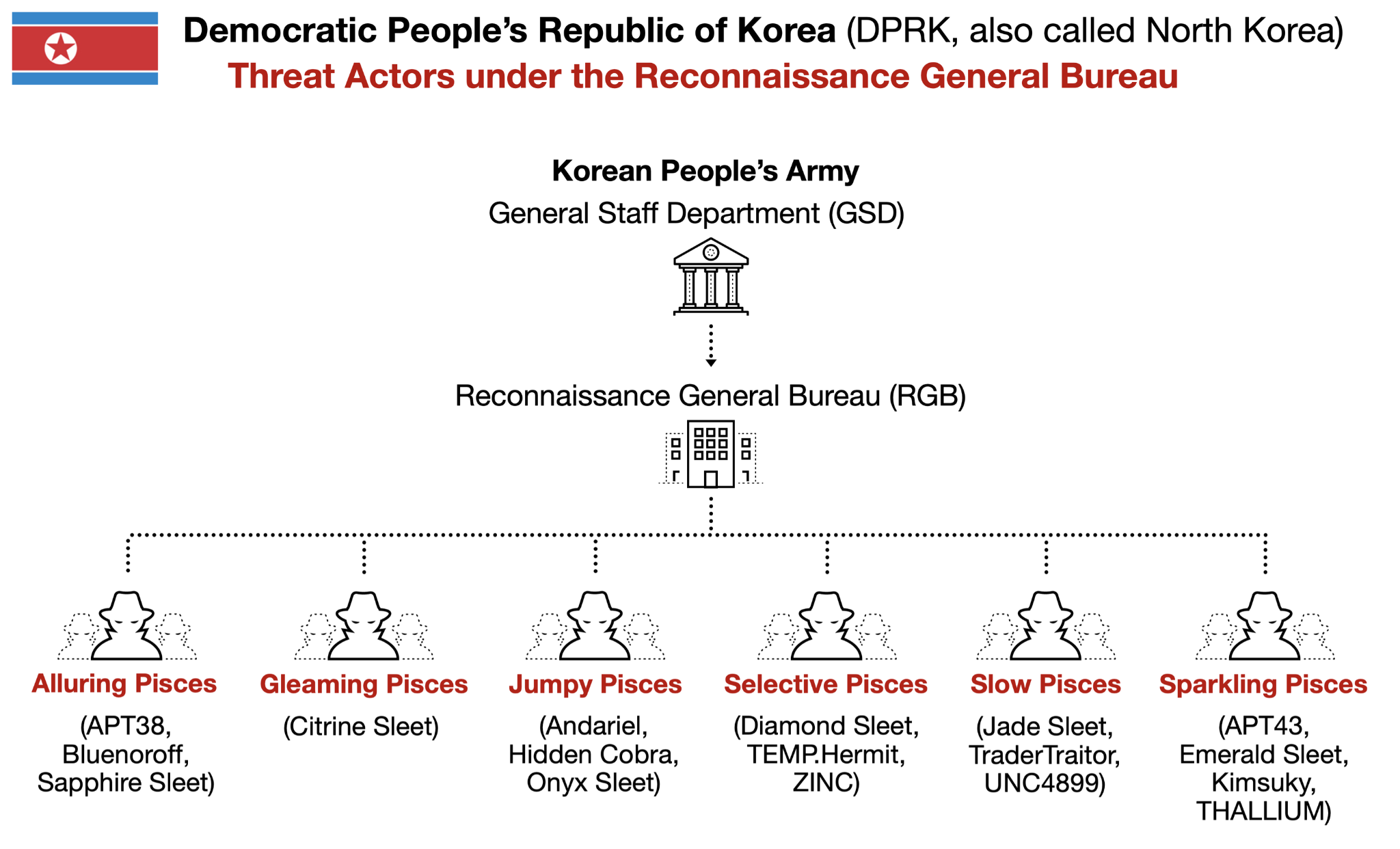
Outside crypto, other branches were active on very different fronts. In traditional finance, Alluring Pisces, also known as BlueNoroff or APT38, had already turned the global banking system into a target before the crypto bull market took off. Its most famous operation was the 2016 Bangladesh Bank heist.
In defense and military sectors, Jumpy Pisces, also known as Andariel, acted as a technical espionage arm. According to a July 2024 indictment from the U.S. Department of Justice, the branch built a closed loop of its own. It used Maui ransomware to attack multiple U.S. hospitals and medical institutions, demanded payments to fund operations, then used that money to buy servers and infiltrate U.S. defense contractors, air bases and South Korean defense research organizations. The targets included design blueprints for F-15 fighter jet engines, military reconnaissance satellites, submarines, and nuclear fuel and uranium enrichment facilities.
In media and strategic intelligence, Selective Pisces, or Diamond Sleet, and Sparkling Pisces, or Kimsuky, focused on stealing sensitive information and creating a chilling effect. Beyond the earlier Sony Pictures disruption, the article says these operators have repeatedly posed as Western mainstream journalists and think-tank scholars, sending malware-laced interview outlines or conference invitations to reporters, diplomats and defense think tanks working on North Korea. They also created large numbers of lookalike social media accounts, impersonating top security researchers to approach experts at companies including Google in order to steal undisclosed software vulnerabilities and information tied to policy toward North Korea.
Researchers generally classify these clusters by target selection, malware traits and server infrastructure. But when teams share code repositories or relay servers, Foresight notes, it becomes nearly impossible to separate each operation cleanly. What is clear, the article says, is that theft and espionage are tightly fused inside the same machine.
From central bank accounts to exchange wallets
Before crypto exchanges became prime targets, banks had already drawn investigators’ attention. In February 2016, computers connected to the SWIFT messaging system at Bangladesh Bank were compromised. U.S. court documents say the attackers sent transfer instructions in the bank’s name, asking the Federal Reserve Bank of New York to move dollars from the central bank’s account overseas.
The attackers tried to move nearly $1 billion. Of that, $81 million reached accounts in the Philippines and then passed through banks, remittance channels and casinos. Another $20 million was blocked by the receiving bank in Sri Lanka. Investigators found that the Philippine recipient accounts had been opened the year before under false names.
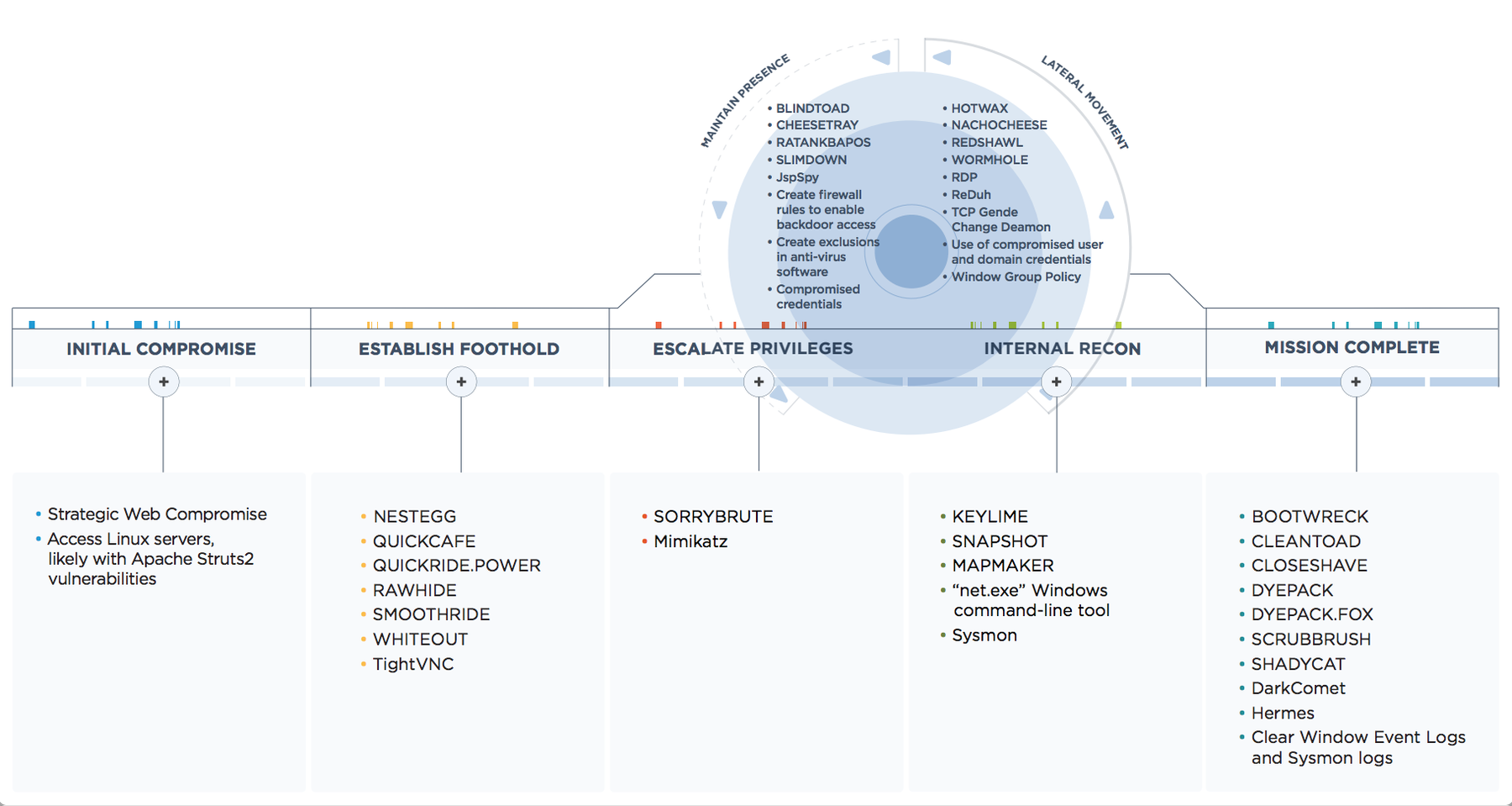
Recipient accounts were only one part of the operation. The attackers also needed to understand how the bank processed transfers. After studying APT38 intrusions into financial institutions, Mandiant found that once inside a victim network, the attackers gathered credentials, located the computers used to process SWIFT transactions and waited for a chance to send transfer instructions. In the cases Mandiant observed, the attackers stayed inside victim networks for an average of about 155 days, with the longest dwell time approaching two years.
Years later, crypto became a major source of funds. In 2022, the Ronin bridge used by the blockchain game Axie Infinity was exploited for more than $600 million, and the FBI attributed the attack to Lazarus. Two years later, Japanese exchange DMM Bitcoin lost 4,502.9 BTC, worth about $308 million at the time. U.S. and Japanese authorities attributed that case to TraderTraitor.
Investigators reconstructed the entry point in the DMM case. In March 2024, an attacker posing as a recruiter contacted an employee at wallet software company Ginco on LinkedIn and sent what was presented as a hiring test. It contained malicious code. After gaining access, the attacker impersonated the employee and then, according to investigators, used the company’s communication system to alter a legitimate DMM transaction request.
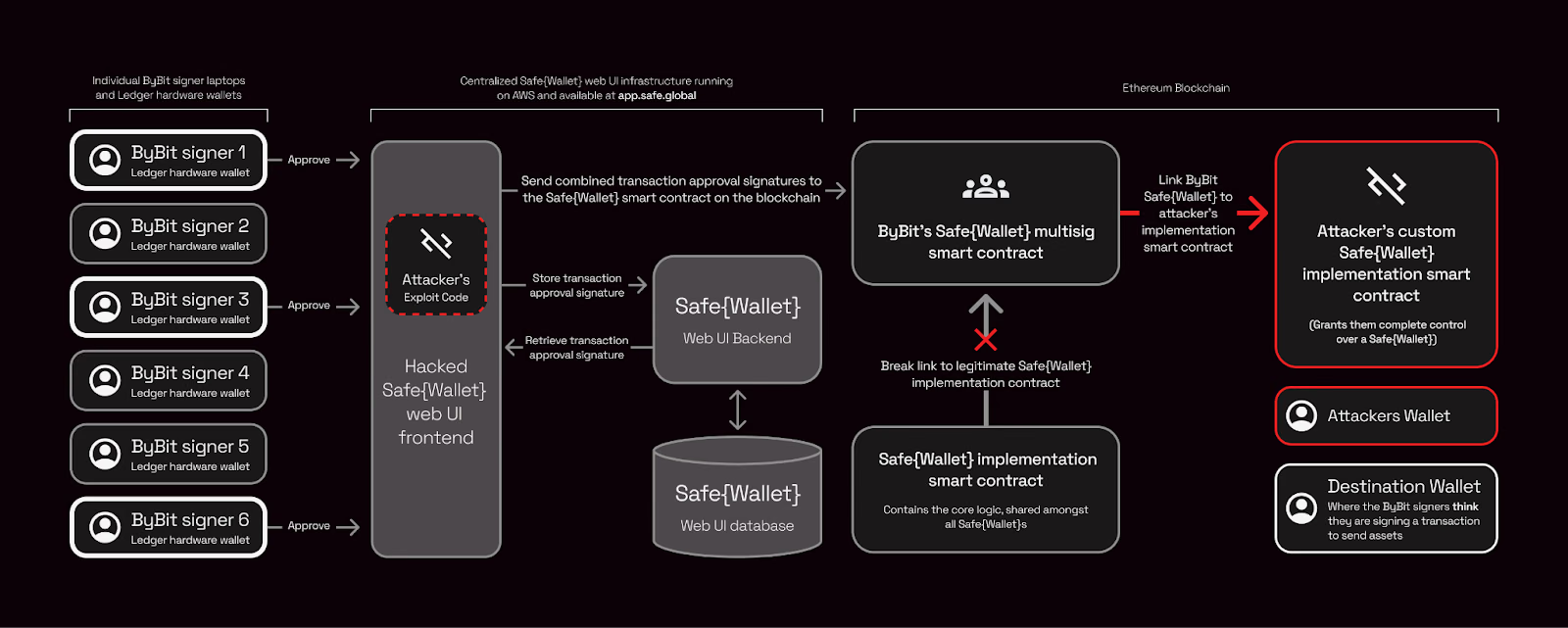
Then came Bybit in February 2025. The exchange was preparing to move ether from a cold wallet into a wallet used for daily operations. Because the cold wallet held assets in storage, the transfer had to be signed by multiple authorized people through the interface of wallet service provider Safe. Security firm Sygnia later said malicious activity had already appeared on a Safe developer’s computer on Feb. 4, and the next day the attackers used that developer’s access token to enter Safe’s cloud environment.
On Feb. 19, the attackers inserted malicious content into code called by the Safe web page and set a trigger condition, waiting for the target Bybit wallet to initiate an action. Two days later, Bybit personnel used the Safe interface to process what appeared to be a normal internal transfer request.
But according to a reconstruction by NCC Group, the transaction the signers actually approved contained a malicious operation. It called a contract deployed in advance by the attackers and changed the cold wallet’s control logic. Once the transaction executed, the attackers no longer needed the original multisignature approvals to move assets out of the wallet. About $1.5 billion then flowed out.
Sygnia said the malicious code was removed about two minutes after the transaction took place. Its investigation found that the initial compromise of the Safe developer’s computer may have involved social engineering, though the exact contact method was not confirmed. Foresight notes that Bybit’s multisig setup was meant to reduce the risk of a single compromised account, but once the attackers got into Safe’s cloud environment, they altered the shared web page used by all signers and secured approval for the malicious transaction.
North Korean operatives have also been accused of entering crypto firms directly under false identities. In 2025, the U.S. Department of Justice charged four North Korean citizens in a theft scheme. Two of them had been hired as developers by a blockchain company and a virtual token company, respectively. Prosecutors said they used those jobs to steal and transfer more than $900,000 in virtual assets.
The hiring process itself can be the trap. Microsoft, in its investigation of a cluster it calls Sapphire Sleet, found that attackers posed as recruiters on social platforms, discussed job opportunities with targets, then arranged technical interviews and asked them to install malware disguised as meeting software or developer-tool updates. The hiring test sent to the Ginco employee in the DMM case appeared in a similar contact chain.
And the methods are still changing. In an October 2026 report, Microsoft said North Korea-linked attackers were using generative AI to research targets, write outreach messages and build false identities. An invitation that appears carefully tailored to a candidate’s work history may be backed by prior collection on that person’s background and social ties.
Where the money went
Once assets are moved, the article says, attackers usually split the funds across multiple fresh wallets. Some of those addresses then send the money onward again, leaving a scattered on-chain trail. The funds may pass through decentralized exchanges or cross-chain services, be swapped into other tokens or moved onto another blockchain. Each additional conversion forces investigators to follow a new set of addresses and counterparties.
The post-Bybit flow offers one example. In February 2025, the stolen ether from Bybit began moving to thousands of addresses. The attackers split the funds, exchanged them and shifted them through cross-chain services. TRM Labs said that within 48 hours, at least $160 million had already been moved into laundering channels.
While tracking those transfers, on-chain investigator ZachXBT noticed another set of actors. In findings he made public in October 2026, he said that after the Bybit attack, more than a dozen accounts appeared in public Telegram and Discord groups seeking to process orders tied to the stolen funds. One trader using the name Jimmy Green drew his attention.
ZachXBT approached him as a customer. On March 6, 2025, he sent 349,700 USDC to a new address in preparation for multiple trades with Jimmy. Jimmy provided a receiving address and asked him to send USDC on Ethereum in exchange for USDT on Tron. ZachXBT traced the wallet that paid gas fees for that receiving address and found that it could be linked back to the stolen Bybit funds and appeared on public lists of addresses tied to the case.
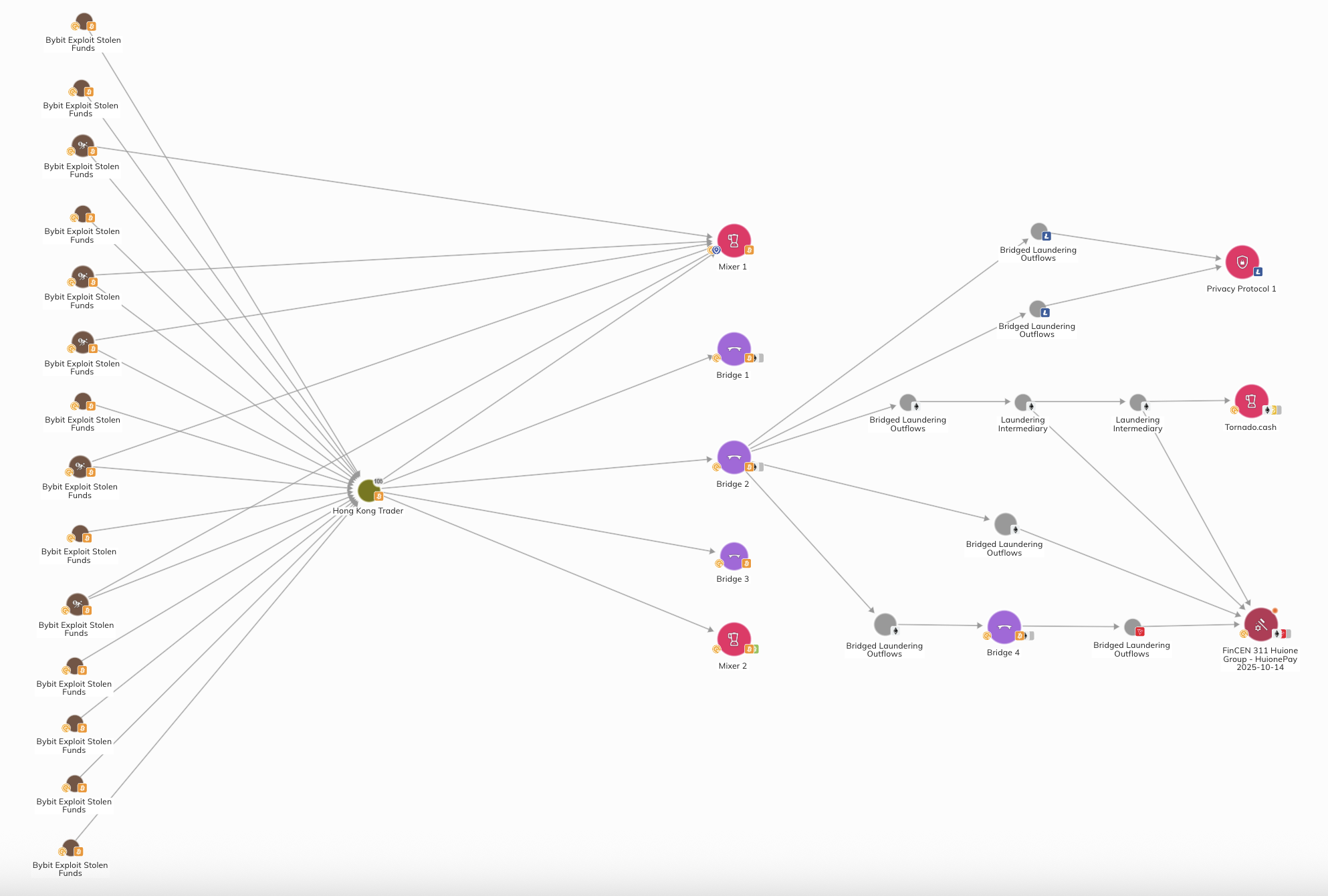
To keep the contact going, ZachXBT completed several more trades with Jimmy, absorbing losses of about 5% on each one. Their conversations covered trading, but also mahjong, food and family. As the exchanges continued, Jimmy began talking about his team’s business, including moving Bybit funds for North Korean clients and operating in Hong Kong and mainland China.
ZachXBT said Jimmy told him a day in advance that one transfer would move to Solana, and corresponding on-chain activity appeared the next day. On March 12, Jimmy sent a screenshot of a cross-chain trade. Using the amount and timing, ZachXBT found a matching order on THORChain. Three Solana addresses later provided by Jimmy helped him trace a group of stolen Bybit funds worth more than $12 million. According to ZachXBT, Tether later froze 442,000 USDT linked to that set of addresses.
Jimmy also claimed that his team had handled most of the stolen Bybit assets. ZachXBT said the laundering pattern he observed matched that claim. He passed his findings to law enforcement personnel and private-sector investigators involved in the case, and did not disclose the experience publicly until October 2026.
After the Binance incident, the exchange said about $3 billion in assets tied to the case had been frozen on-chain. TRM Labs observed attackers selling part of the assets through decentralized exchanges and market makers, while also posting some of the stolen assets as collateral on lending protocols including Aave and JustLend to borrow other assets.
Binance also moved to make customers whole. On Nov. 2, the platform said about 95% of the affected assets had been replenished and released proof of reserves for some major assets. On Nov. 3, Binance said it was restoring withdrawals for more assets and networks while the security investigation remained ongoing.
Across the cases it assembled, Foresight draws a single line: fake recruiting, supply-chain compromise, fraudulent employment, on-chain splitting, cross-chain transfers and off-platform laundering now sit inside one operational chain. In the publication’s telling, years of evolution have turned North Korea-linked hacking groups into a large-scale foreign-currency machine built around the crypto industry.