
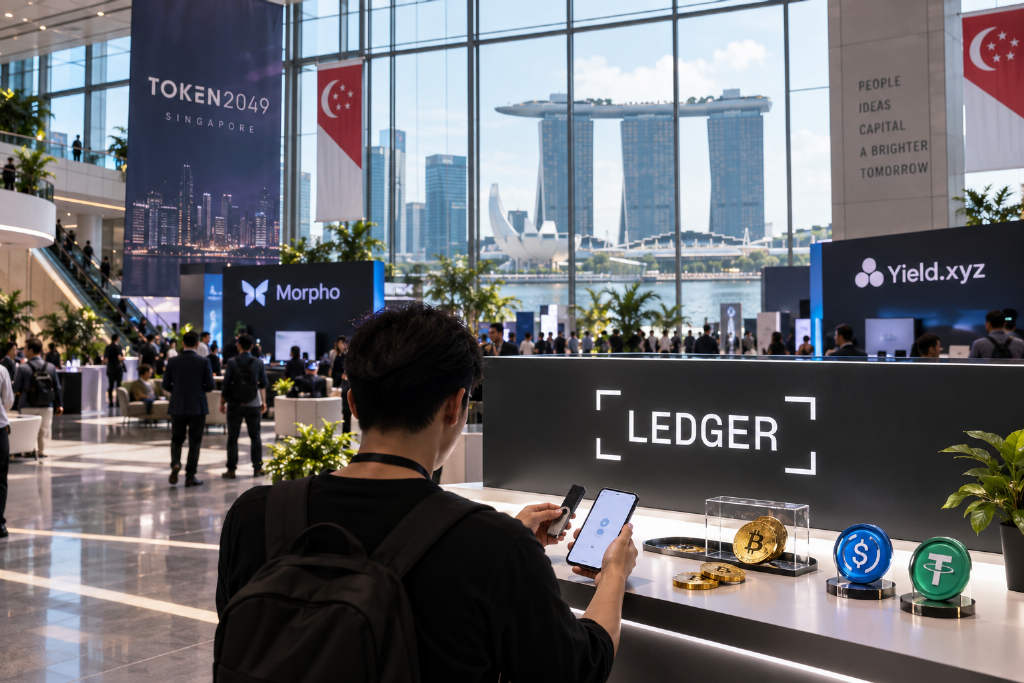
Ledger has rolled out a Bitcoin-backed lending feature aimed at users who want liquidity without selling their coins or moving funds onto a centralized lending platform.
Loans are now available inside Ledger Wallet
Announced Wednesday at TOKEN2049 in Singapore, the new Crypto Loan feature allows eligible users to pledge wrapped Bitcoin—cbBTC or wBTC—as collateral and borrow the stablecoins USDC or USDT.
Ledger said users can open and manage loans directly in Ledger Wallet. They can monitor loan-to-value ratios, add collateral, repay debt, or increase borrowing. Before any key action is executed, it must be physically approved on a Ledger signer.
Morpho and Yield.xyz power the product
The feature is powered by Morpho, the decentralized credit network, through technical provider Yield.xyz. Decrypt noted that Coinbase uses the same provider for its own Bitcoin-backed loans.
Ledger also separately announced direct access to Morpho for its signers. That means users can connect their hardware device to the protocol without routing through browser extensions or software wallets.
Morpho co-founder Paul Frambot said the integration creates 「a powerful liquidity flywheel」. In his description, stablecoins deposited through Ledger’s existing Earn product can help fund the loans that Bitcoin holders are now able to take out.
Ledger moves deeper into financial services
The launch pushes Ledger, best known for its hardware wallets, further into financial services and into a rapidly growing segment of the crypto market.
Decrypt also pointed to similar activity elsewhere. Coinbase recently introduced fixed-rate Bitcoin-backed loans after expanding the product to users in the U.K. JPMorgan, meanwhile, has explored lending against Bitcoin and Ethereum.
The basic appeal is the same across these offerings: holders who expect their crypto to rise in value can borrow against it instead of selling and triggering a taxable event. The risk is familiar as well. A sharp drop in price can lead to collateral liquidation.
Limited-edition Nano Gen5 signer also unveiled
At the Singapore event, Ledger also unveiled a limited-edition Nano Gen5 signer created with the NBA’s San Antonio Spurs. The run is limited to 250 units and extends a marketing partnership with the Spurs that was announced last year.
Crypto Loan is beginning to roll out immediately to eligible users, with availability set to expand over time.