


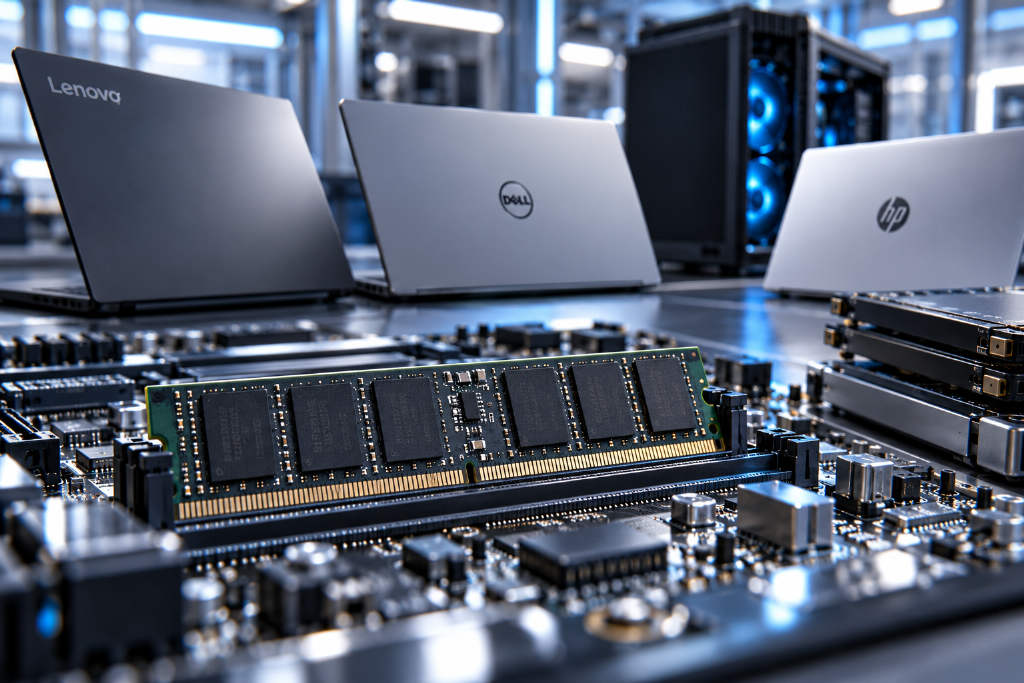
Lenovo, HP and Dell Technologies have signed long-term agreements with memory manufacturers to secure DRAM and SSD supply for next year, according to an Oct. 19 report from South Korean outlet ETNews. The contracts are intended to give major PC brands a steadier supply base after a year marked by memory shortages.
AI infrastructure demand tightened supply for PC makers this year
ETNews said expanding investment in AI infrastructure pushed memory demand sharply higher this year, making it harder for PC vendors to secure components. A senior PC industry executive told the outlet that actual DRAM and SSD deliveries in the first half of the year amounted to only 70% to 80% of demand.
That is the backdrop for the long-term agreements. The executive said the purpose of the deals is to create a more stable source of supply across the memory chain, adding that procurement next year is not expected to face major problems once the LTAs are in place.
Supply may improve, but memory prices are still expected to climb
The report drew a clear distinction between supply security and pricing. LTAs help ensure that shipments are available, but they do not mean lower prices. ETNews said DRAM and SSD prices are still expected to rise next year, although the increase should be less severe than this year.
Including expected price increases for CPUs and GPUs, total component costs are projected to rise 10% to 20% next year. That would still be an increase, but lower than the pace seen this year. For PC vendors, more stable production and a slower rise in costs could help protect margins.
Weak consumer demand is also easing procurement pressure
ETNews also pointed to a contradiction in the market. As higher component costs pushed up PC selling prices, consumer demand weakened and shipments fell. That, in turn, reduced procurement pressure across the supply chain and indirectly eased the memory shortage.
Data from Omdia showed global PC shipments fell 21% year over year in the third quarter, mainly because average PC selling prices posted double-digit growth. Omdia also expects global PC shipments to decline another 7% next year. In other words, part of the improvement in supply conditions is coming from weaker demand rather than a major increase in supply.
The report added that higher factory prices and a slowing economy have weakened consumer purchasing power, leaving the recovery in the B2C market on a slower track.
PC brands are shifting toward enterprise demand and AI PCs
With the consumer segment still soft, PC makers are moving their focus from B2C to B2B. ETNews said enterprise demand has remained relatively steady as companies adopt AI tools to improve productivity and replace employee devices on schedule.
On-device AI PCs, which can run AI workloads directly on desktops or laptops without connecting to the cloud, are also continuing to grow. Omdia said AI PCs accounted for 48.3% of total shipments in the U.S. market in the second quarter and are expected to exceed 50% in the third quarter. Shipments of high-end PCs priced above $1,500 also rose 36.8%.
One PC industry source said demand for enterprise AI PCs is expected to keep increasing even if the B2C market remains weak. The focus next year, the source said, will be to expand AI PC product lines and shipment volumes on top of a more stable component supply base.