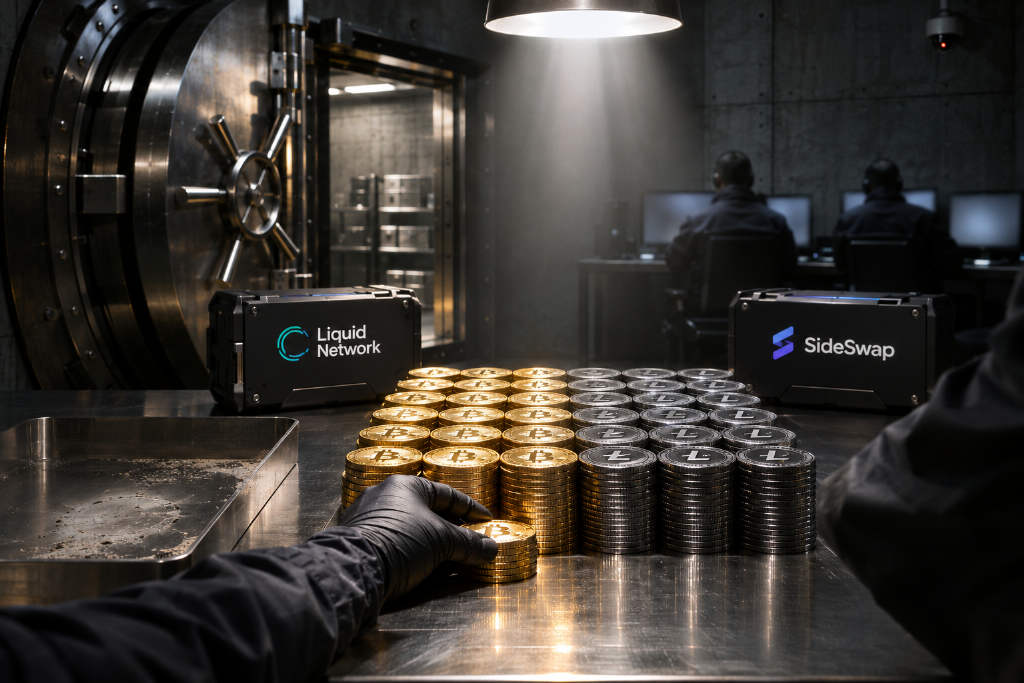
Liquid’s reserve backing has been restored after the shortfall created by the Sept. 6 exploit was fully covered, according to monitoring cited by Odaily and Bitcoin News. The incident stemmed from an Elements rangeproof verification flaw that let an attacker mint about 4,000 L-BTC without corresponding bitcoin reserves. That pushed backing down from roughly 4,205 BTC to 197 BTC.
Most of the tokens were later returned. The remaining gap was closed with a final 250 BTC deposit made on Nov. 2. SideSwap now shows that 4,270.54 BTC backs an equal amount of L-BTC, indicating that full reserve support has been restored on that basis.
Even so, direct redemption through the federation remains restricted. Users who want to exit still need to do so through swap or exchange service providers rather than redeeming directly through the consortium.
Liquid’s reserve backing has been restored, with 4,270.54 BTC now supporting an equal amount of L-BTC, according to Bitcoin News monitoring cited by Odaily.
On Sept. 6, an attacker exploited an Elements rangeproof verification vulnerability and minted about 4,000 L-BTC without bitcoin reserves behind it. As a result, reserves fell from roughly 4,205 BTC to 197 BTC.
Most of the tokens were later returned. A final 250 BTC deposited on Nov. 2 filled the remaining gap. SideSwap currently shows that 4,270.54 BTC backs the same amount of L-BTC.
Direct redemption through the federation is still restricted, however, and users must continue to exit through exchange service providers.
This article was originally published by Bit.Fan. For more cryptocurrency news and market insights, visit www.bit.fan. Disclaimer:
The market information, project data, and third-party content displayed on this platform are for industry information sharing only and do not constitute any form of investment advice or return commitment.
Cryptocurrency trading carries high risks. Users should fully assess their risk tolerance and make independent decisions. All profits, losses, and legal responsibilities are borne by the users themselves.