
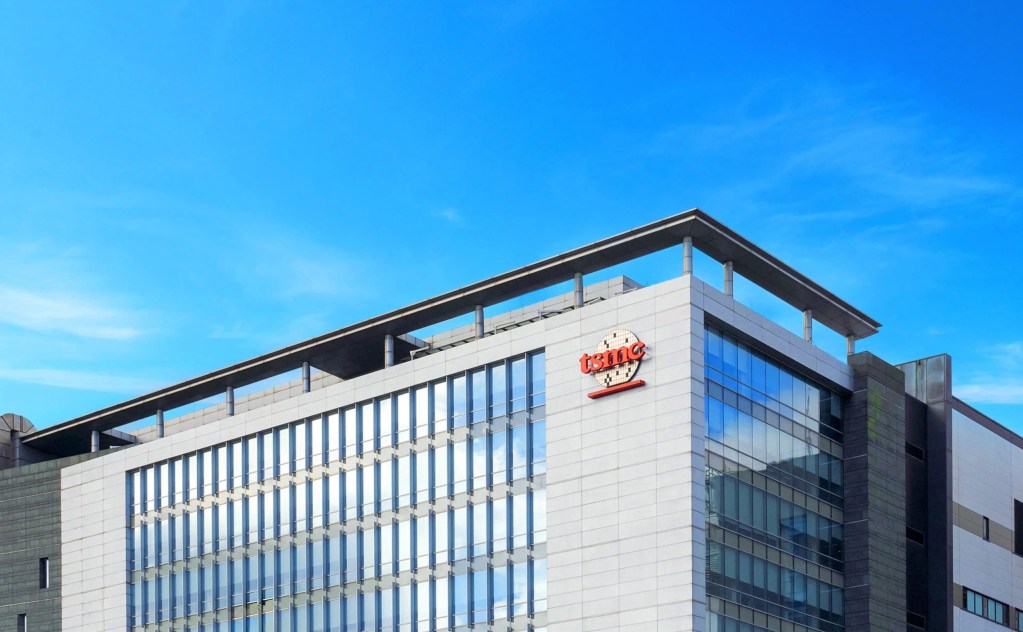
The third-phase expansion of the Longtan Science Park, a project delayed for more than two years, has been restarted. ABMedia reported that local sentiment in Longtan shifted after residents saw the economic spillover effects tied to Taiwan Semiconductor Manufacturing Co. (TSMC) setting up plants in southern Taiwan. Supply chain sources said that once the Longtan Phase 3 development is completed, TSMC plans to place two 1.4 nm wafer fabs and one panel-level packaging, or PLP, plant at the site.
Resident opposition over land acquisition had stalled the project
The project’s troubles began with land expropriation. The Hsinchu Science Park Bureau initially planned to acquire 158.59 hectares, with 88% of the area consisting of privately owned land. That sparked strong resistance from local residents, who formed a self-help group opposing the third-phase expansion and traveled north several times to protest.
TSMC later announced on Oct. 17, 2023 that it would abandon its plan to build in Longtan. According to a Liberty Times report cited by ABMedia, the situation later reversed after TSMC’s follow-up investments in Tainan, Kaohsiung, and Chiayi produced visible economic spillover in surrounding areas. Residents in Longtan gradually changed their view, and after multiple rounds of communication and compromise, opposition faded enough for the expansion plan to move forward again.
Project size was revised three times
The Hsinchu Science Park Bureau and the Taoyuan City government spent an extended period coordinating with local residents and revising the size of the expansion. The planned area was first cut from 158.59 hectares to 89.63 hectares in 2024. It was later adjusted to 104.19 hectares after some opponents changed their position and some residents and landowners petitioned for a wider scope. Of that final total, about 46 hectares are designated as industrial-use land.
Two public briefing sessions have already concluded. Taiwan’s National Science and Technology Council said the Longtan Phase 3 plan passed review by the Science Park Review Committee in May this year and was submitted to the Executive Yuan for approval in June. Under the current timeline, the government aims to complete land acquisition by the end of 2029. Public infrastructure work inside the park is scheduled to start in 2030, when businesses would also be able to lease land for factory construction.
TSMC said it is willing to enter if approvals are granted
The Hsinchu Science Park Bureau said TSMC has made its position clear: if the required legal procedures for Longtan Phase 3 are approved, the company is willing to move in. Supply chain sources said TSMC’s current plan for the site includes two 1.4 nm process wafer fabs and one PLP plant, with detailed arrangements still under discussion.
The report described the 1.4 nm process, known in the industry as the A14 node, as TSMC’s next-generation advanced process after 2 nm. The location for that node has remained undecided for some time. The restart of Longtan Phase 3 suggests northern Taiwan could host that key domestic capacity.
PLP was described in the report as part of TSMC’s forward-looking packaging strategy beyond its CoWoS and SoIC lines, aimed at large-area heterogeneous integration substrates. If the wafer fabs and the packaging plant are built in Longtan together, the area would form a vertically integrated manufacturing cluster covering both advanced process technology and next-generation packaging.
Southern Taiwan plant experience became the turning point
ABMedia’s report said the Longtan Phase 3 case offers a clear policy example. It argued that the deadlock was ultimately broken not by administrative persuasion, but by residents reassessing the project after seeing the economic impact generated by TSMC’s southern Taiwan facilities.
From near collapse to revival, the Longtan Phase 3 project has taken nearly two years to reach this point. If the remaining administrative process moves ahead on the current schedule, TSMC could begin building in Longtan after 2030, bringing new industrial momentum to the Taoyuan technology corridor.