PLP

TSMC
2026-08-24 02:01:13

Report says TSMC may spend over NT$30 billion to buy two AUO plants near its Central Taiwan Science Park site

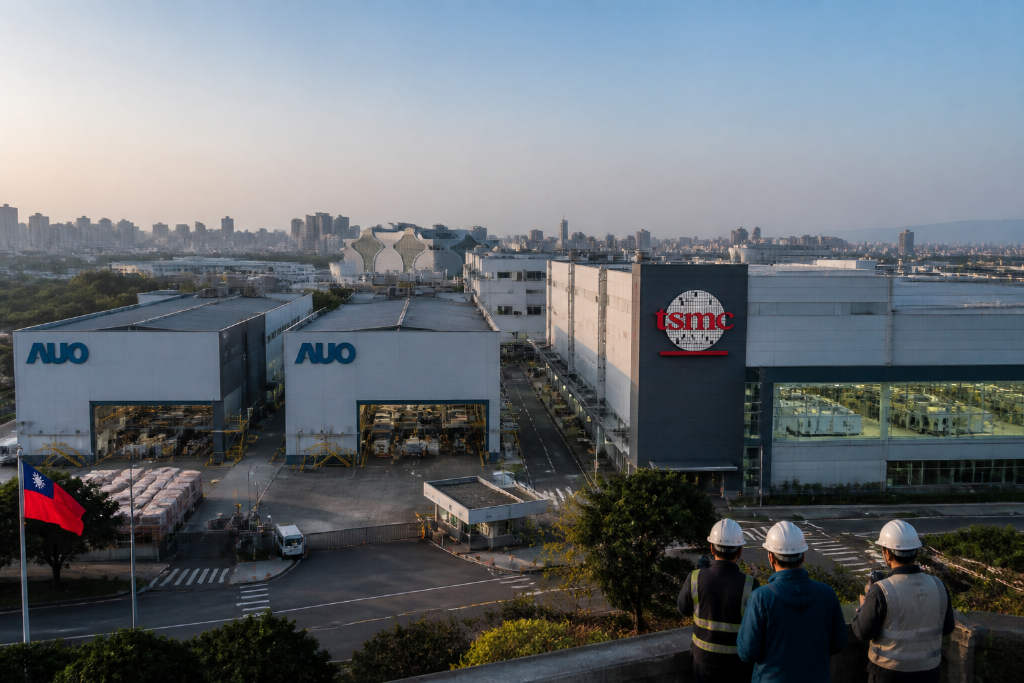
TSMC is rumored to be considering a purchase of two older-generation AUO display plants near its operations in the Central Taiwan Science Park, according to a report cited by ChainCatcher from Commercial Times. The reported deal value is more than NT$30 billion, and the facilities — AUO’s L7 and L5C plants — would be kept as space for large-format packaging development tied to CoPoS and FOPLP. People familiar with the matter, as cited in the report, said TSMC has already completed on-site due diligence. AUO is said to be planning to prioritize the disposal of the two factory sites, with a board submission target in October and a goal of finishing production-line relocation and clearing the facilities by the end of the first quarter next year. Neither TSMC nor AUO has confirmed the transaction. The report also described a broader buildout in central Taiwan. Industry sources said TSMC is extending its footprint from A14 process technology and advanced packaging to the COUPE silicon photonics platform, while existing and planned sites in the park include Fab 15A, Fab 25 and the AP5 advanced packaging and testing facility. On the optics side, Largan has recently acquired land and factory properties in Taichung, with the market reading those moves as preparation for CPO-related volume production.

300
Report says TSMC may spend over NT$30 billion to buy two AUO plants near its Central Taiwan Science Park site
TSMC
2026-08-10 03:22:03

Longtan science park expansion restarts as TSMC signals interest in 1.4 nm fabs

The long-delayed third-phase expansion of the Longtan Science Park has been revived after more than two years of setbacks tied to land expropriation disputes. According to ABMedia, citing a Liberty Times report, local sentiment in Longtan shifted after residents saw the economic spillover created by Taiwan Semiconductor Manufacturing Co. (TSMC) plants in southern Taiwan, including Tainan, Kaohsiung, and Chiayi. Supply chain sources said TSMC is planning three facilities for the site: two 1.4 nm wafer fabs and one panel-level packaging, or PLP, plant. The project was originally designed to cover 158.59 hectares, with 88% of the land privately owned, triggering strong opposition and organized protests. TSMC later announced on Oct. 17, 2023 that it would abandon its Longtan plant plan. Since then, the project scope has been revised several times, first to 89.63 hectares in 2024 and later to 104.19 hectares, of which about 46 hectares are designated for industrial use. Taiwan’s National Science and Technology Council said the expansion plan passed review by the Science Park Review Committee in May and was submitted to the Executive Yuan in June. Under the current timetable, land acquisition is targeted for completion by the end of 2029, with public infrastructure construction scheduled to begin in 2030.

1370
Longtan science park expansion restarts as TSMC signals interest in 1.4 nm fabs
On-chain opti
2026-07-26 09:50:55

On-chain options revive as market structure shifts from complexity to specific user demand

On-chain options are re-emerging after several cycles of failed experiments, but the new wave looks very different from the first DeFi options push. The report cited in the article argues that the sector is moving away from passive liquidity pools, generalized AMMs and overly complex retail-facing products, and toward market structures built around central limit order books, request-for-quote systems, cross-margining and clearer user segmentation. Platforms such as Derive, Rysk and Aevo illustrate that shift in different ways: Derive is positioning itself as a professional venue for sophisticated volatility traders, Rysk is packaging options into yield-oriented products such as covered calls and cash-secured puts, and Aevo is offering options inside a broader unified-margin derivatives exchange. Beyond vanilla venues, the piece also maps out adjacent categories including perpetual options, AMM-native options, short-dated touch options and binary-style markets that overlap with prediction markets. The broader argument is that infrastructure alone does not create demand. For on-chain options to grow, teams need products that solve concrete problems for asset holders and traders in ways that perpetual futures or prediction markets cannot easily replicate.

1350
On-chain options revive as market structure shifts from complexity to specific user demand
Powertech
2026-07-17 06:58:41

Powertech and Broadcom plan $400 million Singapore JV for AI panel-level packaging

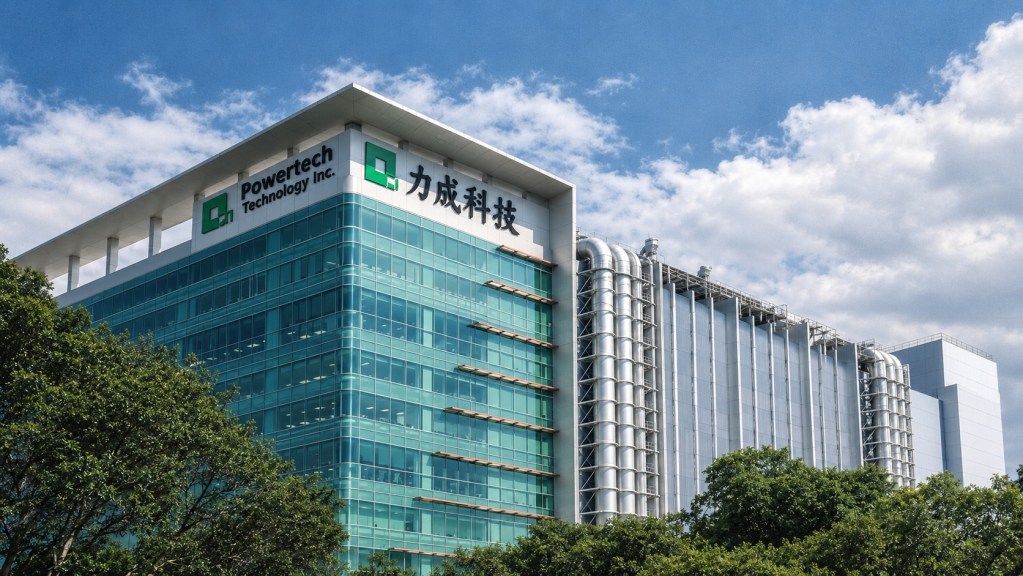
Powertech Technology, Taiwan’s second-largest chip packaging and testing company, has approved a $400 million investment to form a joint venture with Broadcom in Singapore, according to ABMedia. The project targets fan-out panel-level packaging, or FOPLP, a packaging approach seen as increasingly important for AI accelerators and high-performance computing chips. The report says the deal is Powertech’s largest single overseas investment to date. Chairman Tsai Du-Kung said the company has spent more than a decade developing FOPLP and built Taiwan’s first dedicated FOPLP production line in 2018. Powertech said the Singapore operation will focus on additive fine-line redistribution layer technology for advanced packaging substrates aimed at high-end AI chips and large-format packaging. Powertech also said its core technology and intellectual property will remain in Taiwan, and described the Singapore facility as an extension of manufacturing capacity built to serve international customers locally rather than a transfer of technology. The transaction still requires approval from Taiwan’s Investment Commission and other regulators. On July 17, Powertech’s shares briefly rose to NT$325 before reversing and closing at NT$288, down 9%, the report said.

2650
Powertech and Broadcom plan $400 million Singapore JV for AI panel-level packaging
On-Chain Opti
2026-07-07 13:00:00

On-Chain Options Rebuild Gains Pace as Derive Leads and Rysk Finds Yield-Market Fit

On-chain options, once one of DeFi’s most difficult and failure-prone sectors, are showing signs of a more durable revival. Earlier protocols such as Opyn, Hegic, Ribbon, Lyra and others struggled with thin liquidity, poor pricing infrastructure, high collateral requirements and products that were too complex for retail users yet not institutional-grade enough for professional trading firms. That backdrop is now changing. Rollups and Ethereum scaling have reduced execution costs, while CLOB and RFQ models are replacing AMM-heavy designs, making on-chain options more compatible with market makers and institutional workflows. According to the source article, global options markets continue to dwarf futures in contract volume, and institutional crypto demand has expanded through venues such as Deribit, CME and BlackRock’s IBIT options. On-chain options have also recovered in scale, with roughly $1.44 billion in 30-day notional volume. Derive currently dominates the category, while Rysk has differentiated itself by turning options into simplified yield products through covered calls and cash-secured puts. Aevo remains active but appears more focused on broader derivatives than on options as a core product. Beyond vanilla options, the sector is also experimenting with perpetual options, AMM-native options and ultra-short-duration touch products, while prediction markets are increasingly viewed as functionally similar to binary options. The article argues that this cycle may be different because infrastructure, user education and product-market fit are finally improving at the same time.

1050
On-Chain Options Rebuild Gains Pace as Derive Leads and Rysk Finds Yield-Market Fit
On-Chain Opti
2026-07-07 08:45:37

On-Chain Options Rebound as Derive, Rysk and Aevo Reshape a Difficult DeFi Market

A new research note cited by TechFlowPost argues that on-chain options are staging a meaningful comeback after years of failed experiments across DeFi. Earlier projects such as Opyn, Hegic, Ribbon, Friktion, Dopex, Lyra and others struggled with thin liquidity, poor capital efficiency, difficult volatility pricing, high gas costs and a product experience that was too complex for retail traders yet not robust enough for institutions. According to the report, the environment has changed materially: rollups have lowered execution costs, CLOB and RFQ models are replacing AMM-heavy designs, institutional demand for crypto options is growing, and prediction markets have helped normalize conditional payoff products for a broader user base. The result is a more segmented ecosystem with roughly $1.44 billion in 30-day notional on-chain options volume. Derive now dominates the category with about $1.142 billion in 30-day notional volume and $44.3 million in premium, while Rysk is gaining traction by packaging options as yield products through covered calls and cash-secured puts. Aevo remains active as a broader derivatives venue, though options no longer appear to be its sole focus. The report also highlights ongoing experimentation in perpetual options, AMM-native options and ultra-short-term binary-style products.

1100
On-Chain Options Rebound as Derive, Rysk and Aevo Reshape a Difficult DeFi Market
On-Chain Opti
2026-07-07 09:02:12

On-Chain Options Repriced: How Derive, Rysk, and Aevo Are Rebuilding DeFi’s Hardest Market

A new market analysis cited by MarsBit argues that on-chain options, long considered one of DeFi’s most difficult product categories, are showing signs of a real recovery. The report traces how early projects such as Opyn, Hegic, Ribbon, Friktion, Dopex, Lyra, and Premia struggled with thin liquidity, poor capital efficiency, weak volatility surfaces, and user experiences that failed to satisfy either retail or institutional traders. That first cycle produced experimentation, but not durable product-market fit. The latest wave looks materially different. Lower costs from Ethereum scaling and Rollups, the shift from AMMs toward CLOB and RFQ market structure, growing institutional demand for crypto options, and broader user education through prediction markets have all improved the setup. The report estimates that the on-chain options sector has reached roughly $1.44 billion in 30-day notional volume, with premium volume hitting new highs this year. Within that market, Derive is presented as the current leader, accounting for 79.2% of notional activity and 87.2% of premium volume over the past 30 days. Rysk has carved out a separate niche by framing options as yield products built around covered calls and cash-secured puts, while Aevo has evolved into a broader derivatives venue where options are no longer the only focus. The report concludes that the next stage of growth will depend less on infrastructure alone and more on building options products tied to specific user needs that perpetuals and prediction markets cannot easily replicate.

1040
On-Chain Options Repriced: How Derive, Rysk, and Aevo Are Rebuilding DeFi’s Hardest Market
TSMC
2026-06-15 05:21:08

TSMC Advances CoPoS Supply Chain With Mass Production Targeted for Next Year

Citrini’s jukan said on X, citing South Korea’s ETNews, that TSMC is building a CoPoS supply chain covering materials, components and equipment, with mass production targeted for next year. The report also compared PLP with WLP, noting the output advantage of a 600×600 mm rectangular panel.

410
TSMC Advances CoPoS Supply Chain With Mass Production Targeted for Next Year