
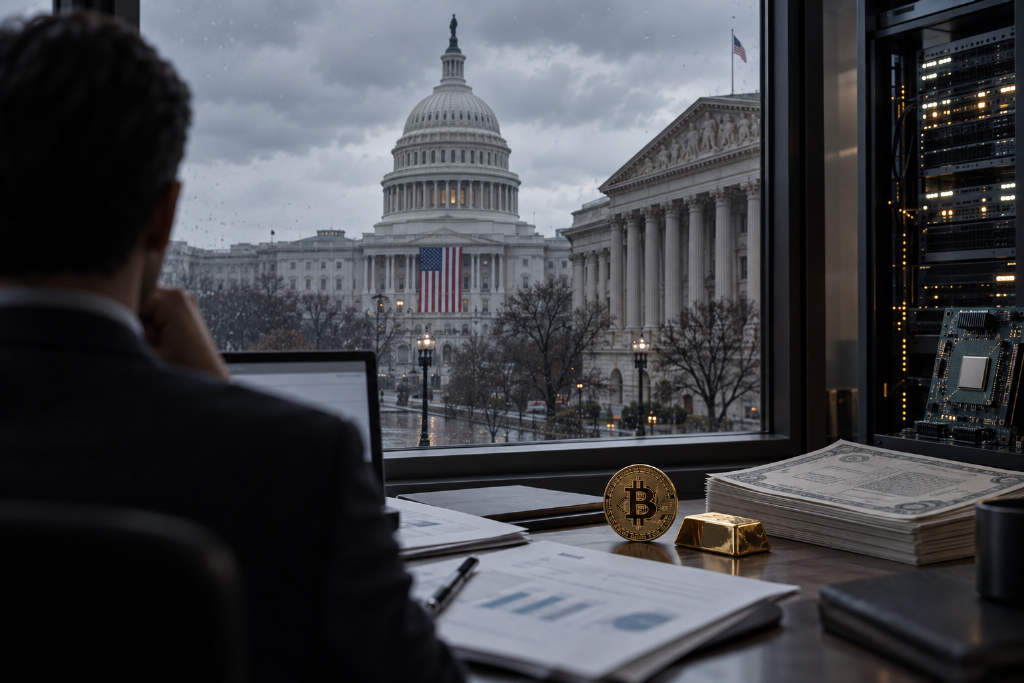
Bitcoin Magazine published a program summary written by Patrick Green featuring Lyn Alden’s discussion on Bitcoin, AI equities, the bond market, and the structural pressures shaping U.S. fiscal and monetary policy.
The summary opens with a direct question: Silicon Valley is promising an AI-driven age of abundance, but does that mean inflation is over? Alden’s answer, as presented in the program notes, is no. She separates AI-related price deflation from monetary inflation. AI, she says, can radically reduce the cost of white-collar services without slowing money printing or lowering the price of assets that are truly scarce, such as Bitcoin.
Chapter outline centers on fiscal dominance and inflation control
The episode is organized into a series of chaptered segments. It begins with “Nothing Stops This Train: Why US Fiscal Deficits Can’t Be Stopped,” then moves to “Fiscal Dominance and Why the Fed Can’t Control Inflation.”
From there, the program turns to “AI Age of Abundance vs. Monetary Inflation,” framing lower service costs from AI as a separate issue from inflation tied to the expansion of money. Another chapter asks what would force the Federal Reserve to support the Treasury market.
Bitcoin, gold, and capital rotation
The summary also highlights Alden’s gold outlook after the pullback from record highs and a separate discussion on why Bitcoin and gold trade differently. One of the market-focused segments asks whether a peak in AI stocks could rotate money into Bitcoin.
Additional chapters cover lessons from Egypt’s 15% inflation and broken money, whether stablecoins actually strengthen the U.S. dollar, and Japanese yen intervention together with Scott Bessent’s edge.
Disclaimer attached to the program
The post includes a disclaimer stating that the views and opinions expressed in the show are those of the participants and do not necessarily reflect the official policy or position of BTC Inc., Bitcoin Magazine, or affiliated entities. It adds that the material is for informational and educational purposes only and should not be treated as investment, legal, tax, or accounting advice. It also says nothing in the show constitutes a solicitation, recommendation, endorsement, or offer to buy or sell securities or financial instruments, and that viewers should consult their own advisers before making financial or business decisions.
The post first appeared on Bitcoin Magazine and is written by Patrick Green.