


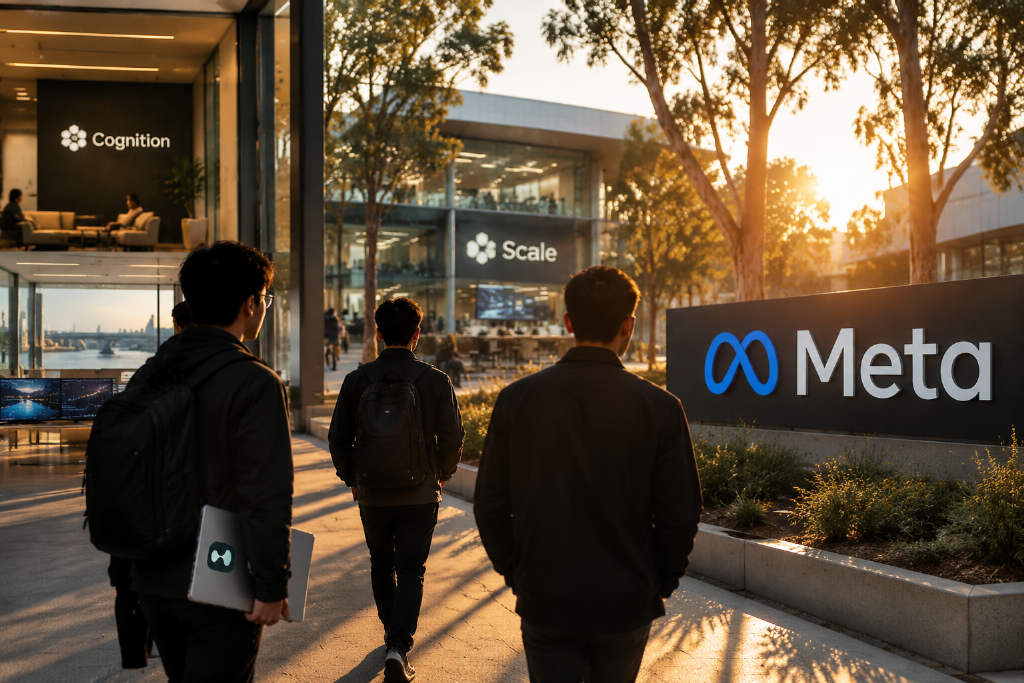
A photo posted by Meta chief AI officer and Scale AI co-founder Alexandr Wang has become a talking point across both the AI and crypto communities on X.
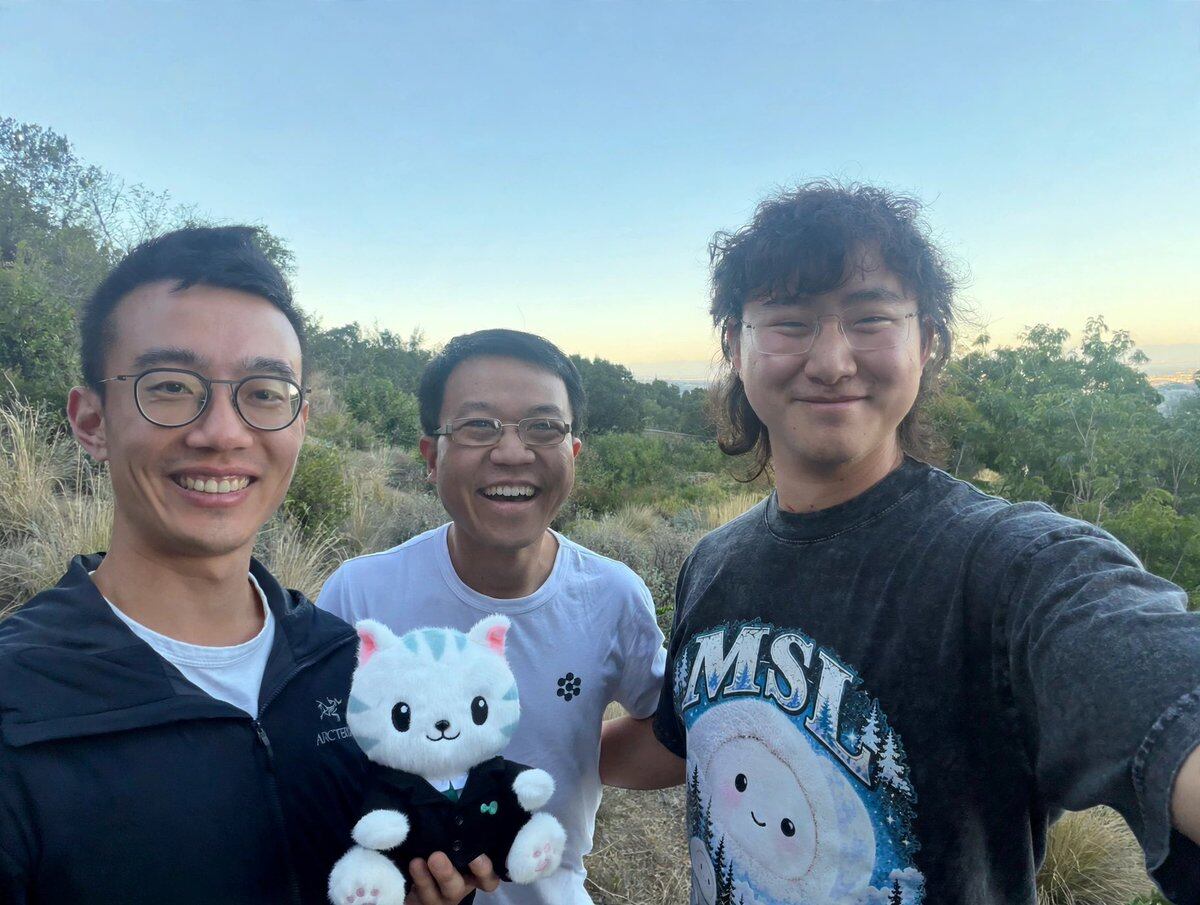
In the picture, Wang appears alongside Cognition founder and CEO Scott Wu and Hyperliquid founder Jeff Yan. His caption was brief: “Got the HRT gang back together!”
Odaily said the “HRT” reference points to Hudson River Trading, one of Wall Street’s major high-frequency trading firms. About a decade ago, the three men in the photo were part of HRT’s first internship program. Today, all three are still in their early 30s or younger and now sit at the center of AI infrastructure, AI coding, and onchain derivatives.
The three founders in the photo
Odaily described the trio as sharing a strikingly similar profile: Chinese heritage, Olympiad competition backgrounds, elite academic credentials, early exposure to quantitative trading, and well-timed moves into major technology shifts.
Alexandr Wang: from Scale AI to Meta Superintelligence Labs
Wang was born in 1997 in Los Alamos, New Mexico, to a Chinese immigrant family. His parents were physicists at Los Alamos National Laboratory, the site associated with the Manhattan Project during World War II. Odaily said Wang showed an early interest in math and programming, qualified for the Mathematical Olympiad Program in 2013, made the U.S. Physics Team in 2014, and reached the finals of the USA Computing Olympiad in 2012 and 2013.
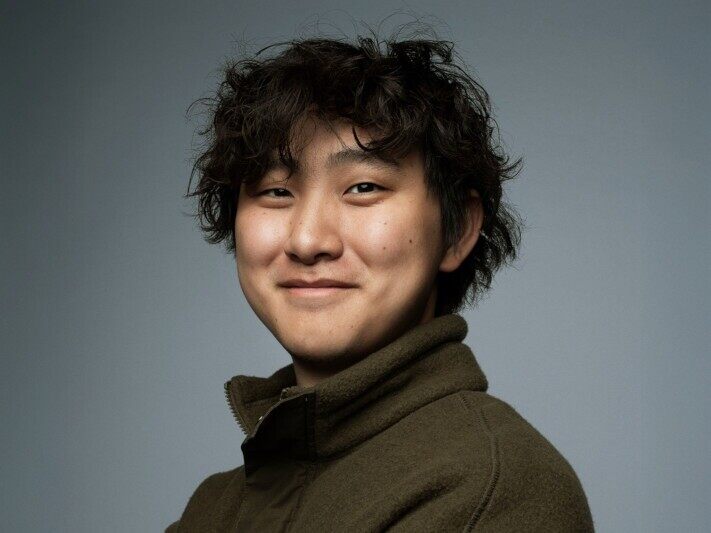
In 2015, Wang dropped out of the Massachusetts Institute of Technology. A year later, he founded Scale AI, which focused on labeling data used to train AI systems in areas such as computer vision and audio transcription. Odaily said Scale AI reached a $7.3 billion valuation in 2021, and Wang’s 15% stake pushed his net worth above $1 billion.
The report added that in June 2025, Meta bought a 49% stake in Scale AI for $14.3 billion. One condition attached to the deal, according to Odaily, was that Wang, then 28, would join Meta. He later took charge of the company’s AI development group, Meta Superintelligence Labs, or MSL.
Odaily wrote that Meta has since moved back into the center of the AI race under Wang’s leadership. The company recently released two new models, Muse Wonder and Muse Wonder Full. The report said their performance on several industry benchmarks has put them in contention with leading models from OpenAI and Anthropic.
Scott Wu: the founder behind Cognition and Devin
Scott Wu, also born in 1997, built his reputation in programming competitions. Odaily said he won three gold medals at the International Olympiad in Informatics and took first place globally with a perfect score in 2014. At Harvard, he later helped his team win a gold medal at the 2016 International Collegiate Programming Contest and finished third overall.
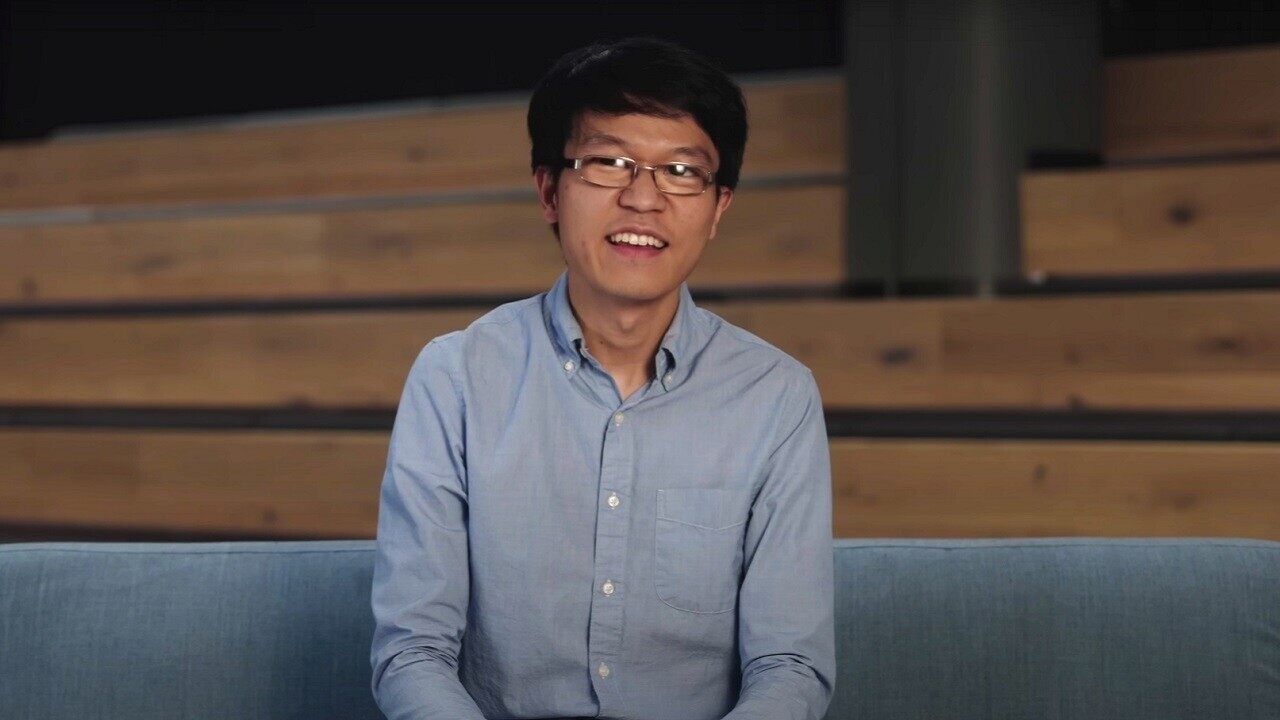
After an early social startup attempt with Lunchclub, Wu co-founded Cognition in 2023 with Steven Hao and Walden Yan and became the company’s CEO. In 2024, Cognition launched Devin, which Odaily described as the world’s first autonomous AI software engineer, capable of independently writing, debugging, and deploying complex code. The report said the product helped ignite the AI agent category.
Odaily said Cognition has completed several funding rounds. The latest came in September this year, when the company announced an E round of more than $2 billion led by Andreessen Horowitz, or a16z, and Accel, bringing its post-money valuation to $48 billion.
Jeff Yan: the one who moved into crypto
For the crypto industry, Jeff Yan is the most familiar figure in the photo. Odaily described him as a well-known legend in the sector and noted that he is two years older than the other two founders.
According to the report, Yan taught himself physics and calculus in high school, made the U.S. Physics Olympiad national team, and later won one silver and one gold medal at the International Physics Olympiad. He entered Harvard on a full scholarship, where he became close friends with Scott Wu.
During the winter of his junior year at Harvard, Yan and Wu were both selected for HRT’s first winter internship program. Odaily said the program had only 10 spots and ran for three weeks as an intense algorithm competition. In each internal round, Yan and Wu took the top two places.
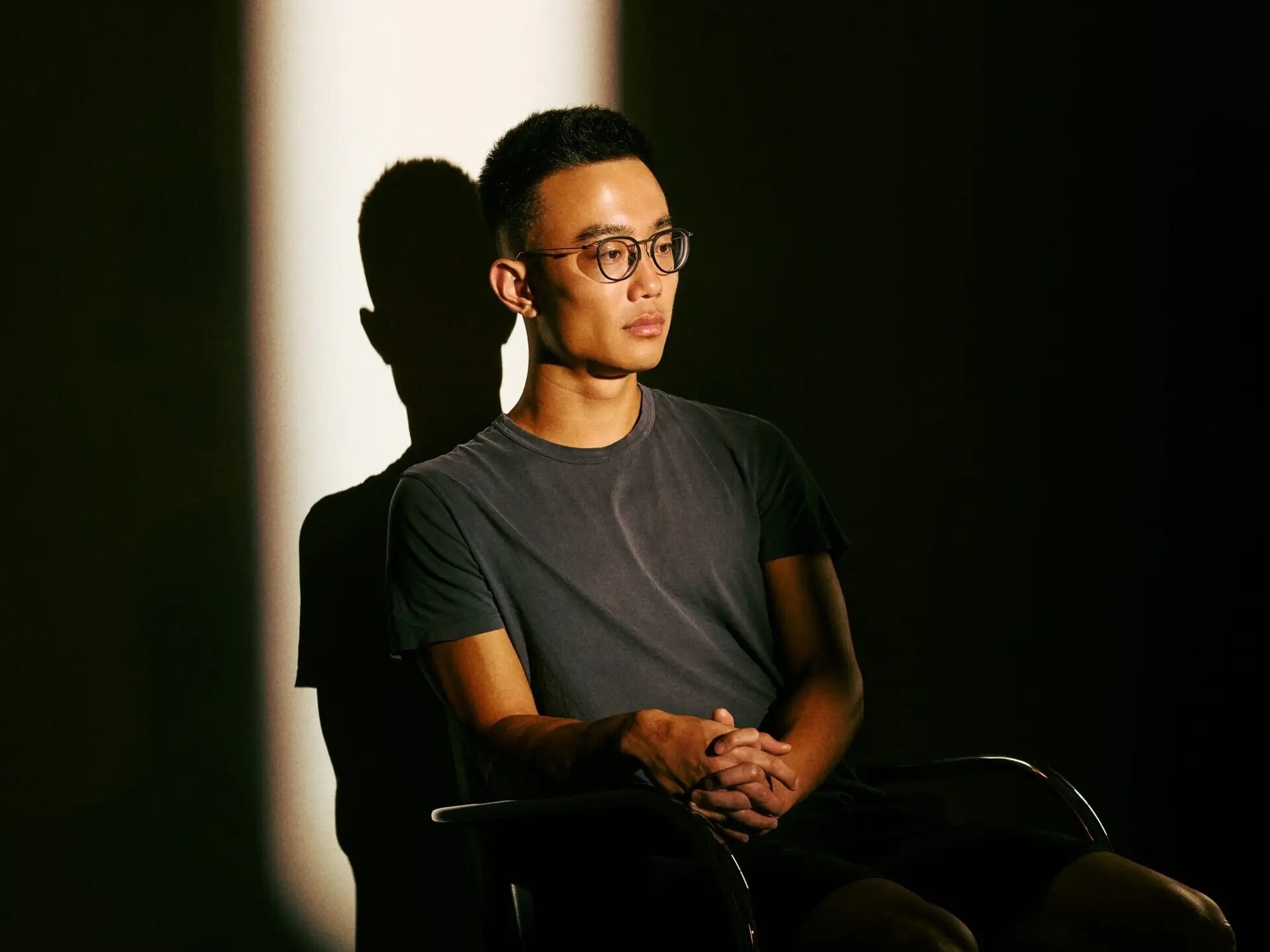
After completing both undergraduate and graduate studies at Harvard and spending a short period working full-time at HRT, Yan was drawn to Ethereum’s yellow paper and decided to use code to rebuild financial markets. At the end of 2019, he founded crypto quantitative market maker Chameleon Trading with $10,000 in initial capital. Odaily said the firm generated large profits in crypto within two and a half years, allowing Yan to reach full financial independence by age 27.
The report said the collapse of FTX at the end of 2022 pushed him into the next phase. He launched Hyperliquid with his own capital, took no money from venture capital firms, and built an onchain perpetual futures business on a self-developed Layer 1 with a team of just over 10 people. Odaily said that in 2025, the team generated more than $900 million in profit, while the large HYPE airdrop became one of the most prominent community wealth-creation stories in crypto.
A wider network beyond the photo
Odaily also pointed to a broader network behind the three founders, citing a Jeff Yan interview published earlier this year by Colossus. In that telling, the trio shown in the photo represents only a small part of a much larger circle. Some of those ties came from HRT’s first 10-person internship class, while others go back even earlier to high school Olympiad training camps.
The report listed several other members of that circle:
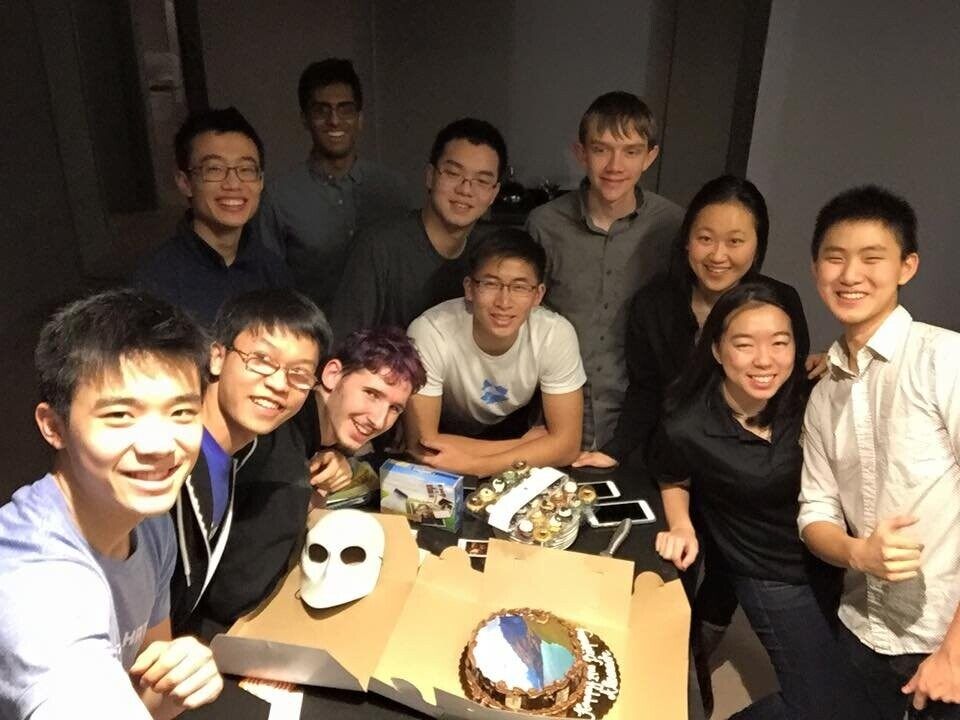
- Jesse Zhang, founder and CEO of Decagon. Born in 1997, he was another member of HRT’s 10-person internship group. Odaily said he made the U.S. Mathematical Olympiad training camp twice in high school and completed four years of Harvard coursework in three years. His AI customer service automation company Decagon, founded in 2023, reached a $4.5 billion valuation after a $250 million Series D in January this year.
- Johnny Ho, co-founder and CSO of Perplexity. A Harvard alumnus and a central figure in the Olympiad circle, he won three IOI gold medals and took first place globally with a perfect score in 2012, according to the report. He co-founded AI search engine Perplexity in 2022. Odaily said market rumors in August suggested Nvidia was considering an investment and that the company’s valuation had risen to $30 billion.
- Steven Hao, co-founder and CTO of Cognition. He graduated from MIT’s mathematics department and won an IOI gold medal. Odaily said he was an early core partner at Scale AI and later co-founded Cognition with Scott Wu, serving as CTO. The report said his personal net worth has already exceeded $1 billion.
- Demi Guo, co-founder and CEO of Pika. Born in Hangzhou in 1999 and raised in Silicon Valley, she won an IOI silver medal and is also a Harvard alumna. Odaily said she left a Stanford PhD program to found AI video generation startup Pika, which has reached a valuation in the hundreds of millions of dollars.
“Why can’t it be us?”
Near the end of the piece, Odaily drew a comparison with the “PayPal Mafia,” the network associated with figures such as Elon Musk, Peter Thiel, and Reid Hoffman. For years, Silicon Valley has looked for another founder circle with similar reach.
Odaily said that about a decade ago, before any of them had become widely known, Jeff Yan, Alexandr Wang, Scott Wu, and their peers were already discussing the PayPal Mafia while moving from high school Olympiad competitions into quantitative trading internships.
At the time, a 19-year-old Wang reportedly threw out a line to the group: “Why can’t it be us?”
Ten years later, when Wang raised his phone again and took the photo with Scott Wu and Jeff Yan, Odaily framed that question as something that had already been answered in practice. The report referred to the group as either the “HRT gang” or the “Olympiad gang,” arguing that even though its members now operate across AI and crypto, they remain linked by the same focus on intellectual intensity, engineering speed, and rebuilding core systems.