
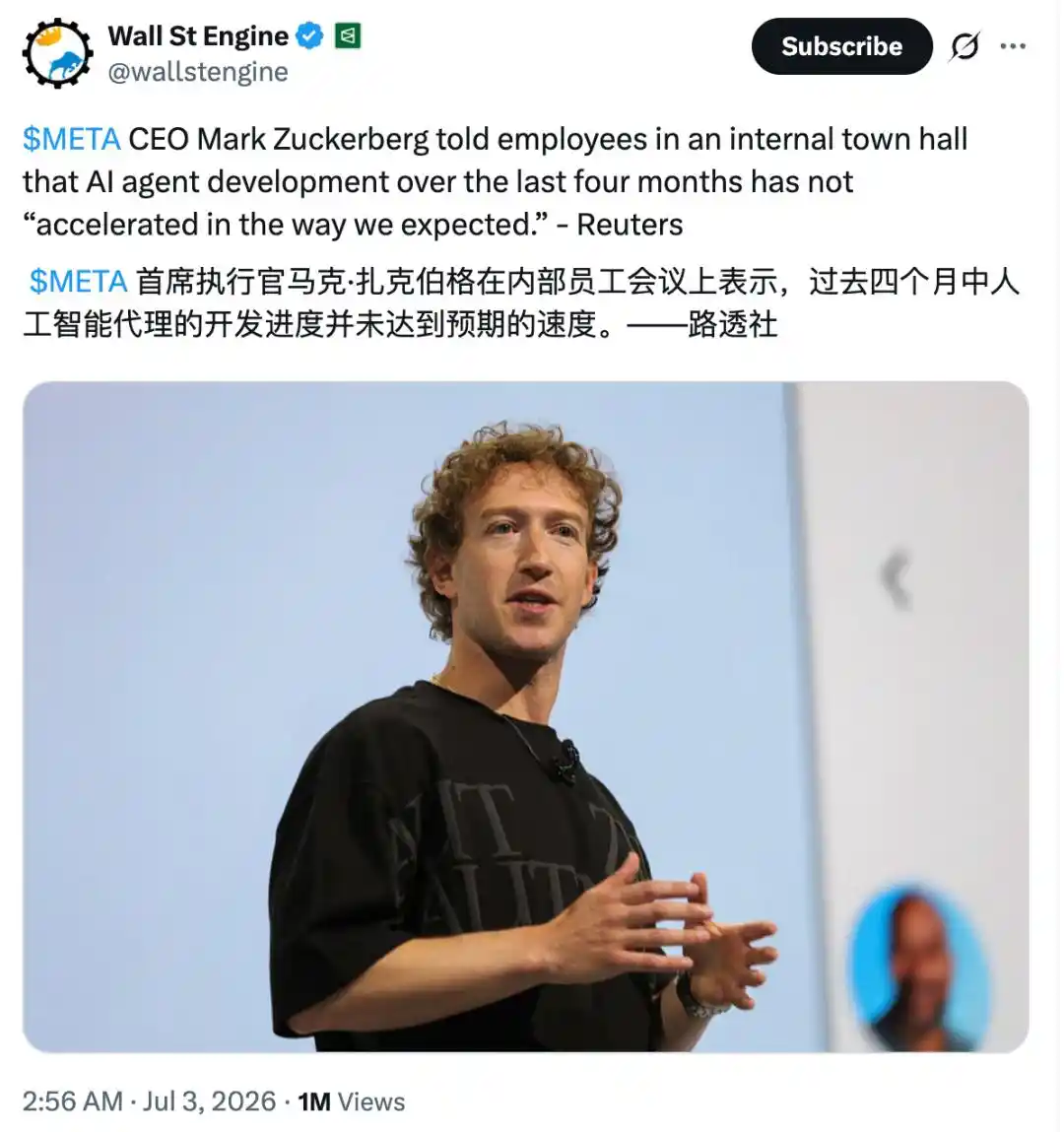
Meta is reportedly exploring a new AI infrastructure business called Meta Compute, a move that would open its large-scale compute platform to outside customers through GPU rentals, third-party model hosting, and model-as-a-service offerings. According to reporting from Bloomberg and SemiAnalysis, the company is looking for more direct ways to monetize its AI buildout as progress in proprietary model development has fallen short of broader market expectations.

The proposed strategy marks a notable shift in emphasis. Meta is still investing heavily in frontier AI models and internal AI agents, but the company now appears increasingly focused on turning its compute footprint into a standalone commercial product. That would place Meta not only in competition with model developers such as OpenAI, Anthropic, and Google, but also with AI cloud and infrastructure providers.
Meta’s compute footprint continues to expand
SemiAnalysis said Meta has not slowed its data center and compute procurement. In the first six months of this year alone, the company reportedly signed more than 5GW of cloud and colocation data center capacity. That figure excludes self-built campuses that are already moving forward. Two of Meta’s largest data center campuses currently under construction are said to represent another 2.5GW of capacity combined.
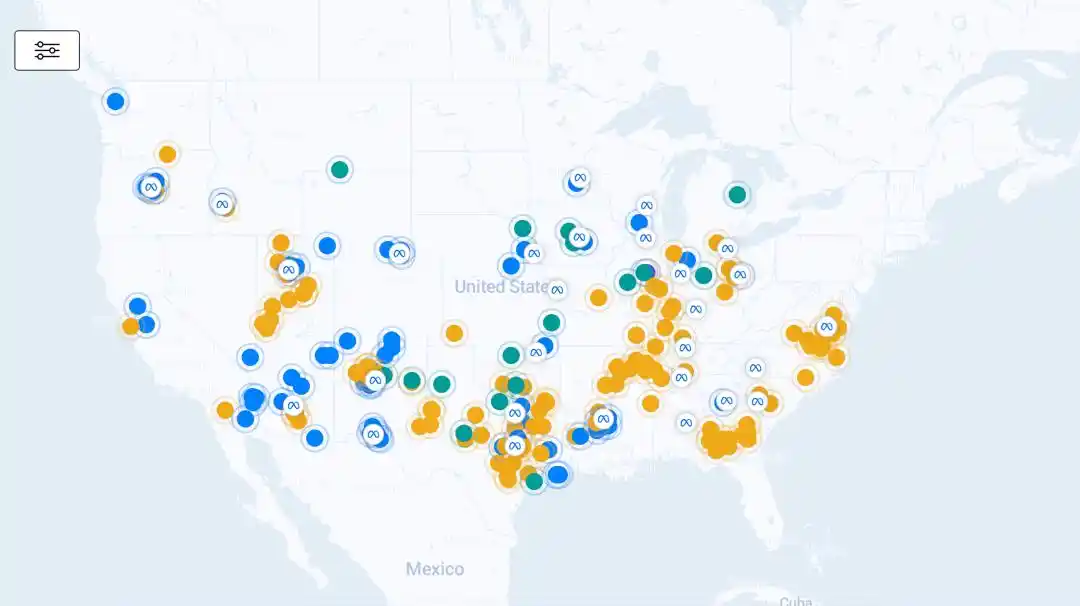
From the start of 2024, Meta’s signed data center and compute-related deals have reportedly approached 10GW. That scale gives the company meaningful flexibility in how it allocates resources. Part of the capacity will continue to support internal foundation model development, including Muse Spark and the next-generation Watermelon model now being trained internally.
Another major internal use case is advertising. SemiAnalysis believes Meta may want to increase the complexity of its ad recommendation systems by as much as 10x, using additional training and inference capacity to improve ad targeting and monetization. In that scenario, compute investment would not only support AI branding, but also feed directly into Meta’s core advertising business.
GPU rental could become a high-margin revenue stream
Beyond internal workloads, Meta is also said to be evaluating a neocloud-style model in which part of its compute capacity is leased to external customers at premium prices. SemiAnalysis referenced high-end compute leasing structures similar to those used by SpaceX, suggesting that annual revenue per 1GW could reach roughly $50 billion under certain contract assumptions.

On that basis, allocating just 200MW of capacity to third-party customers could theoretically translate into about $10 billion in annual revenue, with strong margins. One notable feature of this type of arrangement is contractual flexibility: some deals may run for three years on paper while allowing either side to cancel with 90 days’ notice. That structure would let Meta reclaim capacity for internal model training if priorities shift.
Such flexibility is strategically important. It means Meta would not necessarily be locking away its most valuable infrastructure for the long term. Instead, it could treat external leasing as a monetization layer on top of a compute base that remains available for internal AI programs when needed.
Claude hosting and platform services are also under discussion
SemiAnalysis further reported that Meta is in final-stage talks with Anthropic to secure access to private instances of Claude. If an agreement is reached, Meta could move beyond simple GPU leasing and begin offering hosted third-party frontier models on its own infrastructure. That would resemble the platform approach taken by Amazon Bedrock, Microsoft Foundry, and Google Vertex.

For Meta, this model has several advantages. First, it could support internal use. The report said Google recently restricted Meta’s use of Gemini, making Claude a potential substitute for internal teams that require access to high-quality model tokens. Second, it could be sold externally as a managed service, allowing enterprise customers to access Claude through Meta’s platform without separately handling contracting, deployment, or operations.
Third, Meta could extend those capabilities into vertical software. By combining hosted frontier models with its ad platform and distribution reach, the company may be able to build AI agent products for sales and marketing workflows. SemiAnalysis expects Meta could announce similar agreements soon, with Anthropic as the leading candidate, while OpenAI or Google could also become future partners.
Rising AI spending increases pressure to monetize infrastructure
The backdrop to the Meta Compute discussion is the sheer cost of frontier AI development. Meta has raised its 2026 capital expenditure guidance to $125 billion to $145 billion. For comparison, first-quarter capex this year already reached $19.84 billion. While the Llama family has had major influence in the open-source ecosystem, its direct monetization has been more limited than the market once hoped.

Muse Spark, Meta’s latest in-house model effort mentioned in the report, has also not yet restored the company to the front rank of commercial model leaders. Meanwhile, Watermelon, the next-generation model now being trained internally, is said to require an order of magnitude more compute than Avocado. Meta has indicated that Muse Spark will receive updates focused on coding and agent capabilities, underscoring that the company is still pursuing its original model roadmap.
Even so, investors often find infrastructure easier to value than unproven model leadership. GPUs, data centers, hosted APIs, and managed model platforms can all be priced, contracted, and benchmarked. In that sense, monetizing compute gives Meta a more immediate story to tell the market, even if its broader ambition to catch up with OpenAI, Anthropic, and Google remains intact.
Market reaction highlights the strategic shift
The market reacted quickly to the reports. Meta shares rose nearly 9%, while neocloud names such as CoreWeave and Nebius came under selling pressure. The reaction suggests investors see Meta’s infrastructure push as potentially credible and disruptive, especially given the company’s scale in data center procurement and its ability to combine AI services with an existing advertising engine.

For now, the company does not appear to be abandoning its internal model ambitions. Rather, Meta seems to be adding a second path: if frontier model leadership takes longer to achieve, its GPU fleet and data center footprint do not have to remain a pure cost center. They can be rented, packaged into hosted model services, deployed into ad systems, or used to support future AI agent software.
If Meta Compute materializes as described, Meta would be evolving from a company primarily trying to build top-tier models into one that also sells the infrastructure underneath the AI stack. That would broaden its addressable market and potentially reshape competitive dynamics across both the model and AI cloud sectors.