
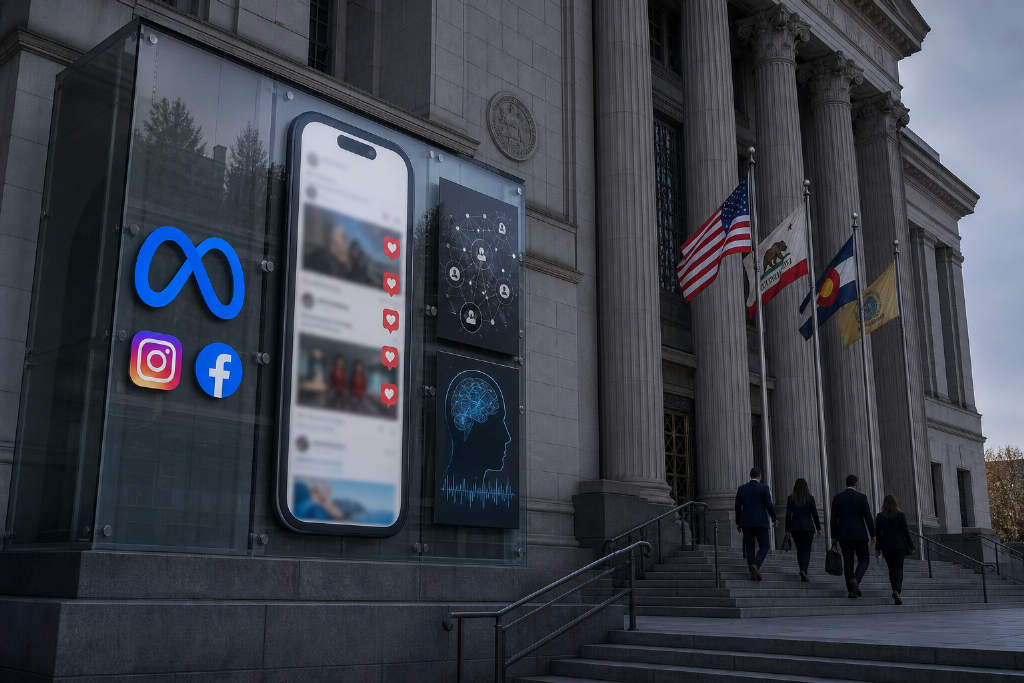
Meta is facing a U.S. courtroom fight that puts recommendation engines, infinite scroll, and like-based feedback loops at the center of the case. Using the states’ theory of liability, the penalty could reach a headline figure of $1.4 trillion.
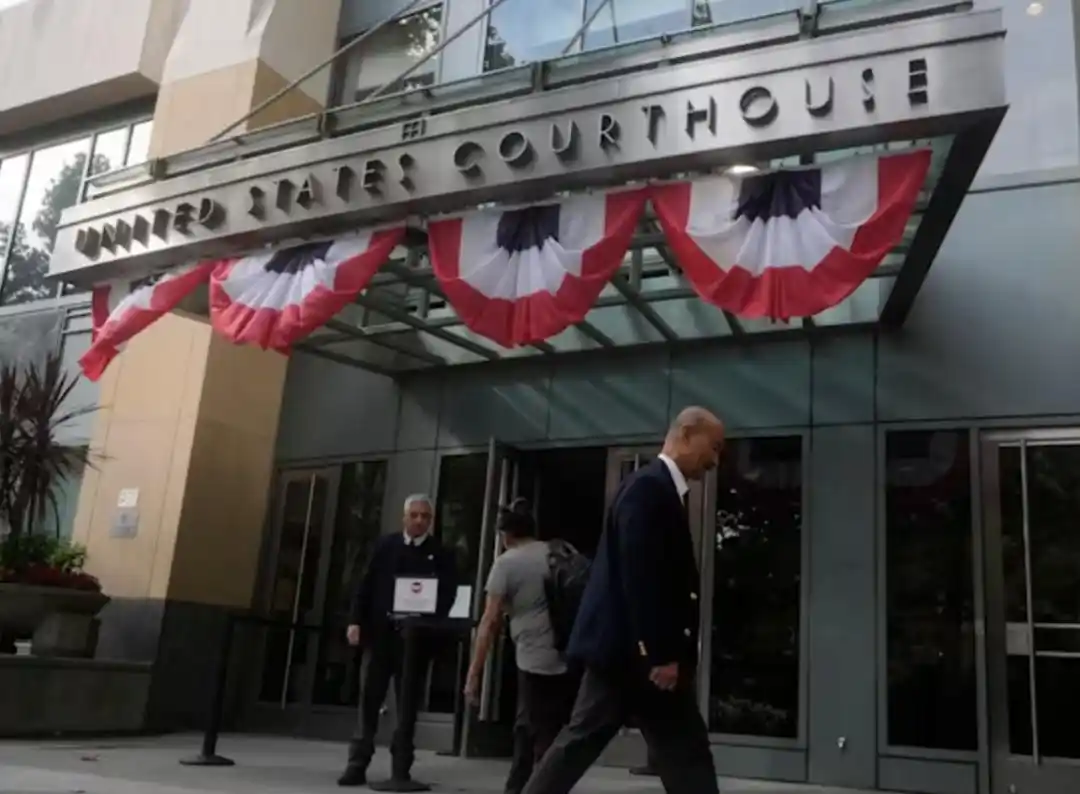
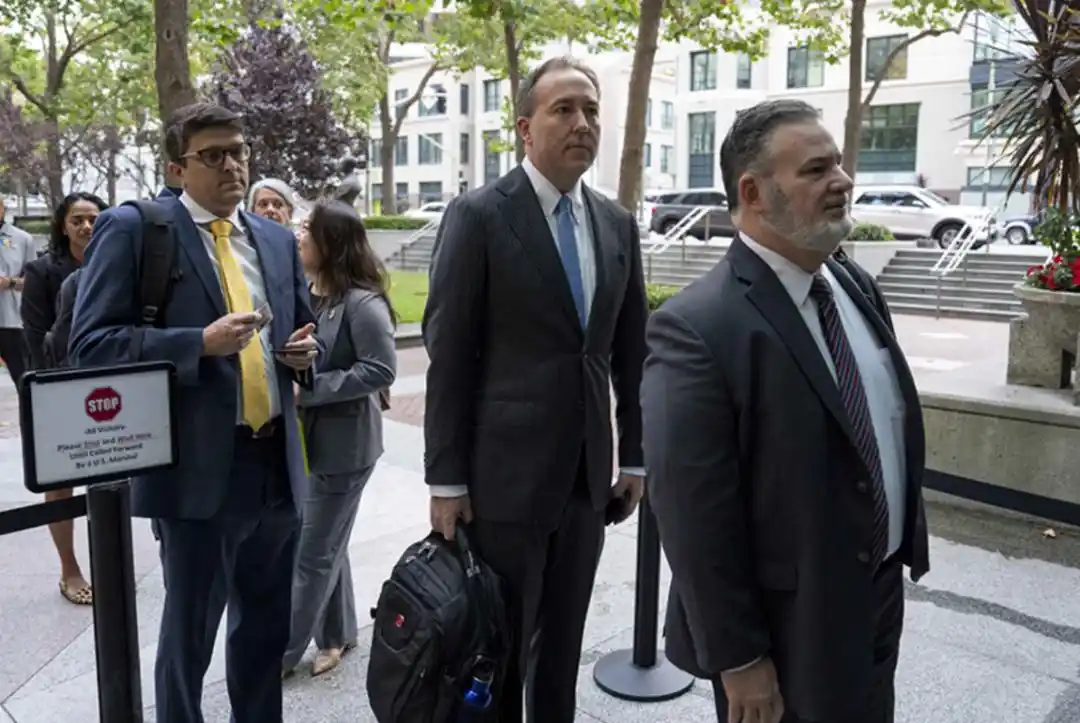
The lawsuit was filed in 2023 by a bipartisan coalition of 29 state attorneys general. On Aug. 18, California, Colorado, Kentucky, and New Jersey became the first four states to go to trial in federal court in Oakland, California. The trial is expected to last six weeks.
The claims target platform safety, youth addiction features, and children’s data collection
The states’ case has two layers.
- First, under consumer protection laws, they accuse Meta of misleading the public about platform safety and of building features into Instagram and Facebook that encourage compulsive use among children and teenagers.
- Second, under the Children’s Online Privacy Protection Act, or COPPA, they accuse Meta of collecting data from children under 13 for years without parental consent.
According to expert analysis cited by the states, about 4.6 million children under 13 used Instagram during the review period, and another 3.9 million used Facebook.
In opening statements, California Deputy Attorney General Megan O’Neill described Meta’s business model as a four-step process: hook users, keep them on the platform as long as possible, harvest data, and then hide the truth from the public. She also introduced an internal email sent to Instagram head Adam Mosseri that said “teen time spent” was the goal. According to the source material, some employees privately referred to Instagram as “drugs” and called themselves “drug dealers.”
Meta answered in direct terms. A spokesperson said the states’ allegations “lack substantial evidence” and called the penalty calculations excessive, arguing that the same teen users were counted more than once to inflate the number into the trillion-dollar range. Meta’s lawyers also argued that “social media addiction” has not been formally recognized by the medical community as a mental disorder, so statements that the platform is not addictive cannot be treated as false on that basis.
Chief Executive Officer Mark Zuckerberg and Instagram head Mosseri are both expected to testify.
The legal strategy goes after product design and tries to get around Section 230
The most important legal move in the case is the states’ decision not to center their claims on harmful third-party content posted by users. Instead, they are aiming at Meta’s own product design.
For roughly three decades, platforms have relied on Section 230 of the Communications Decency Act as a shield against liability for third-party user content. In this case, the states changed course. They focused on how recommendation algorithms distribute content, how infinite scrolling extends time spent, and how likes create social feedback loops.
That distinction remains heavily disputed in legal academia. Eric Goldman of Santa Clara University School of Law said separating “content” from “the way content is presented” is little more than wordplay. In his view, content editing and distribution are fundamentally the same thing. He compared Meta’s algorithmic ranking to a newspaper deciding headline size and photo placement, conduct he says falls under editorial freedom protected by the First Amendment.
Judge Yvonne Gonzalez Rogers did not accept that argument, allowing the case to proceed to trial. The source also notes that in April this year, the Massachusetts Supreme Judicial Court ruled in a similar case that claims aimed at a platform’s own design are not blocked by Section 230.
The states’ list of requested remedies goes well beyond money. They want likes removed, infinite scroll cut back, age restrictions imposed, and limits placed on usage time. The target is the product’s underlying interaction model, not just Meta’s balance sheet.
How the $1.4 trillion figure was built
The number comes from a formula described in court: alleged violations multiplied by the penalty allowed per violation under state law.
The alleged violation count is tied to estimates of affected youth users. Millions of users multiplied by multiple violations, then multiplied again by penalties of several thousand dollars per violation, produced the trillion-dollar total.
Meta pushed back in pretrial filings, saying a penalty on that scale would have “no precedent in the history of consumer protection enforcement.”

At the same time, public information shows the states themselves are not necessarily expecting to recover that full amount. During hearings, they said the actual figure could be closer to $200 billion, roughly equal to about three years of Meta’s after-tax profit.
The eight-person jury in this case serves in an advisory capacity. Liability findings and final remedies will be decided by Judge Rogers, and an appeals court could still reduce the outcome later.
Other cases have started to test similar theories
The source points to two recent reference cases.
In New Mexico, a jury ruled in March that Meta violated the state’s consumer protection law 75,000 times. At the maximum $5,000 per violation, that produced a $375 million penalty. A judge then found that the platform also constituted a public nuisance and added a $567 million youth mental health remediation fund, bringing the total to $942 million. Meta is appealing.
During the same period, a jury in Los Angeles found Meta and YouTube negligent in another benchmark case and awarded $6 million in damages. The amount was relatively small, but the source says the theory of “harmful platform design plus inadequate warning” cleared a jury for the first time.
The spillover could extend beyond social media
The larger impact may not be the final dollar amount.
According to the source, TikTok, YouTube, and Snapchat are all facing similar lawsuits, and TikTok has already settled before trial. If the four states win in Oakland, other plaintiffs across the U.S. would gain a court-tested template showing how to bypass Section 230, how to build evidence around internal company documents, and how to calculate penalties.

The same logic is already being tested in lawsuits involving generative AI, video games, and social games. Any product that depends on algorithmic distribution and time-spent design to retain users could fall within range.
The source also argues that for Chinese internet platforms expanding overseas and relying on recommendation algorithms, the trial serves as a free compliance stress test.
State attorneys general also hold different legal tools from ordinary private plaintiffs. They can sue under COPPA and seek compulsory remedies that cover millions of users. That means even if any fine is reduced later, a court could still end up rewriting product rules directly.
What to watch over the next six weeks
Three points stand out over the coming six weeks: the testimony of Zuckerberg and Mosseri, how many items survive from the states’ list of about 130 alleged misleading statements, and how Judge Rogers ultimately defines liability for platform design itself.
Based on the public record cited in the source, the $1.4 trillion figure looks more like an anchor in negotiations than an amount many expect to be collected in full. Goldman framed the stakes in broader terms: “What’s on trial in Oakland now is the entire internet ecosystem.”
The original article cited by MarsBit was from the WeChat public account “AI唱反调,” written by Bai Ke.