
Meta has taken another step in building out Muse, its personal AI agent, by launching Muse Gadgets, an open-source project aimed at custom hardware.
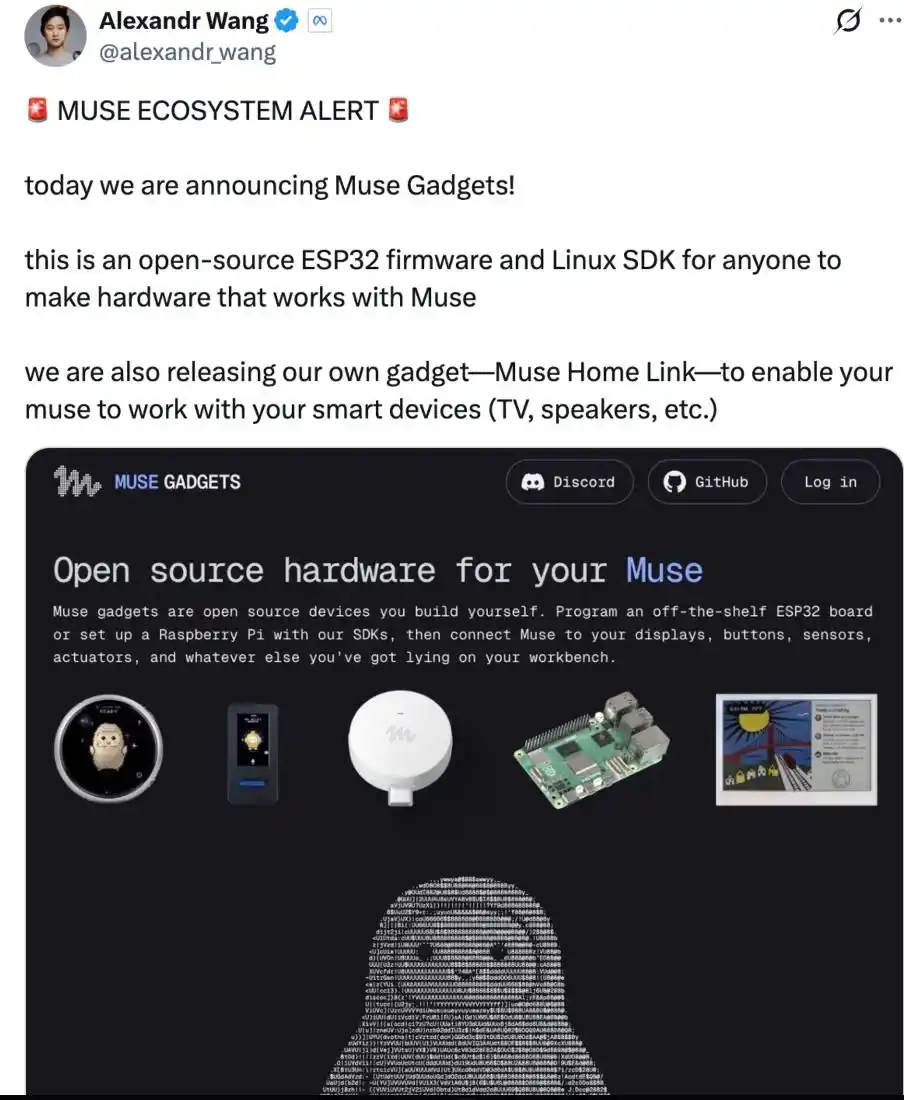
Muse was introduced as an AI assistant built to carry out tasks rather than act as a standard chatbot. Meta says it can handle email, shopping, trip planning, and some ongoing background operations. With Muse Gadgets, the company is now opening the hardware layer to developers and makers who want to build dedicated peripherals around that agent experience.
Developers can run Muse on ESP32 and Linux-based devices
According to Meta, developers can use ESP32 development boards to run Muse firmware, or use a Linux SDK to connect more advanced hardware. In practice, that means Muse interaction logic can be deployed on low-cost microcontrollers, while a Muse client can also run on more capable edge devices such as Raspberry Pi 5.
Meta listed several example form factors for DIY builds:
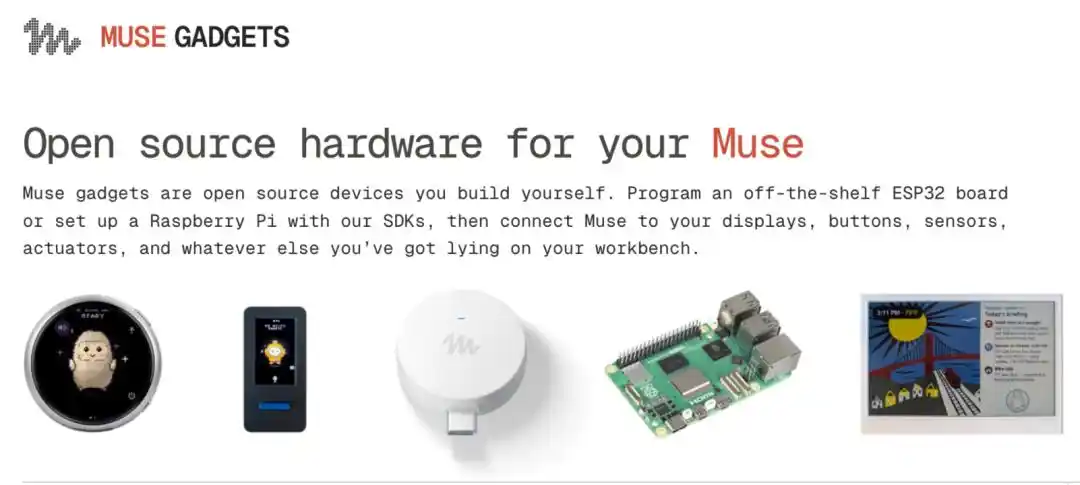
- Color E Ink displays that work as low-power desktop reminder panels or smart boards showing Muse-synced schedules and to-do lists.
- HDMI display sticks or large-screen extensions that project the Muse agent interface or interactions onto a TV or external monitor.
- Handheld touch accessories that function like a self-built Muse Charm, giving users a portable way to talk with the agent without wearing smart glasses.
How developers can get started
Meta also outlined a basic setup path for developers who want to begin building right away.
- Get credentials by visiting gadgets.muse.ai to register and claim a personal API token.
- Connect development tools by importing the official GitHub repository into AI coding agents such as Claude Code, Cursor, or GitHub Copilot CLI, then use agentic coding workflows to understand the protocol and generate driver code.
- Flash and debug the firmware by loading code onto an ESP32 board or running the SDK client on Linux or Raspberry Pi hardware, which enables a real-time two-way connection between the device and Muse.
Meta also introduced Muse Home Link
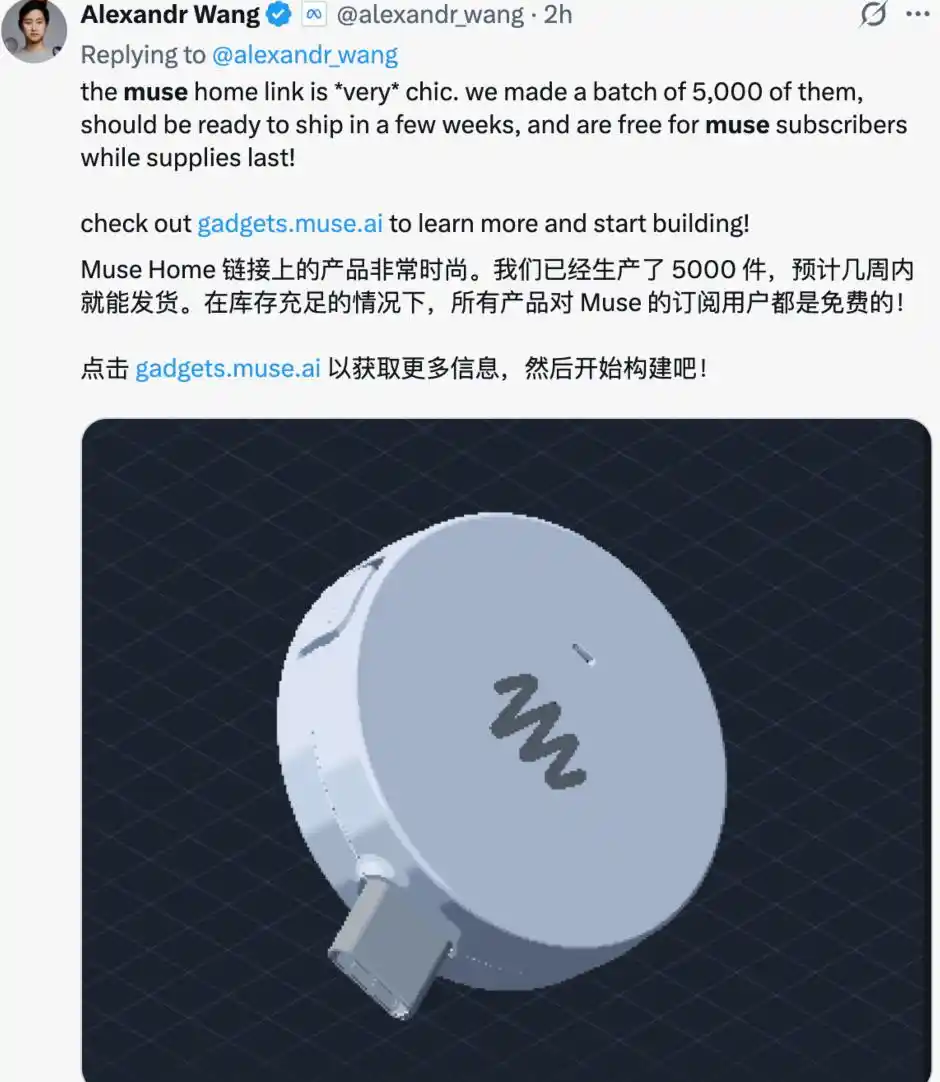
Alongside the open-source release, Meta unveiled Muse Home Link, an official device powered through USB-C. The product is designed to connect Muse to a home network so it can communicate with smart home devices, including TVs, speakers, and any hardware that supports HTTPS interfaces.
Meta said an initial batch of 5,000 units has already entered pilot production. Shipments are expected to begin within a few weeks. While inventory remains available, eligible Muse subscribers will be able to receive the device for free.
Alexandr Wang says the goal is to unlock developer creativity
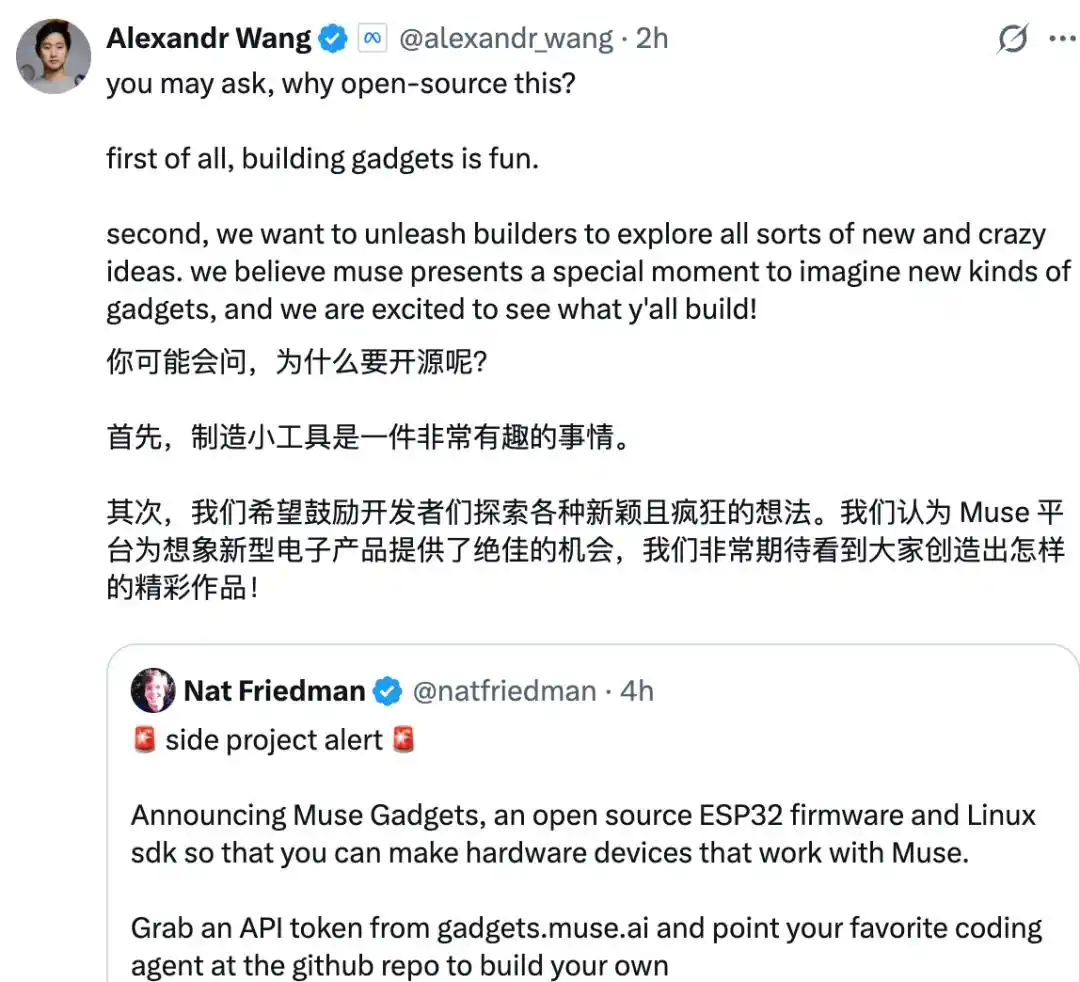
Addressing the decision to open-source the project, Alexandr Wang said: 「First, building all kinds of little gadgets is fun in itself.
Second, we want to unlock developers’ creativity and let people explore all kinds of new, even wild ideas. We believe Muse is at a special moment, one that creates endless possibilities for new hardware devices, and we’re very excited to see what people end up building.」
That framing suggests Meta wants Muse to operate not only as a company product, but also as a platform that others can extend.
Early developer projects are already appearing
The release quickly drew attention online, and some users have already shown working Muse-based devices.
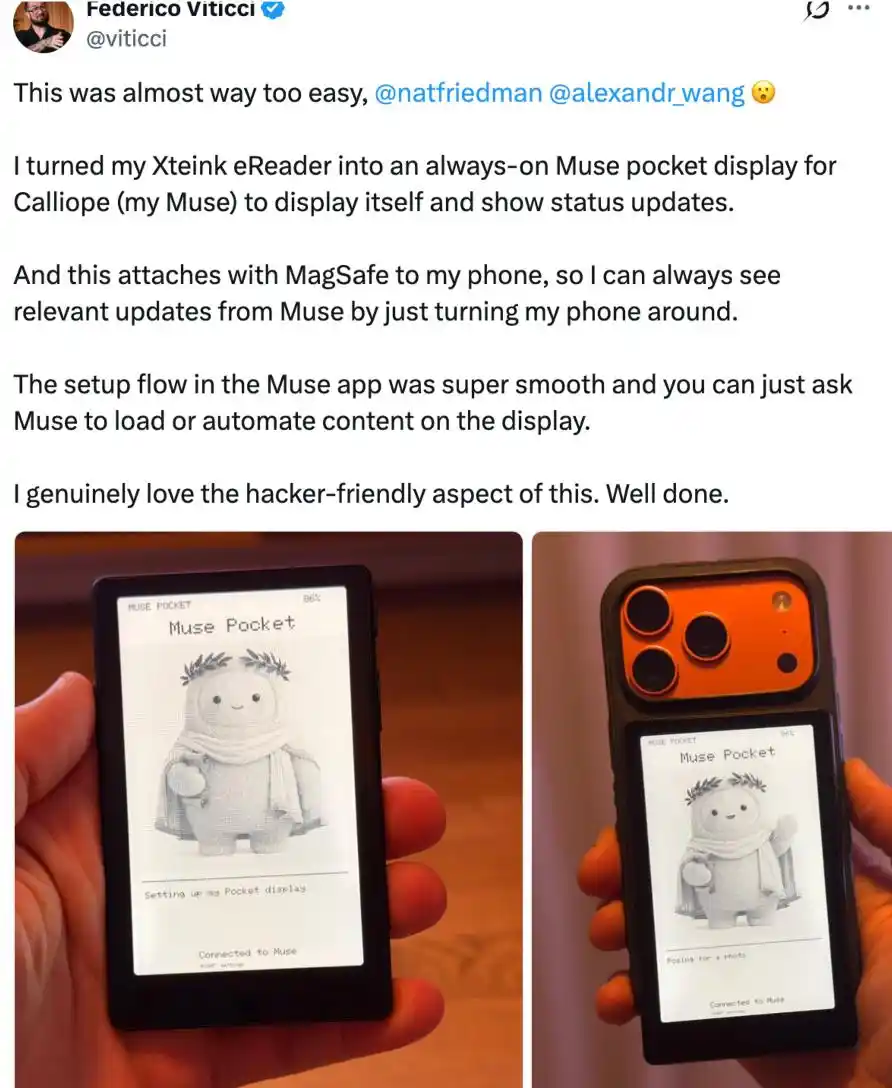
Federico Viticci (@viticci) said he turned his Xteink E Ink reader into an always-on portable Muse display. On that screen, Muse, identified as Calliope, can show its visual avatar and status updates. The device can also attach magnetically to the back of his phone through MagSafe, allowing him to flip the phone over and check Muse updates at any time.
He wrote: 「The setup flow in the Muse app is very smooth. You can even have Muse load content directly or automate what appears on the display. I really like this design philosophy that feels friendly to hackers and developers.」
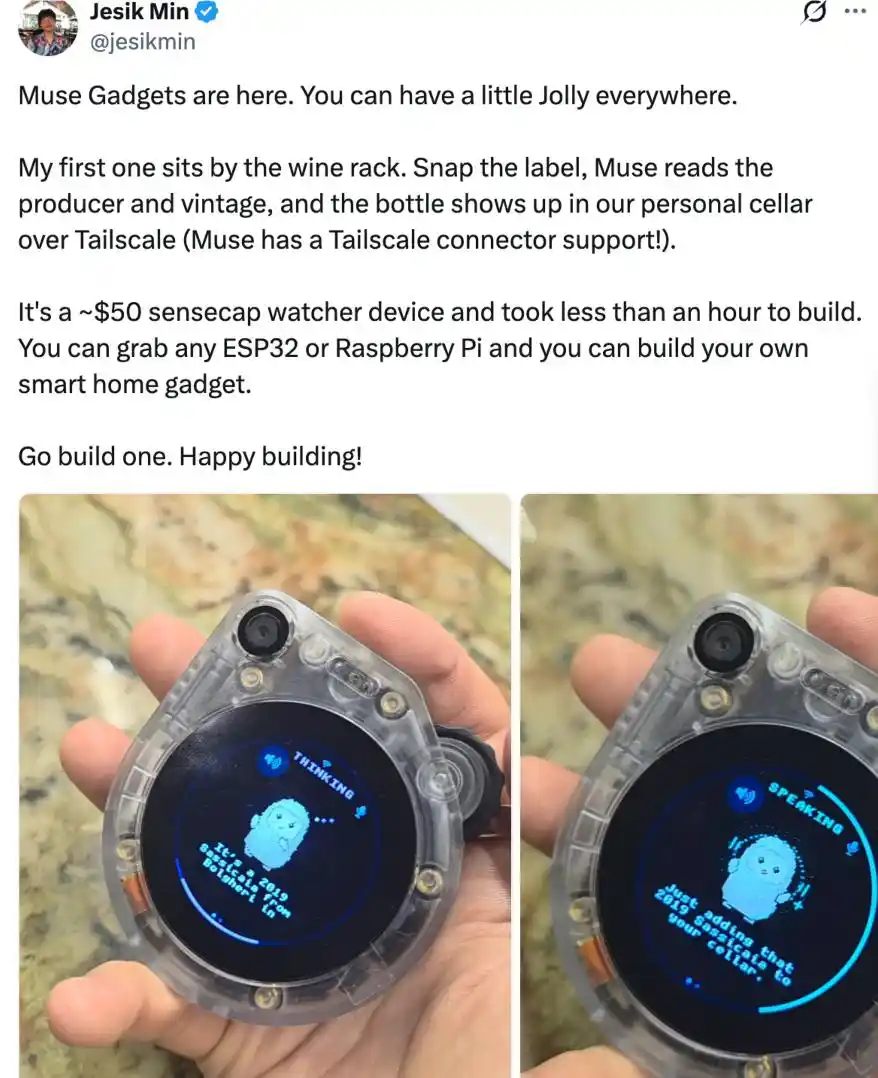
Another developer used a roughly $50 SenseCAP Watcher device to build hardware connected to a personal wine cellar. After a user photographs a wine label, Muse can identify the winery and vintage, then sync that information into a personal cellar system through a Tailscale connector. The article said the full build took less than an hour from setup to operation.
A different route for AI hardware
The article points to a broader shift in how AI hardware may develop. In the past, the pattern was usually straightforward: a company designed hardware, users bought the device, and developers built applications on top of it. AI agents may push that model in another direction, where companies provide the model and agent capabilities, and developers create the hardware forms.
It also notes that the industry has already spent time exploring AI hardware through products such as AI Pin, which tried to replace the smartphone as the main entry point. Many of those products ran into limits tied to functionality and interaction design. The newer approach appears different: build a stronger AI agent first, then let it spread across multiple kinds of hardware.
That is the route Meta appears to be taking. Muse handles the intelligence layer, while developers build the physical endpoints. If that model holds, Muse could show up on smartphones, smart glasses, home devices, and entirely new hardware created by outside developers.
Reference links cited in the source include Alexandr Wang’s post on X, a report from The Verge, gadgets.muse.ai, and Federico Viticci’s post on X. The original Chinese article said it came from the WeChat account Jiqizhixin (ID: almosthuman2014), authored by 「关注AI的」.