
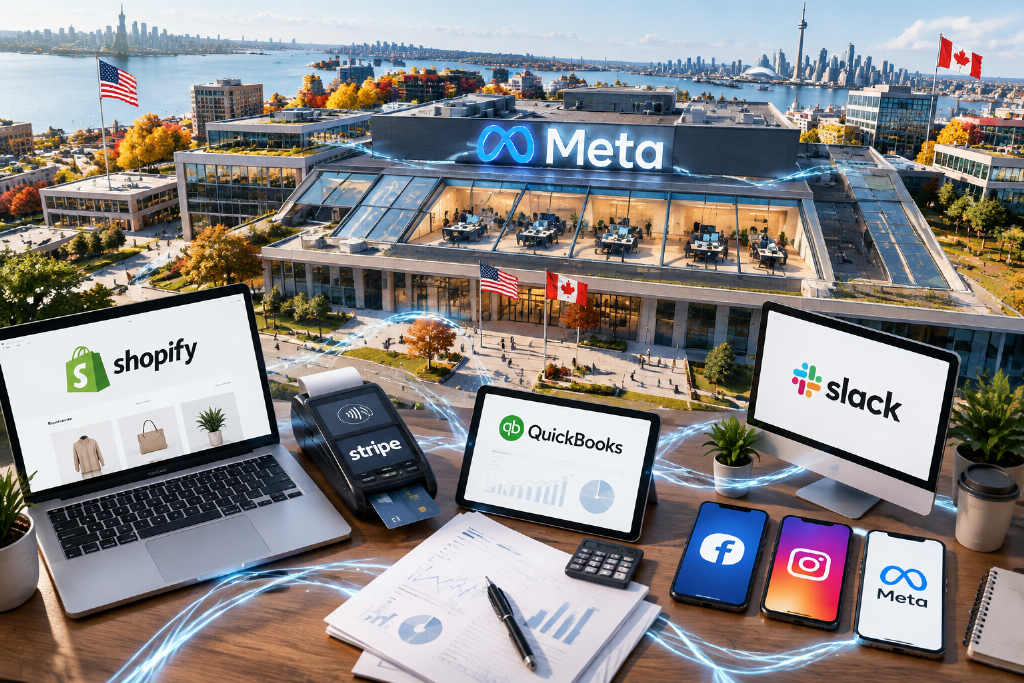
Meta is taking its breakout AI agent Muse into the business market. On Sept. 29, the company introduced Muse for Small Business, a version aimed at small business owners that can connect with Shopify, Stripe, QuickBooks, Slack and 11 other commonly used tools, as well as Facebook business assets, Instagram professional accounts, and Meta ad accounts.
The product is designed to let the AI agent help with sales analysis, expense checks, ad drafting, and customer replies. Pricing is unchanged from the existing Muse offering: core features are free with usage caps, and users who need more capacity can move to a paid subscription.
Muse connects with 15 tools and supports custom integrations
According to Meta’s official announcement, Muse for Small Business currently supports Asana, Box, Canva, Dropbox, Figma, Granola, HighLevel, Intuit QuickBooks, Klaviyo, Lovable, Notion, Shopify, Slack, Stripe, and Zoom. Meta said more connectors will be added later, and custom connections are also supported.
Meta said the main distinction lies in access to its own platform data. Business owners can connect Instagram professional account data, Facebook Pages, and Meta ad accounts in a few steps, allowing Muse to become familiar with the business — what it sells, the brand’s tone of voice, and the questions customers ask most often.
Meta outlined several use cases
Meta said small businesses can use the system to:
- Analyze this year’s sales, marketing campaigns, and social performance, then draft a growth plan for next year
- Pull the most urgent tasks from email, calendars, and news
- Review ad and content performance, then draft new marketing campaigns
- Check monthly financial performance and spot expenses that look unusual
In the announcement, Meta wrote: 「Small businesses have grown on our apps for nearly two decades. They tell us what they lack is time, not ideas.」
User approval is required before posts, emails, or spending
Once an AI agent is given access to ad accounts and financial data, permissions become a central issue. Meta said clearly in the announcement: 「Nothing will be published, sent, or spend any money without your permission.」
That pledge comes with context. After Muse launched, it drew a series of controversies. Chain News had previously reported that Muse accessed users’ private messages and gave an incorrect explanation of how that access was obtained. Amazon also blocked Muse, citing unauthorized access. As Muse moves into business use, whether owners trust it with ad budgets and bookkeeping will shape how widely the service is adopted.
Muse for Small Business is currently available in the United States and Canada.
Meta moves deeper into enterprise AI
The launch came one day after Meta announced a dedicated enterprise AI platform. According to CNBC, that platform will include Muse agents, business agents, and coding tools. Meta also recruited MongoDB CEO CJ Desai to lead it.
Meta chose to unveil the small-business version on the same day OpenAI is holding its DevDay developer conference, a timing that has been seen as another sign the company is preparing to compete head-on with OpenAI and Anthropic in the enterprise market.
Meta’s installed base and ad business remain key advantages
One of Meta’s biggest assets is its existing user base. The company said Facebook has 200 million small businesses on the platform. CNBC reported that after Muse launched on Sept. 8, it briefly climbed to the top of Apple’s App Store rankings, ahead of ChatGPT. Meta’s stock rose 25% in September, though it has pulled back over the last two trading days.
Evercore analyst Mark Mahaney estimated that Muse could reach 100 million users within six to 12 months.
For years, nearly all of Meta’s revenue has come from digital advertising. At last week’s Meta Connect event, Mark Zuckerberg called Muse the 「core」 of the company’s AI strategy. Alexandr Wang, who oversees Meta AI operations, also laid out Muse’s vision. Now Muse is moving from a personal assistant product into a tool that works on behalf of small businesses, while tying even more closely into Meta’s ad business: the AI that helps companies analyze and draft ads operates inside Meta’s own advertising platform.