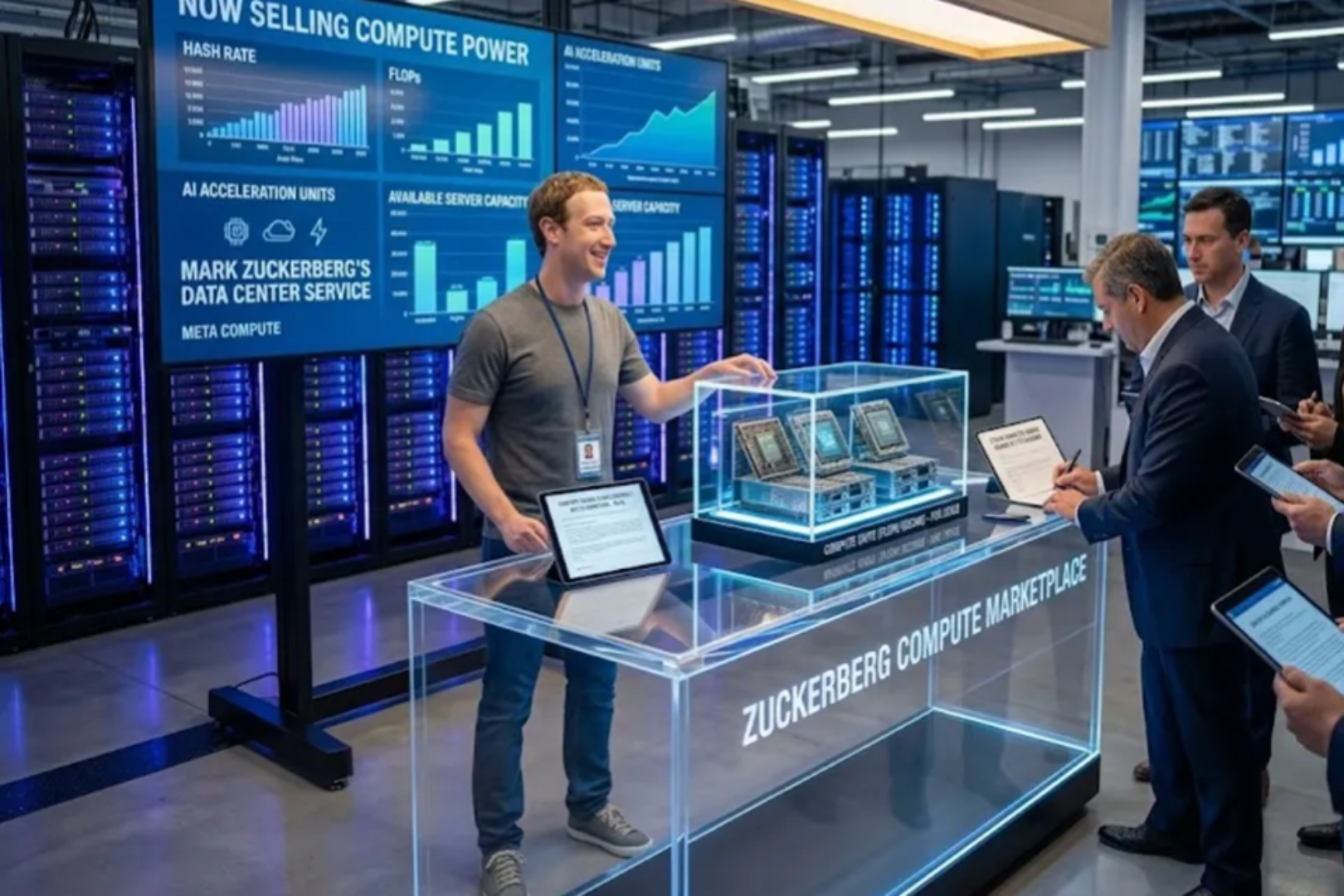
News that Meta is considering selling its excess AI compute capacity triggered sharp selloffs in U.S. equities, cracking the core narrative that has supported AI rallies for two years: infinite capital expenditure growth. But a closer look at the data and statements from industry players reveals not a simple 'oversupply' of compute, but a structural shift in the AI value chain—where keeping machines fully utilized becomes the new scarce asset.
Meta Selling Compute: From Superintelligence to Selling Electricity
Meta has never been a cloud provider. It buys chips and builds data centers for its own models, ad systems, and Zuckerberg's vision of superintelligence. But reports indicate Meta is exploring an internal initiative called 'Meta Compute,' which could sell raw compute or offer models on its infrastructure like Amazon Bedrock. Zuckerberg told shareholders that outside companies ask weekly to buy API services or compute, often at prices above Meta's cost. He added they haven't done so yet because Meta thinks it still needs that compute. The question: if needed, selling is optional; if not needed, selling becomes a painkiller for the balance sheet. Meta's pivot doesn't prove oversupply, but it forces the market to ask: can trillion-dollar AI spending be sustained solely by the promise of distant superintelligence?
Cloud Providers Keep Raising Prices; Model Companies Face Compute Misallocation
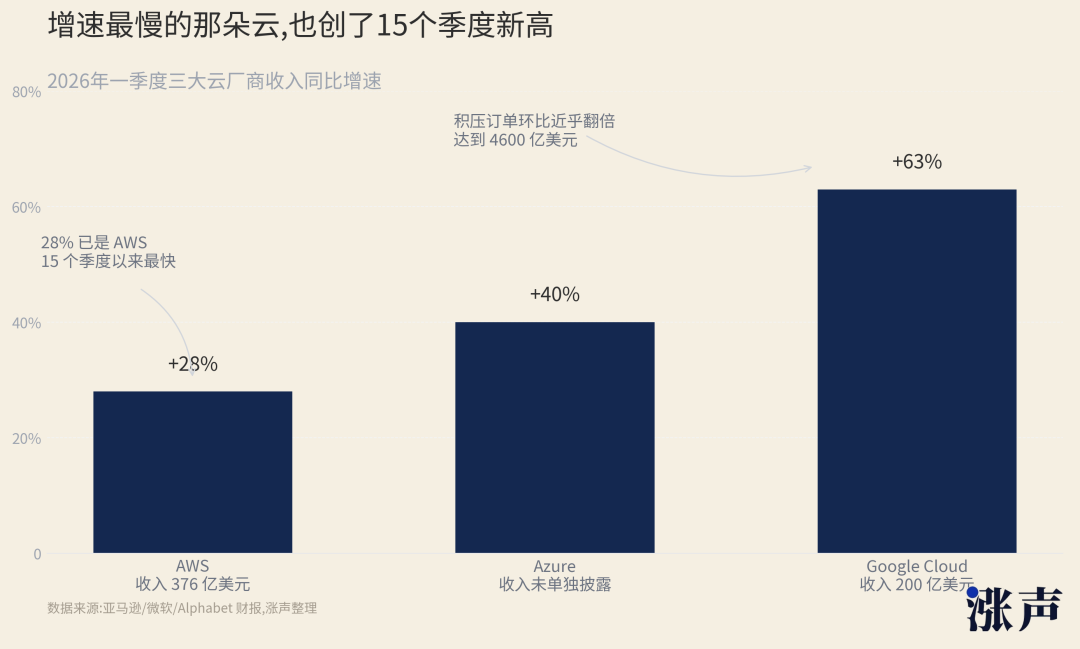
Capital expenditure hasn't collapsed. AWS Q1 revenue grew 28% to $37.6 billion, Google Cloud hit $20 billion with faster growth, and Microsoft Azure maintained ~40% growth. Amazon expects 2025 capex to reach $200 billion, Alphabet raised its 2026 guidance to $180-190 billion, and Meta lifted its 2025 outlook to $125-145 billion. These numbers don't scream demand collapse—rather a split. Cloud providers sell certainty: guaranteed GPU access and stable data centers. AWS raised prices for its GPU reservation service by 20% in late June (after a 15% hike in January)—a sign of strong demand. But model companies face a different reality. xAI's compute has flowed to Anthropic because machines don't care about founders; they only care about utilization. Google even restricted Meta's access to Gemini because the requested capacity exceeded Google's ability to supply. One company considering selling compute while buying top-tier model capacity it can't get isn't a sign of oversupply—it's a sign of misallocation.

Enterprise Awakening: Tokens Become Electricity Meters, Open-Source Models Become Bargaining Tools
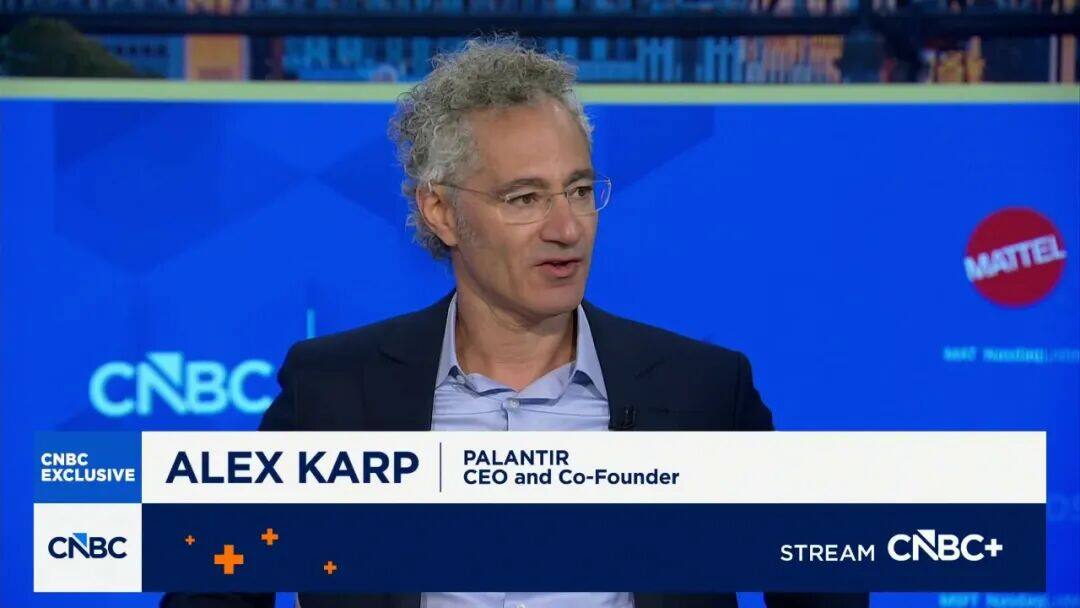
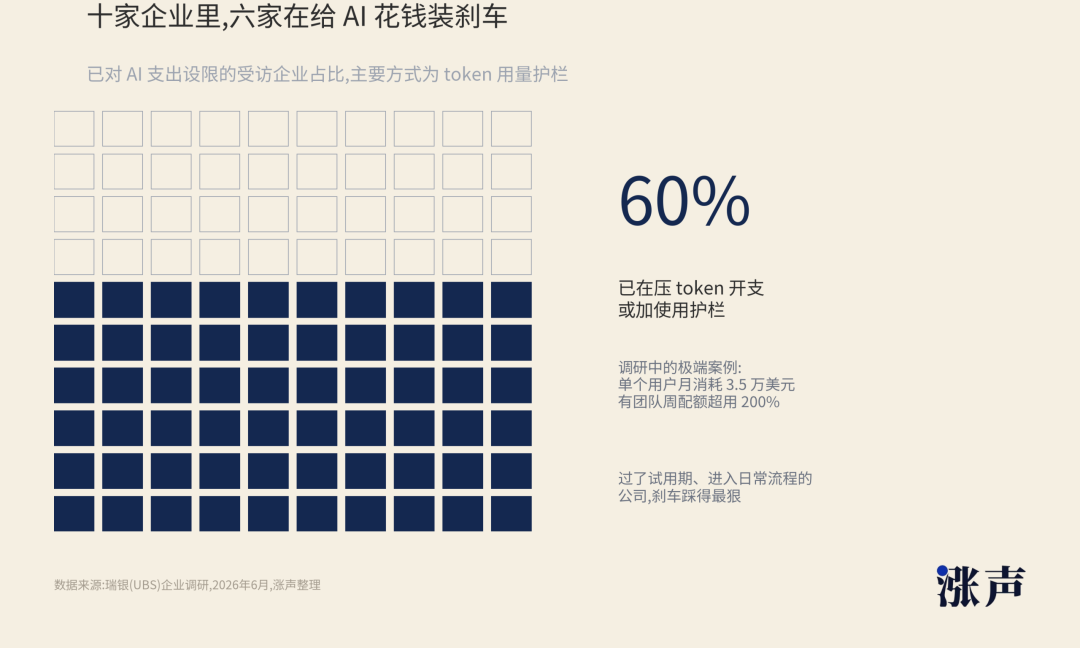
Palantir CEO Alex Karp went on CNBC to call out the token billing model of OpenAI and Anthropic, saying CEOs privately complain they're 'paying for tokens that create no value while handing over their data.' A UBS survey found ~60% of enterprise IT leaders are capping token spending and adding usage guardrails. As AI shifts from toy to tool, CFOs are asking: did these tokens save labor, drive revenue, or reduce risk?
A Codex study by OpenAI and universities found that agentic coding tasks consume up to 1000x more tokens than normal code chat, with variance between runs of up to 30x. Tokens have become an electricity meter. The next step for a CFO: decide which tasks require frontier models and which only need 'good enough' models. This is where open-source models like GLM-5.2, Kimi 2.7, and DeepSeek become bargaining tools on enterprise procurement desks. a16z's Marc Andreessen said many AI practitioners now view GLM-5.2 as the first Chinese model to match or exceed US frontier models on most tasks. Coinbase provided a concrete case: switching default models to GLM 5.2 and Kimi 2.7, combined with model routing, caching, and context compression, cut AI spending by nearly half while token usage grew exponentially. Enterprises can now disaggregate procurement: hardest tasks to most expensive models; summaries, customer service, info extraction, boilerplate code to cheaper or locally deployed models.

Compute Hasn't Disappeared, It's Stratifying
The sting of Meta's announcement is that it shows, for the first time, AI infrastructure faces the same problem as ordinary factories: you built the factory, but where are the orders? This doesn't mean demand is gone. A more precise description is that compute is stratifying. The top layer (best models, best clouds, most stable GPU clusters) remains scarce—AWS's ability to raise prices proves it. The middle layer becomes awkward: decent but not scarce; customers compare, negotiate, ask why not use a cheaper model or another cloud. The bottom layer gets squeezed by open-source models and cost optimization. In the 19th century railroad bubble, railroads weren't fake; in the dot-com bubble, fiber optics weren't fake. The winners were not those who bought machines fastest, but those who kept them running. The capex narrative has shifted from 'who spends fastest' to 'who can keep machines fully utilized.' Assets don't care about the future—they care about being used today. Meta opened the door and showed the warehouse: some machines will be eaten by frontier models, some rented by cloud customers, some cheapened in price wars, and some will wait for an application that hasn't arrived yet. The AI story has changed: it no longer belongs only to those who buy the most machines the fastest.