
Meta Selling Compute: A Turning Point in AI Capex Narrative
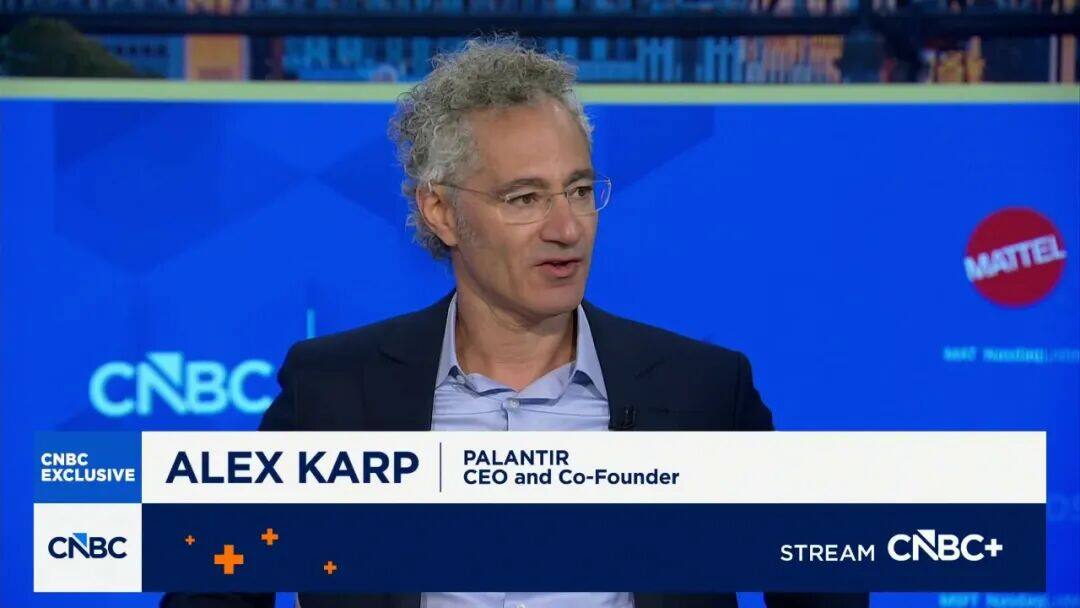
The AI market suffered a violent correction after Meta hinted it might sell its surplus AI compute. Three years ago, this would have been unremarkable—cloud computing is essentially selling compute slices. But Meta had never positioned itself as a cloud vendor; it bought chips, built data centers, and secured power for its own models, ad systems, and Superintelligence ambitions. Now, considering renting out capacity sends a significant signal: either a temporary resource window during construction, or a need for near-term revenue to support hundred-billion-dollar AI spending. The ensuing market plunge and Palantir CEO Alex Karp's 20-minute tirade on CNBC brought this debate to a head.
Compute Demand Hasn't Vanished—It's Being Redirected
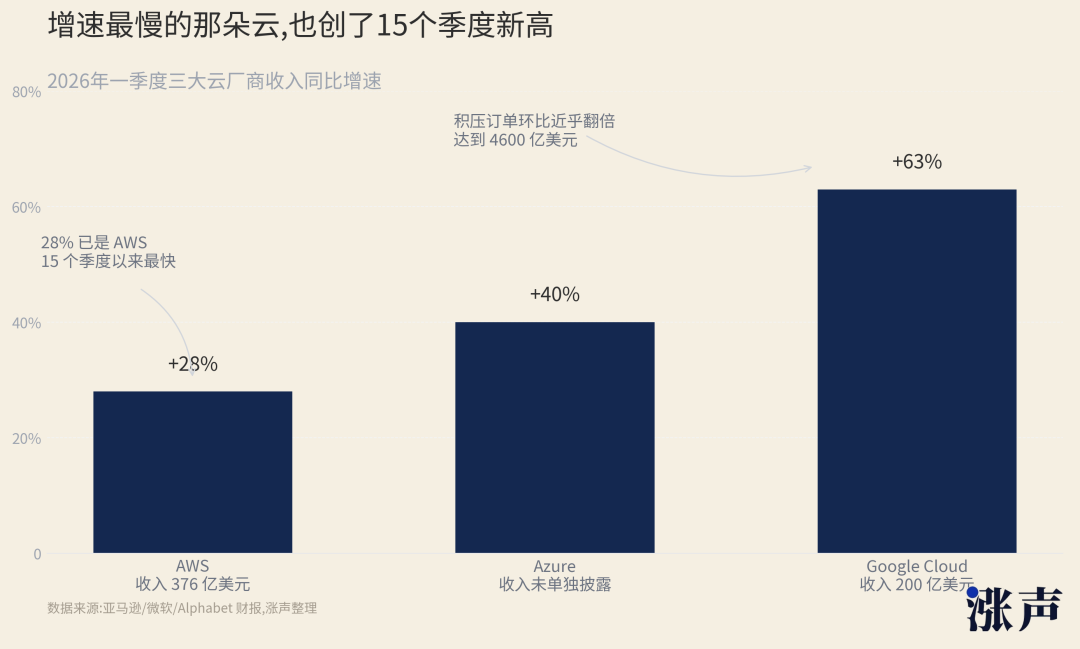
Public data does not support a collapse in AI capex. AWS Q1 revenue grew 28% to $37.6B, Google Cloud reached $20B, and Microsoft Azure grew ~40%. Amazon hinted at $200B capex this year, Alphabet raised 2026 guidance to $180-190B, and Meta itself raised its full-year capex to $125-145B. AWS raised prices on its GPU reservation service by ~20% in late June, following a ~15% hike in January—an action inconsistent with weak demand. Scarcity leads to price increases. However, model companies face diverging fates: Anthropic remains strained as enterprises pay a premium for difficult tasks, while weaker models face underutilization. xAI is routing compute to Anthropic, and Google restricted Meta's access to Gemini, indicating not oversupply but misallocation.
Enterprise AI Spending Awakens: From FOMO to ROI Calculation
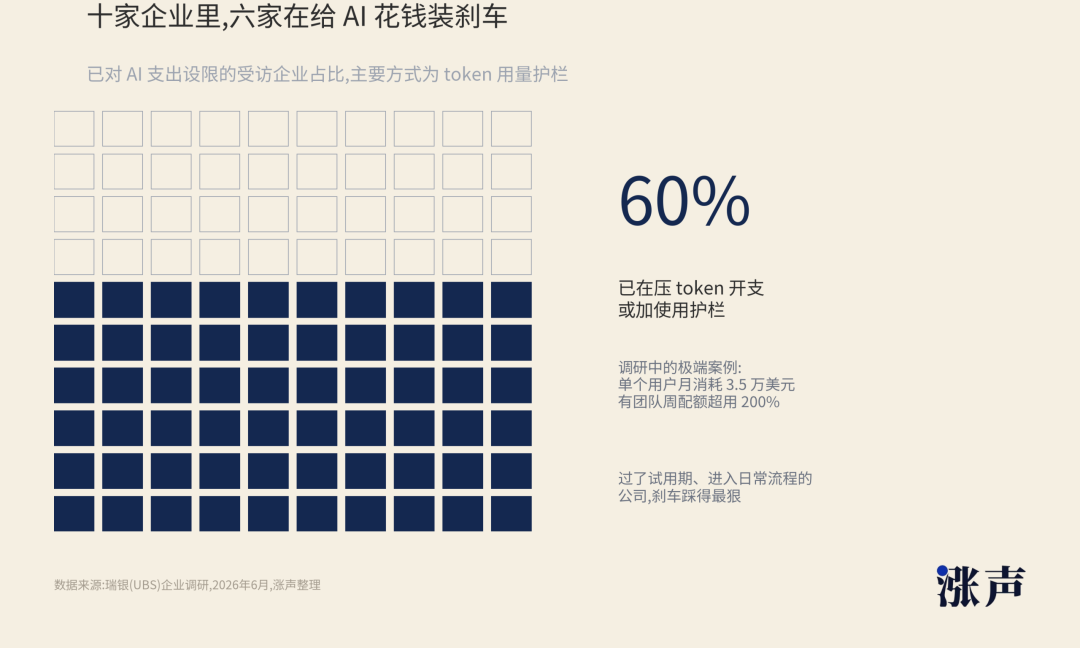
A UBS survey shows about 60% of enterprises are capping token spend and adding guardrails, especially those that have moved beyond pilot phases. Karp revealed that CEOs privately complain about 'paying for tokens that create no value while handing over their data.' Meanwhile, a Codex study from OpenAI and several universities shows active users grew over 5x in H1 2026, internal legal token output surged 13x vs November 2025, and research output surged 50x. Agentic coding tasks consume up to 1,000x more tokens than standard code chat, with 30x variance between runs. Tokens have become an electricity meter; CFOs are now asking about output per unit of compute. Enterprises are no longer blindly chasing the best models; they are splitting procurement: hardest tasks get premium models, routine tasks use cheaper or open-source models.

Open-Source Models and Model Routing: The Enterprise Cost-Cutter
a16z partner Marc Andreessen noted that many AI practitioners now regard ZhiPu GLM-5.2 as matching or surpassing top US public models on most tasks. Coinbase provides the strongest evidence: CEO Brian Armstrong said the company switched its default model to open-source like GLM-5.2 and Kimi 2.7, combined with model routing, caching, and context optimization—Token usage grew exponentially but AI spend was cut by nearly half. Open-source models don't need to win every battle; they just need procurement departments to believe not every kilowatt-hour must be billed at luxury rates. Enterprises can now disaggregate model capabilities, reshaping pricing power across the chain.
Compute Stratification: Certainty, Outcomes, and Cost
The best framing is not 'compute oversupply' but 'compute stratification.' At the top, top-tier models, premium cloud, and stable GPU clusters remain scarce—AWS can raise prices because certainty has a price. In the middle, resources are adequate but not scarce; customers compare, negotiate, and ask why they should pay more. At the bottom, open-source models and cost optimization continuously compress pricing—enterprises won't use the most expensive models for routine tasks. AI has moved from a volume story to a structural story: some will continue raising prices (selling certainty), some will shift to selling outcomes (customers don't want to pay for consumption), some will be forced to cut prices (alternatives appear), and some will rent out machines (better than idling). Meta's signal is a marker of this structural inflection: hardware does not automatically turn into good business; it needs daily utilization, paying customers, models to run, and applications to convert spend into revenue. The next chapter of AI capex belongs to those who can manage utilization, stratified pricing, and cost optimization.