


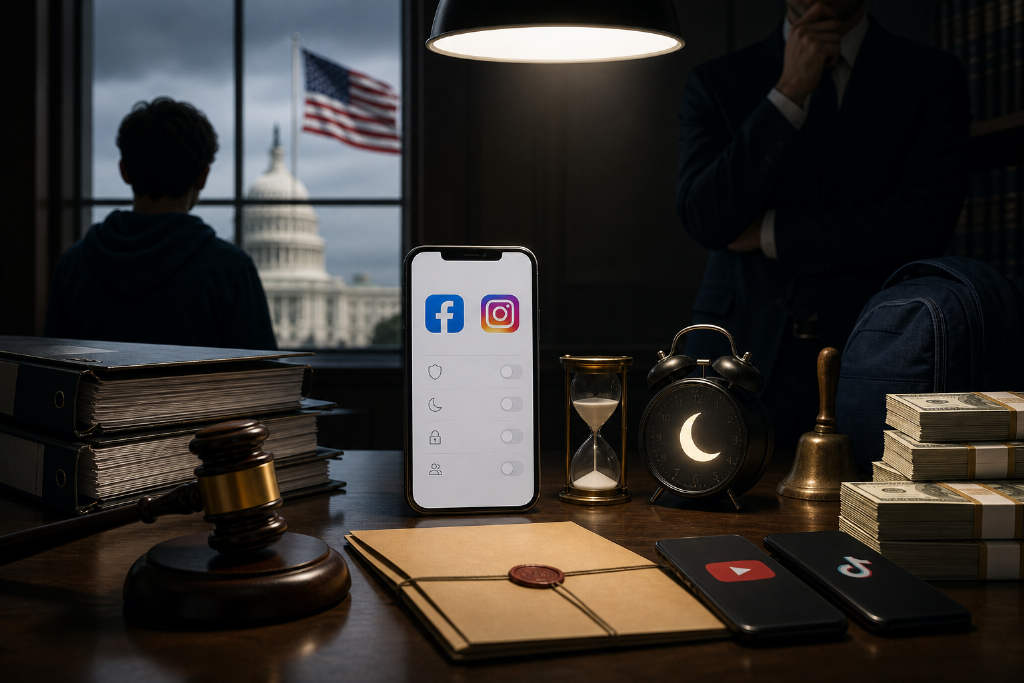
Meta has agreed to pay more than $18 billion to settle litigation over online safety for minors and to add new guardrails on Facebook and Instagram, including time caps, nighttime lockouts and other protections for teen users. For now, though, the rules apply only to users in the United States.
Bloomberg reporters Newley Purnell and Gian Volpicelli highlighted that point in their coverage. A Meta spokesperson confirmed that the company will monitor the impact of the new rules and remain in contact with governments in other countries, but did not offer a timetable for expanding them beyond the U.S.
Settlement value exceeds $18 billion
According to Bloomberg, Meta agreed to pay as much as $17.1 billion to 47 states, the District of Columbia, and U.S. territories including Puerto Rico, American Samoa and the Northern Mariana Islands. It will also pay Texas more than $1 billion separately, bringing the total to slightly above $18 billion.
The structure of the payout is a central part of the agreement. Meta will pay 70% of the overall amount first, or about $12.7 billion, spread over 10 years. The remaining roughly $5.3 billion is conditional: it would be triggered only if Alphabet-owned YouTube and TikTok also agree to set a one-hour daily usage cap for minors, introduce a night mode and add age-verification measures.
That arrangement ties youth-protection standards across multiple social media platforms to the same settlement framework.
What changes for users under 18
On the product side, Facebook and Instagram will impose several restrictions on users under 18:
- A combined daily usage limit of two hours across the two apps, with parental approval required for changes.
- A direct lockout from midnight to 6 a.m., except for direct messaging.
- No standard notifications during school hours, from 8 a.m. to 3 p.m., while safety and message notifications remain unaffected.
- Reminders after 15 minutes of continuous use and again once total use reaches one hour.
Users will also be able to switch to a non-algorithmic feed or turn off autoplay. On the parent side, Meta is adding usage insights and alerts for suspicious accounts and secondary accounts. An independent auditing body will oversee enforcement of the full package.
In an official statement, Meta said: "Ensuring teens have safe and age-appropriate experiences on our apps is a top priority for Meta."
Criticism from the U.K. and concerns over enforcement
The decision to limit the new protections to the U.S. drew an immediate response in the United Kingdom. U.K. Secretary of State for Work and Pensions Pat McFadden told the BBC: "It’s interesting that they chose to settle yesterday rather than continue to contest this case," and called it "a major issue that parents in Britain and around the world care about."
He added: "We do not want to see children in the United States getting higher protections than children here."
The U.K. is considering a ban on social media use for children under 16 and curfew-style restrictions for older teenagers. Bloomberg also said that more than 20 countries, including the U.K., have already imposed or are considering limits on youth access to platforms including Meta, TikTok and Snapchat.
Zvika Krieger, Meta’s former director of responsible innovation, raised a technical concern. If teen users simply sign up for adult accounts, he argued, the restrictions could become ineffective. He also said Meta’s age-verification capabilities have not been upgraded in step with the new rules. Research cited in the report shows that most users rarely change default settings, and some parents may not even know the new options exist.
No timetable for a global rollout
Matthew Bergman, founder of the Social Media Victims Law Center, described the settlement as "a bellwether for the rest of the world" and a measure of cross-border accountability. He added: "My first reaction is vindication. Meta has long insisted its platforms are not addictive."
Still, protections available to parents in the U.S. are not yet available elsewhere. Meta has not committed to a schedule for extending the U.S. version of the two-hour cap and midnight lockout worldwide.