

Meta's 'Compute Resale' Triggers Sector-Wide Rebalancing
On July 1, Bloomberg reported that Meta is preparing a new cloud computing business to sell surplus AI compute externally, while also considering offering a managed model service similar to AWS Bedrock. The market reaction was dramatic and divergent: Meta's stock surged over 10% intraday, closing up 8%; CoreWeave and Nebius tumbled 13% and 17% respectively. The next day, selloffs spread to Asian hardware stocks, with South Korea's KOSPI falling ~7%, and Samsung Electronics and SK Hynix both dropping over 8%.
Overnight, Meta transformed from one of the most aggressive compute buyers of the past two years into a potential seller. This role reversal struck at the heart of the AI bull market's foundational belief: that Big Tech's capital expenditures (CapEx) would grow forever. For the first time, that faith has shown a visible crack.
The Engine of the Past Two Years: Shortage Lists and CapEx Explosion
The underlying logic of the AI rally has been 'shortage'. Surging demand coupled with supply bottlenecks created a long chain of scarcity—from high-end GPUs and HBM memory to data center space, power capacity, and even enterprise SSDs and HDDs. This 'bucket effect' gave each scarce link pricing power, driving a structural bull market for upstream suppliers.
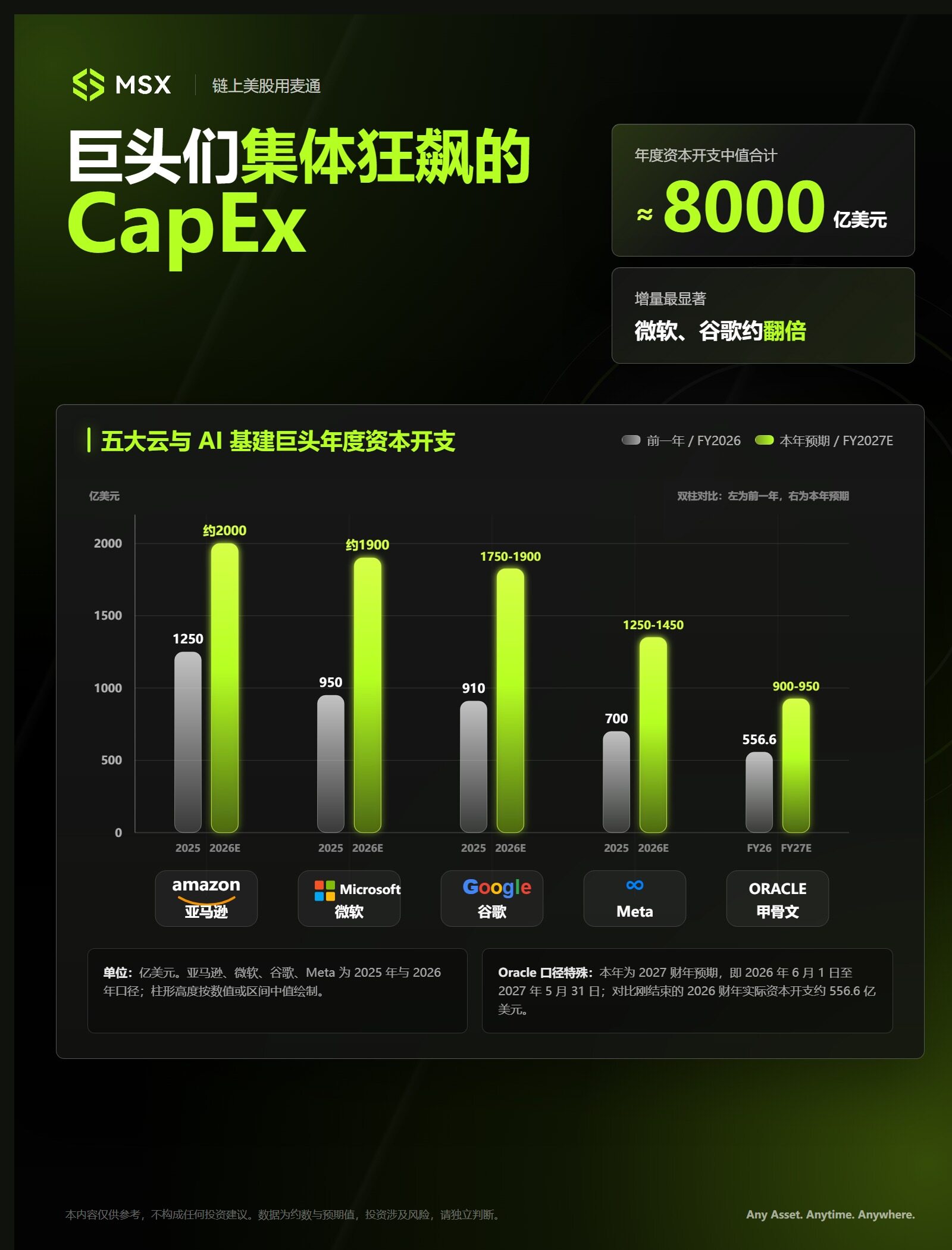
The real engine, however, was the ever‑expanding CapEx of the four hyperscalers: Microsoft, Meta, Amazon, and Google. Bridgewater estimated their AI infrastructure investments would reach ~$650 billion in 2026, up 60% from 2025. Reuters, citing Goldman Sachs and Morgan Stanley, projected global AI-related CapEx (data centers, power, equipment, software) could approach $800 billion in 2026. Meta itself raised its 2026 CapEx guidance to $125–145 billion, and held ~$237.7 billion in non‑cancellable contractual commitments as of Q1 2025, much of it tied to servers, data centers, and third‑party cloud compute.

Why Meta Is Both Buying and Selling Compute
Meta's decision to sell surplus compute does not mean it sees an industry‑wide glut. Rather, it reflects a mismatch between long‑cycle supply and short‑cycle demand: data center construction takes years, forcing Meta to build capacity ahead of the most aggressive scenarios, but its own models and products cannot yet absorb all that capacity. Selling idle GPUs recovers costs—a rational move.
This is not unprecedented. In May 2025, xAI leased its Colossus 1 cluster (220,000 NVIDIA GPUs) to Anthropic for $1.25 billion per month. Compute resources flow to where they are most valuable. When internal consumption falls short, renting out capacity is optimal.

What makes Meta special is its vast user base (Facebook, Instagram, WhatsApp, Messenger) which should make it the most natural candidate to embed AI into products and create a flywheel. Yet, Meta is simultaneously building its own compute and still purchasing external models like Gemini. Reports indicate Meta's demand for Gemini was so large that Google struggled to satisfy it. This reveals a gap in Meta's 'compute → model → product → revenue' loop: its in-house models are not yet competitive enough to fully utilize its own compute capacity.
Market Reaction: A Paradigm Shift from 'Hoarding GPUs' to 'Using Compute'
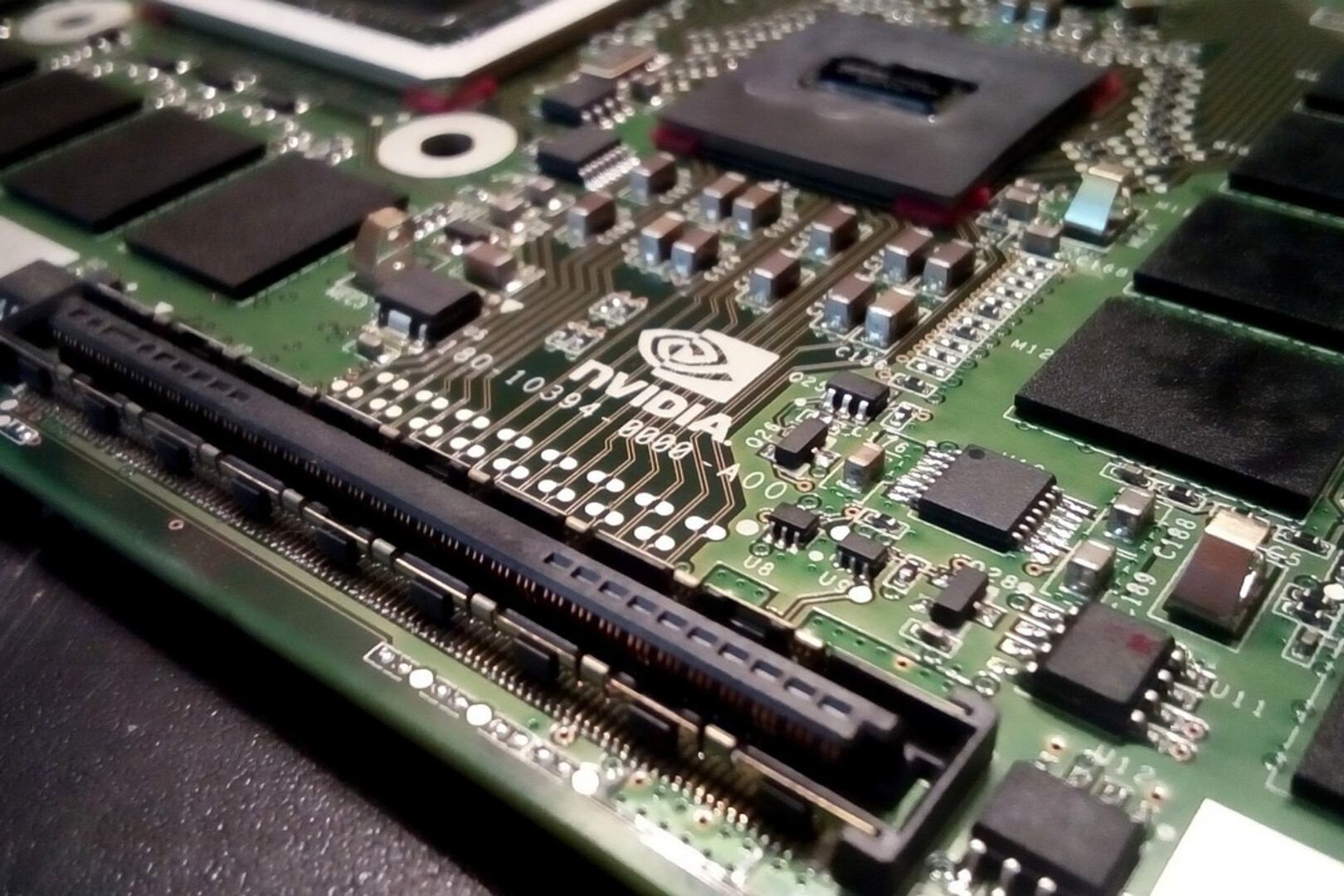
The sector rotation is not simply about 'compute oversupply'. It reflects a deeper repricing of where value is created in the AI value chain. The surface logic—'cloud down, hardware down, software up'—makes sense: Meta releasing compute could depress pricing, hurting cloud and hardware stocks. But at a deeper level, the market is now questioning 'who is burning cash inefficiently'. Once 'return‑on‑investment' becomes the dominant metric, expectations that Big Tech will slow their arms race begin to erode the certainty premium of upstream hardware.
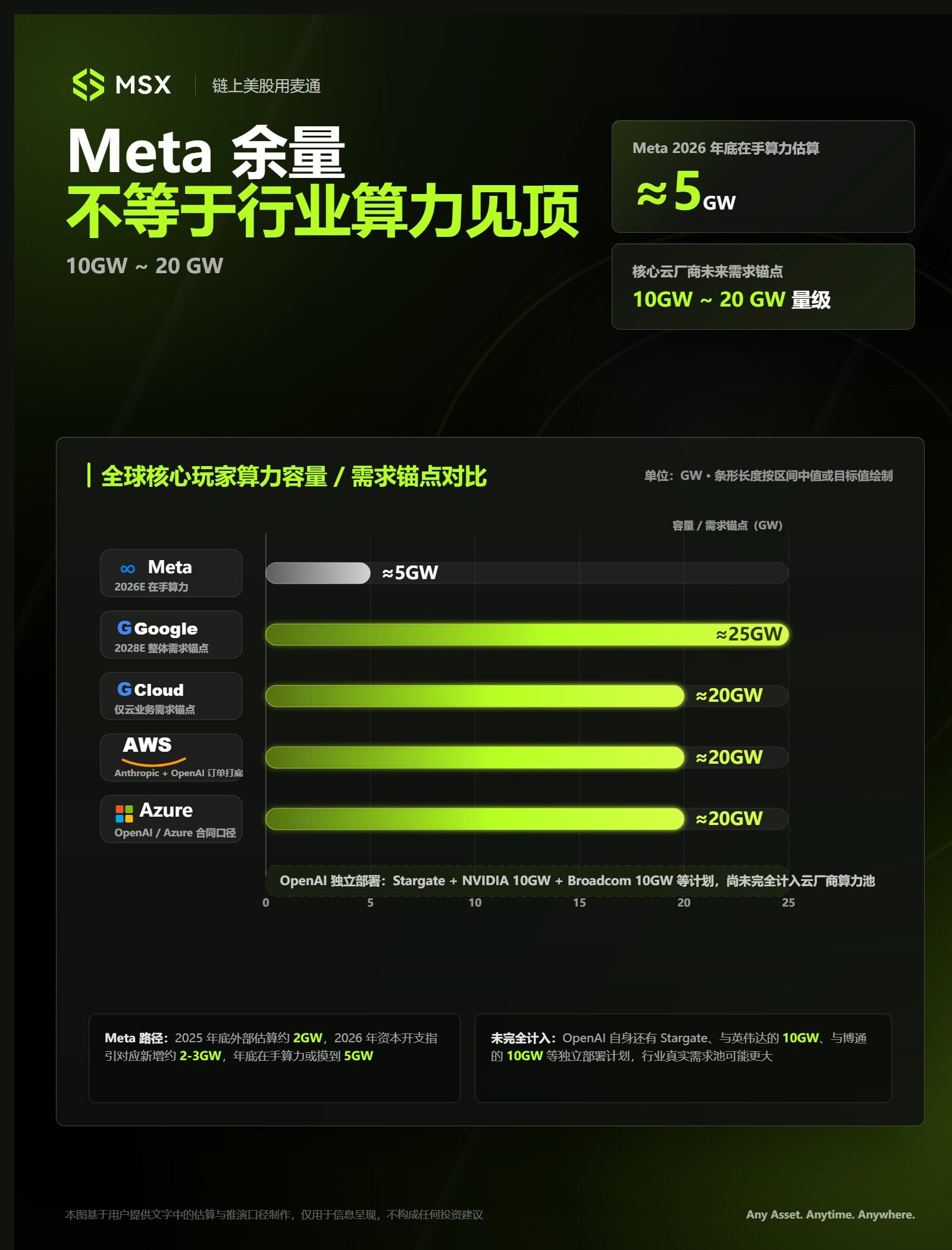
A critical fact: Meta's idle capacity (peak ~5 GW by end‑2026) is a rounding error compared to the industry's demand of 10+ GW in new builds over the next three years. The xAI‑Anthropic leasing price—$1.25B/month for 500 MW, equivalent to ~$300B/GW/year—shows that even if one player leaves the table, its freed‑up compute will be quickly snapped up by top‑tier model companies (OpenAI, Anthropic). Therefore, Meta's surplus is unlikely to crash the market; instead, it underscores that compute remains extremely scarce—just not optimally allocated to Meta's current product stack.
Two tectonic shifts are underway. First, while AI ROI remains uncertain, Big Tech CapEx is starting to look 'a little uncertain'—the market is rewarding companies that control depreciation costs and punishing those that burn cash. Second, this risk has not yet been fully priced into hardware valuations. Once investors believe that 'limitless GPU arms race' is unnecessary, the high‑growth premium of Nvidia and others could deflate.
Conclusion: Not the End of the AI Bull Run, but Acceleration of Winner‑Takes‑All
The Meta episode is not evidence of an AI bull market ending. It marks a transition from 'who hoarded the most GPUs' to 'who uses compute best'. Lower‑cost compute lowers barriers for software and application firms, creating dividends. As resources concentrate toward the few players capable of efficiently closing the 'compute‑model‑product‑revenue' loop, AI's winner‑takes‑all dynamic is only just beginning.

For investors, the focus must shift from tracking GPU shipments to tracking where compute flows—and which firms can turn that compute into real profits. That is the most enduring lesson from Meta's surprise move.