


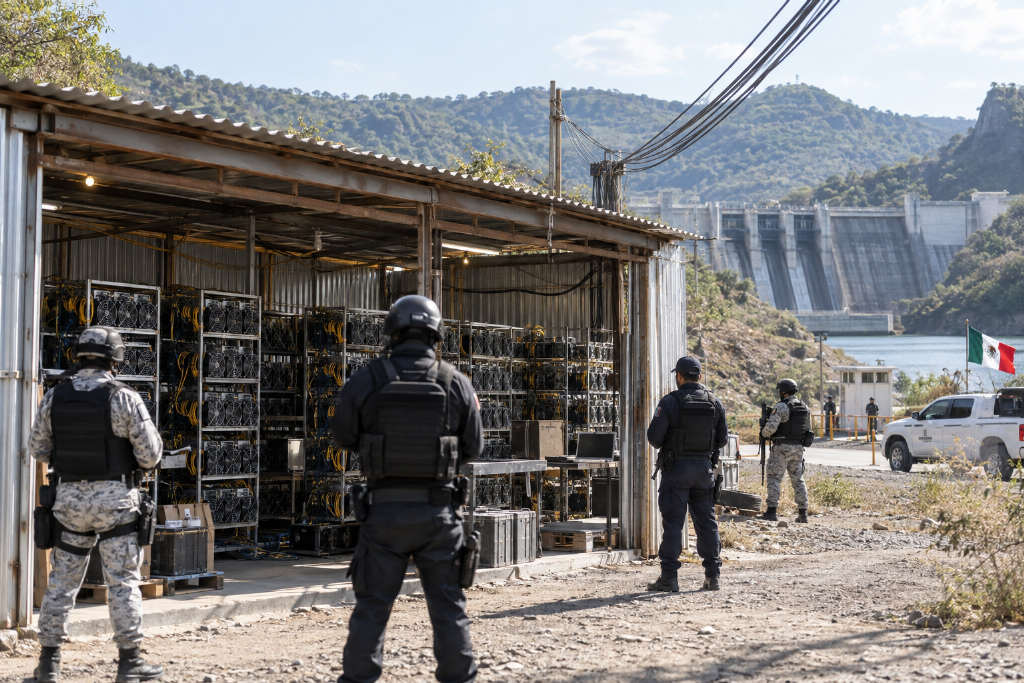
Mexico is stepping up its hunt for illegal crypto mines after authorities dismantled a secret operation powered by stolen electricity from the Nuevo Necaxa dam. The site, located in rural northern Puebla, had 300 computers, and officials hope the crackdown will reduce large-scale electricity theft tied to unauthorized mining.

According to local media cited by Protos, Puebla’s Public Security Secretariat is expanding its search for similar sites across neighboring states. The dismantled mine had been illegally siphoning electricity generated by the dam.
Puebla officials say remote locations help hide the activity
Francisco Sánchez, head of Puebla’s Public Security Secretariat, said, “This activity consumes a great deal of energy and generates a lot of noise, which is why operators seek out isolated and very remote locations.”
Authorities in Puebla suspect the operation may also have helped legitimize and launder profits from other illegal activities.
Separate Mexico homicide case tied by prosecutors to a suspected BTC motive
Elsewhere in the country, Mexican prosecutors believe the killings of Jonathan Meléndez, his pregnant wife Ana Paula Barragán, their three-year-old daughter Sofía, and 21-year-old nanny Aleyda Romero were motivated by a bitcoin stash the attackers believed was worth millions of dollars.
Diego Sebastián N and Gerardo N were arrested on September 2. Prosecutors said no BTC was stolen in the homicide. A later witness account referred to a device that held 3 million pesos in crypto, worth about $177,000.
How illegal mining operations differ from legal ones
Legitimate bitcoin mining companies have to account for the electricity needed to run their machines, the cost of cooling those machines, and local rules governing commercial power use. Illegal operations, by contrast, look for weak or poorly maintained energy infrastructure that can be redirected without drawing suspicion.