

Microsoft opened its new fiscal year with a stronger-than-expected set of numbers. Azure growth picked up again, but another line in the earnings report stopped climbing: commercial order backlog barely increased from the previous quarter.
Those two developments can happen at the same time. Cloud revenue captures services already delivered. Backlog captures revenue that customers have already committed to under contract but that Microsoft has not yet recognized. They describe different stages of the same business. Before either shows up fully, Microsoft also has to spend cash on servers and data center expansion.
According to Microsoft’s earnings report, revenue for the quarter ended in September reached $92.3 billion, up 19% from a year earlier. The company now places Azure, Microsoft 365 cloud services, and related products inside a newly presented Intelligent Cloud and Infrastructure segment structure, giving investors a clearer view of how cloud revenue is being grouped.
Azure growth accelerated under the new reporting view
Azure is Microsoft’s cloud platform, where customers rent computing and storage resources and also use AI services. Microsoft said Azure revenue for the quarter was $33.2 billion, up by about $10.8 billion from the same period last year. Using the company’s recast figures under the new segment presentation, that single increase accounted for roughly three-quarters of Microsoft’s total revenue growth in the quarter.
That does not mean all of the increase came from AI. Microsoft’s Azure metric includes cloud and AI consumption services as well as products such as virtual desktop offerings, and the company did not break out AI revenue separately in this earnings release. The growth shows customers spent more on Azure, but it does not show how much of that spending went specifically to model training or AI applications.

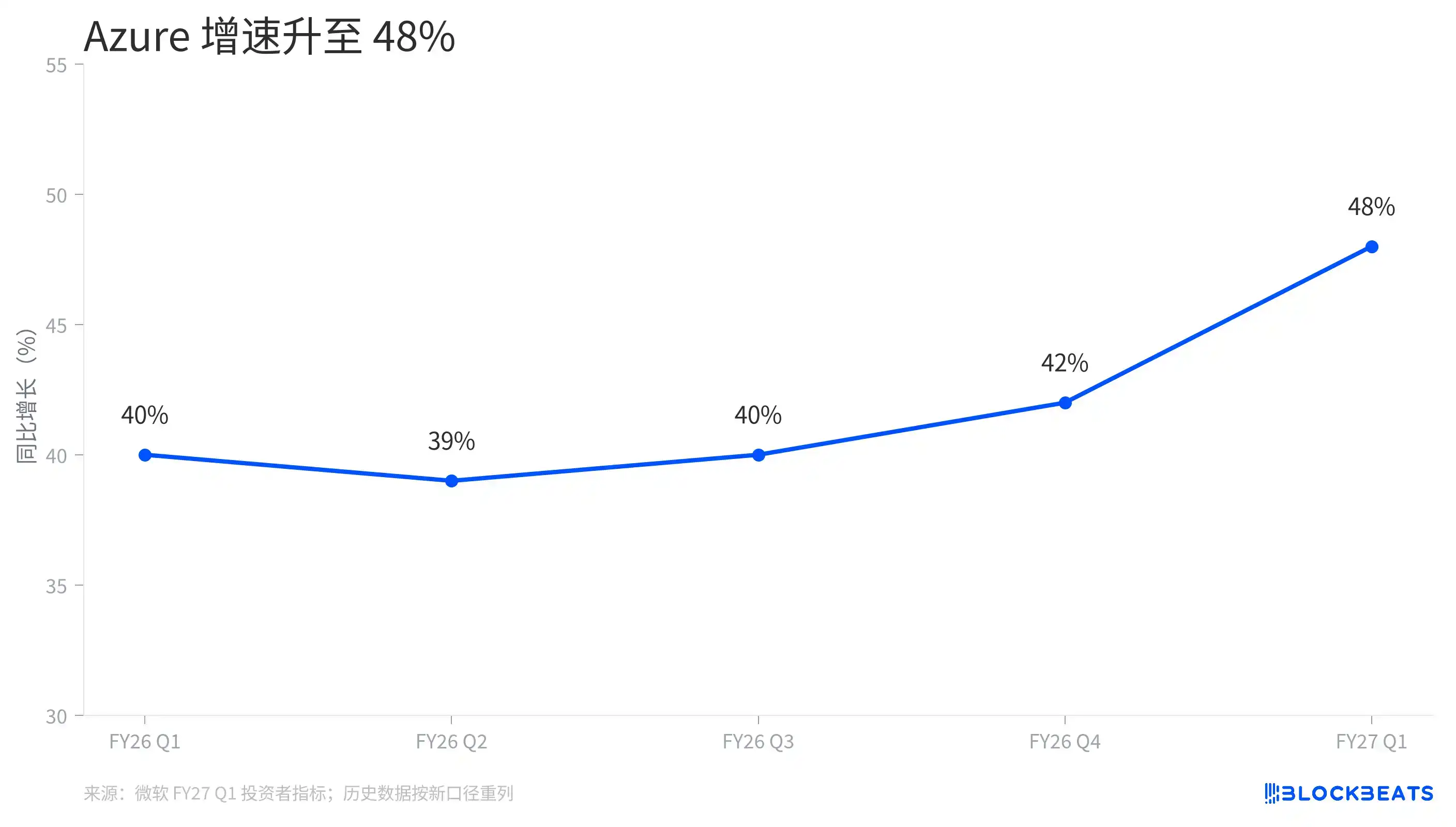
Microsoft also recast historical growth figures. Its investor metrics table showed Azure growth at 42% in the previous quarter under the new basis, rising to 48% this quarter. When Microsoft reported the prior quarter, it used the older “Azure and other cloud services” measure, which showed 43% growth. For trend analysis, the figures need to be compared on the same basis rather than mixing old and new definitions.
Why backlog and revenue are telling different things
Commercial remaining performance obligations, or RPO, can be read as contracted commercial revenue that has not yet been recognized. When customers sign long-term cloud contracts, the full contract value does not become revenue on the signing date. Microsoft recognizes revenue as services are delivered, while the unrecognized portion remains in backlog.
That backlog was still 73% higher than a year earlier, but it was nearly unchanged from the previous quarter. Over the same period, Microsoft’s cloud revenue kept rising. The two lines are not in conflict. Backlog is shaped by new contracts, the pace at which existing contracts are fulfilled, and contract duration. A flat quarter-over-quarter backlog does not by itself prove demand has weakened.
There is also a timing difference between backlog and revenue. Backlog is a stock measure at a point in time and can stretch across several quarters or even years. Revenue is a flow measure recognized during a single quarter. Dividing backlog by quarterly revenue can help frame scale, but that multiple is not the average remaining life of customer contracts, and it is not cash already collected by Microsoft.
How much cash went back into equipment and property
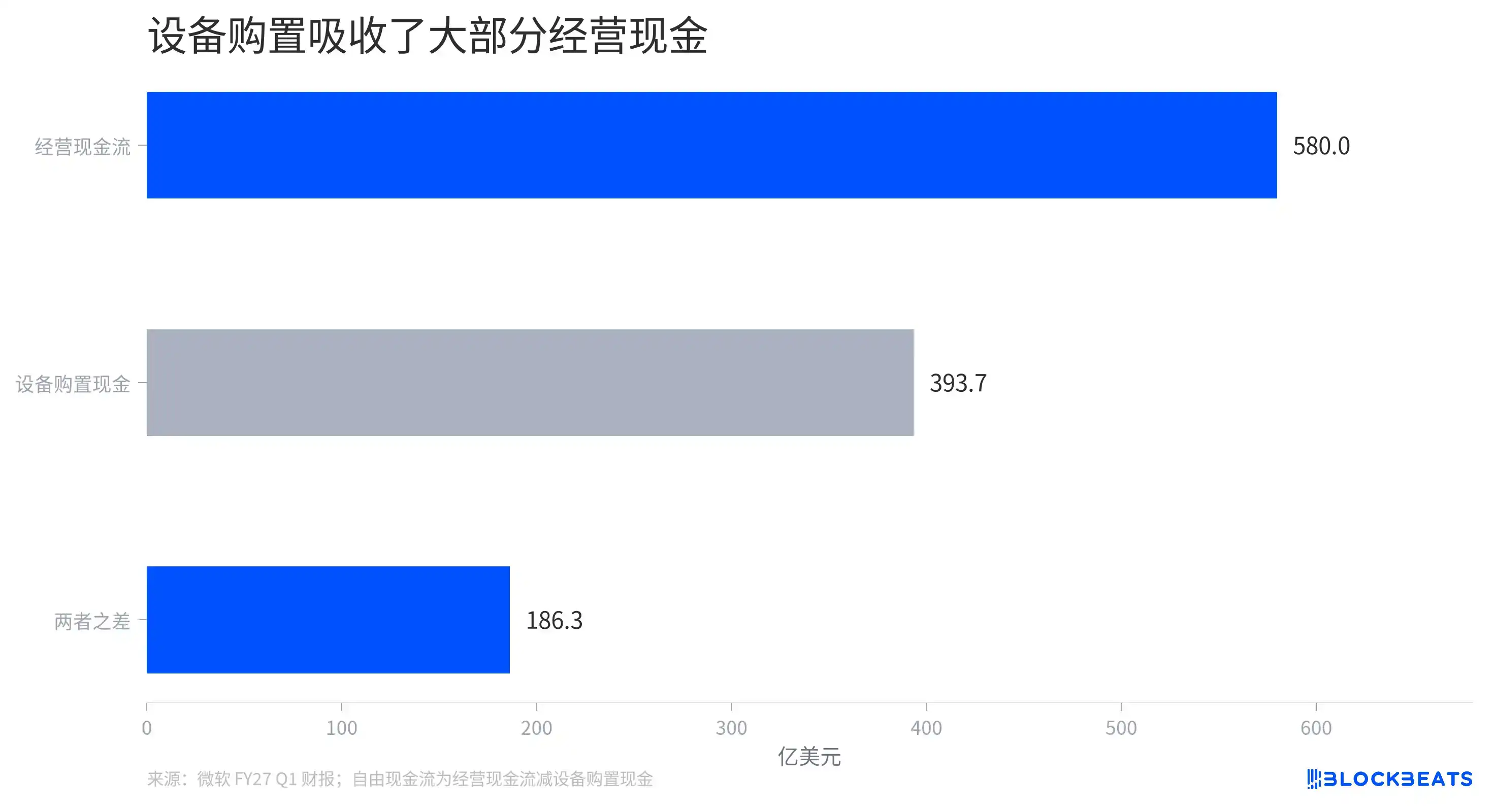
The income statement shows business growth. The cash flow statement shows the pace of buildout. Microsoft reported $58 billion in cash generated from operating activities for the quarter and $39.4 billion in cash paid for equipment and property. The difference was about $18.6 billion, which also matched management’s rounded free cash flow figure cited on the earnings call.
Put another way, for every $100 of operating cash flow, about $68 went to cash purchases of equipment and property during the quarter. That ratio applies to Microsoft as a whole and cannot be treated as a standalone return measure for Azure or AI. Operating cash flow is also affected by working capital items such as customer collections, payment timing, and taxes.
Capital spending can also be presented on a broader basis. Management said on the earnings call that its capital expenditure figure includes items such as finance leases, so it cannot be directly subtracted from operating cash flow. The equipment and property line in the cash flow statement records cash actually paid. The two measures look at buildout spending from different angles and should not be treated as the same expense line.
Why net income growth looks different under two measures
Microsoft said quarterly net income rose 32% under U.S. generally accepted accounting principles, while net income excluding the impact of its OpenAI investment rose 18%. That leaves a 14 percentage point gap for the same company in the same quarter.
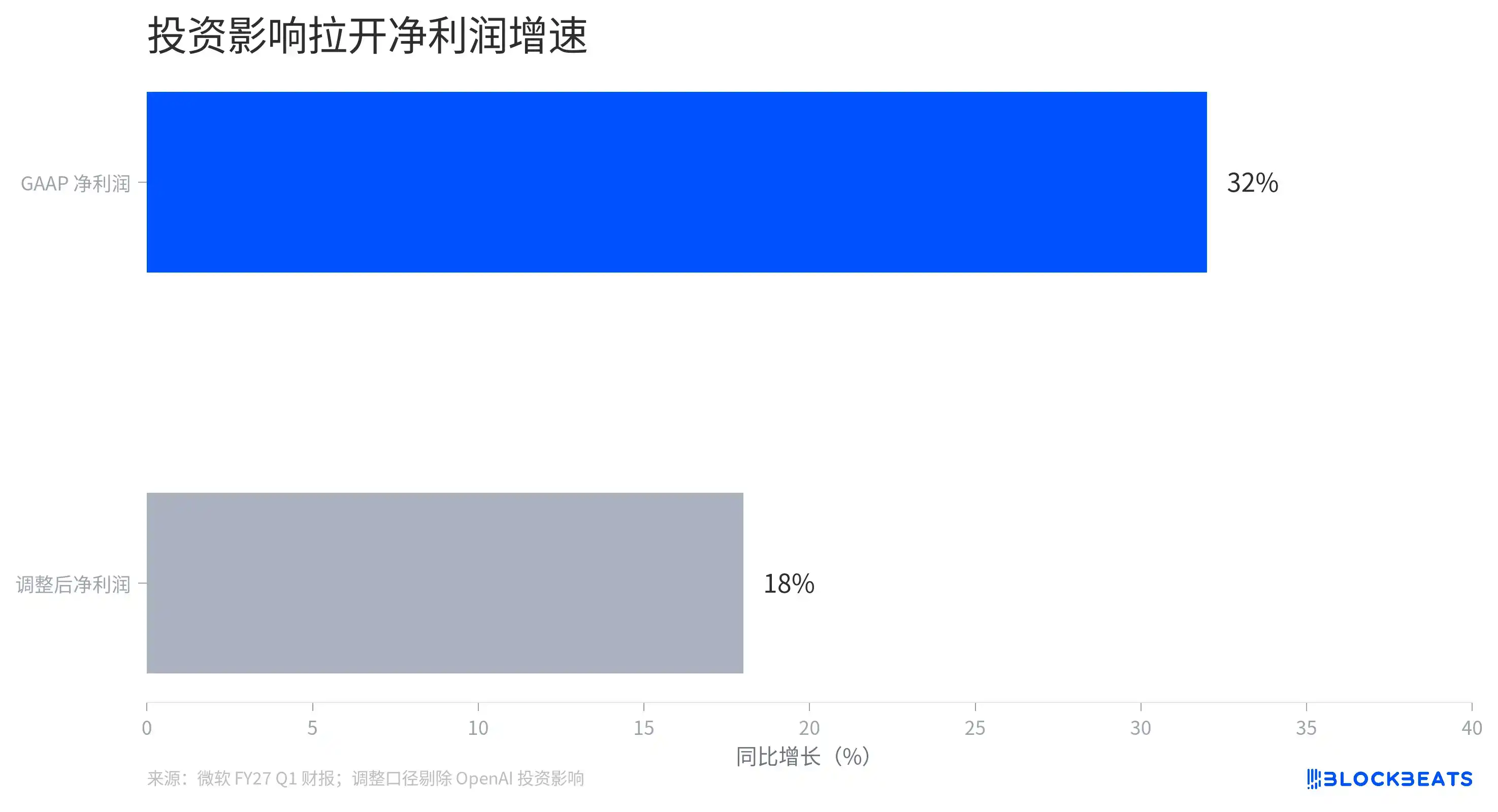
The main reason is the comparison base. Microsoft’s earnings report showed that losses tied to its OpenAI investment reduced net income in the year-earlier quarter, while the investment had a smaller effect this quarter. With last year’s base pushed lower, the year-over-year GAAP growth rate appears higher this time.
The adjusted figure can help readers isolate performance without that investment effect, but it remains a company-defined non-GAAP metric rather than a full adjustment for all investments or one-off items. Operating profit growth and cash flow still need to be examined separately.
This earnings report effectively split Microsoft’s cloud business into several clocks: when contracts are signed, when services are delivered, when equipment is paid for, and when investment gains or losses enter the income statement.



