

Brent crude neared $100 a barrel on Thursday as the sharp deterioration in the Middle East added fresh stress to global energy markets. The move came as two major oil transit chokepoints, the Bab el-Mandeb Strait and the Strait of Hormuz, faced disruptions at the same time.
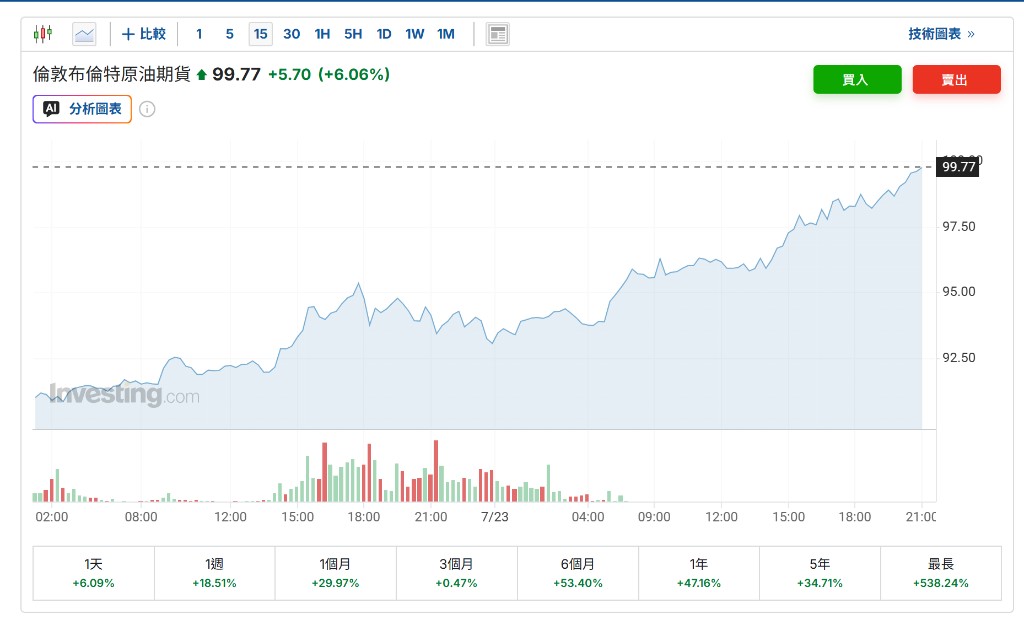
Brent futures were up nearly 5% on the day and touched $100 intraday. The latest leg higher followed Houthi involvement in the conflict, which raised the threat of a closure around the Bab el-Mandeb, while Hormuz remained partially obstructed. With both routes under pressure, risk premiums climbed sharply.
The article was written by Bu Shuqing of Wallstreetcn and republished by TechFlowPost. It described the latest escalation as pushing the global energy market toward one of its most dangerous moments in decades.
Red Sea attacks and Hormuz disruption tighten supply expectations
The immediate catalyst for the latest oil spike was a renewed Houthi attack on Red Sea shipping.
According to Xinhua, Yemen’s Houthi movement said early on July 23 local time that it had attacked two Saudi oil tankers in the Red Sea, adding that the two vessels had violated a recently announced maritime embargo. After that news, Brent jumped above $95 in after-hours trading. By Thursday, as war-related risk premiums continued to build, the price rose further to $98.70.
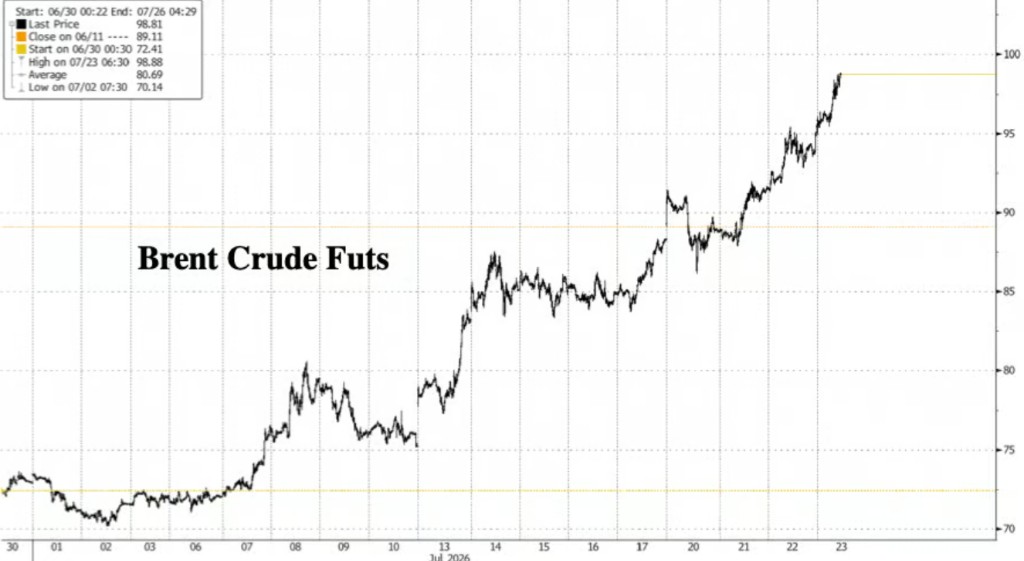
Tankers have again started avoiding the southern Red Sea route. Shipping traffic that had briefly recovered after the 2023 Houthi attacks subsided is now facing another reversal. At the same time, the partial blockage in the Strait of Hormuz has not been resolved. With the world’s two most important energy shipping lanes both in disorder, expectations for supply tightened quickly.
Saudi Arabia has also sent a tougher signal, saying it would respond forcefully to any attack on its tankers or onshore energy facilities. That has added to fears of a broader escalation.
RBC says a worst-case scenario could take oil back toward the 2008 high
Helima Croft, global head of commodity strategy at RBC Capital Markets, issued one of the strongest warnings. She wrote, “the war is entering a dangerous phase, and the Red Sea and critical infrastructure are at risk.”
In a note to clients on Thursday, Croft said that although Brent has already gained more than 30% since July 1, the current price is still “a lagging indicator of the extreme stress in the region.” In her view, the ongoing escalation could push oil above the $128-a-barrel high reached during the 2022 Russia-Ukraine conflict. In the worst case of a full regional war, prices could even challenge the 2008 record of $146 a barrel.
Croft also highlighted the significance of Houthi involvement. She said it could undermine the effectiveness of the east-west pipeline as an alternative route and deepen the supply losses caused by the conflict.

Saudi Arabia has previously relied on its east-west pipeline, which can move 7 million barrels a day, to bypass the Strait of Hormuz and send some crude to Red Sea export terminals. But if the Bab el-Mandeb also becomes impassable, that workaround loses much of its value. Tankers bound for Asia would have to reroute around the Cape of Good Hope, raising freight costs and delaying deliveries by weeks, which would tighten physical supplies even more.
Goldman Sachs outlines a $120-plus fourth-quarter scenario
RBC was not alone in warning about the risks.
According to the report, Goldman Sachs commodities specialist Daan Struyven said on Monday that Brent futures could rise above $120 a barrel in the fourth quarter if shipping disruption in the Strait of Hormuz persists. He also said that this was not Goldman’s base-case forecast.
Taken together, the comments from the two institutions show a market confronting both a severe baseline scenario and far more extreme tail risks.
Thin inventories and rising gasoline prices add pressure
One reason the market is more sensitive to the latest shock is that global oil buffers have already been drawn down. The report said crude inventories at Cushing were close to “tank bottoms,” leaving almost no spare cushion to absorb a prolonged supply interruption.
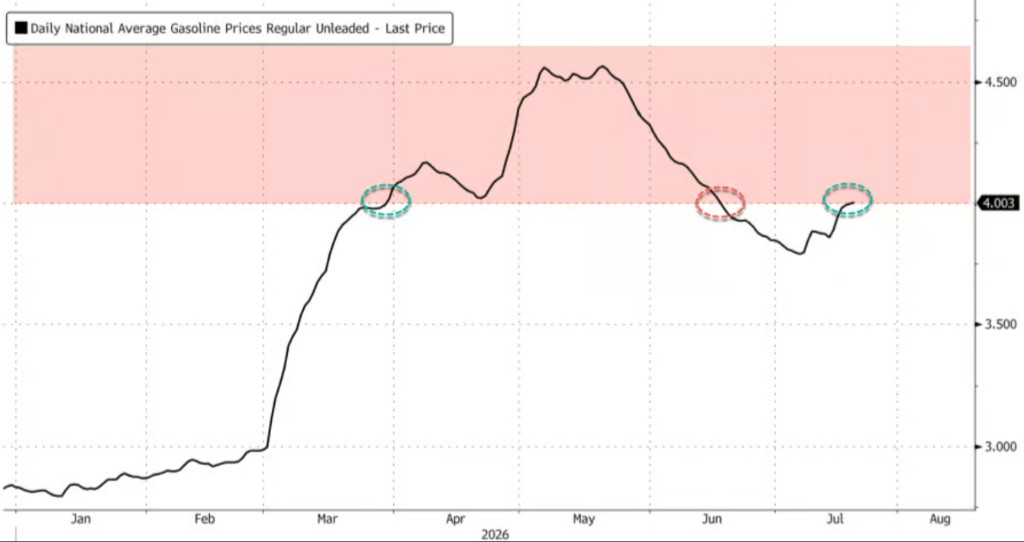
Demand-side pressure is also visible in the United States. The national average price for regular gasoline moved above $4 a gallon on Monday. That politically sensitive benchmark is increasing pressure on the Trump administration and narrowing room for Gulf diplomacy.
The article said analysts believe that once the U.S. military has degraded to a sufficient extent Iran’s missile and drone capabilities used to threaten commercial shipping, pressure from oil prices would push Washington back toward a diplomatic solution.
The scale of the supply risk is large. The Strait of Hormuz carries about one-fifth of global oil supply, while the Bab el-Mandeb normally handles 8 million to 9 million barrels a day. If both routes were to become paralyzed at the same time, global energy markets would face an extraordinary supply stress test.