

A 2026 midyear report from insights4vc says the onchain equity market still falls short of putting the stock market fully on blockchain rails. What has actually emerged, it argues, is a more credible infrastructure layer for distributing securities, recording ownership claims, and settling trades through blockchain-based systems.
Using RWA.xyz data, the report says the value of distributed tokenized stocks rose from $951 million in March 2026 to $1.89 billion in July, nearly doubling. Even so, the gain was driven mostly by a limited set of products and platforms.
The report frames the market around a basic split: products that trade more freely often offer weak claims on actual ownership, while products with stronger legal force tend to have weaker liquidity and distribution. In that sense, it describes the sector as a fractured “Layer 2.5” system.
What changed after March
The new report updates insights4vc’s March 2026 analysis, The State of Onchain Real World Assets, and focuses on what changed in material terms after that publication.
The March version separated assets into two categories: assets recorded onchain and assets that can be transferred to external wallets. The update says that distinction still matters. Under the RWA.xyz framework, “represented assets” stay within the issuer’s or platform’s own environment, while “distributed assets” can move to external wallets, even if transfers may still be limited to approved or whitelisted addresses.

Still, the report says transferability on its own is no longer enough to judge whether a product is mature.
Since March, offshore products have become easier to use across chains and in decentralized markets. Ondo expanded to Ethereum, BNB Chain, and Solana, added decentralized routing, and introduced continuous mint-and-redeem functions for some products. xStocks also broadened its distribution channels and collateral integrations.
Regulated U.S. infrastructure moved in a different direction. The emphasis there was not unrestricted portability, but legal certainty, controlled wallets, compliant custody, transfer-agent records, and integration with the Depository Trust Company, or DTC.
The report says the clearest progress came from regulated market infrastructure, especially Nasdaq’s same-CUSIP settlement model and DTC’s planned commercial rollout.
Those two tracks solve different problems. Offshore wrappers improve access and composability. Regulated infrastructure strengthens the connection between the token and the legal ownership claim behind it.
The report defines a “canonical share” as the issuer-authorized base security whose transfer is recognized inside the official ownership system. It distinguishes that from third-party instruments that only track a stock’s price or performance. At present, it says, no product has reached scale while also delivering canonical ownership, broad wallet distribution, institutional liquidity, and independent onchain price discovery.
Why aggregate RWA numbers can mislead
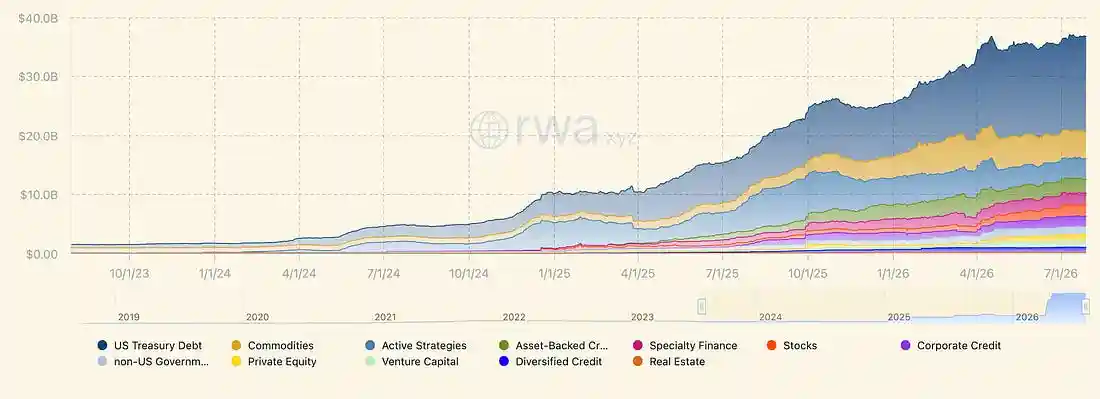
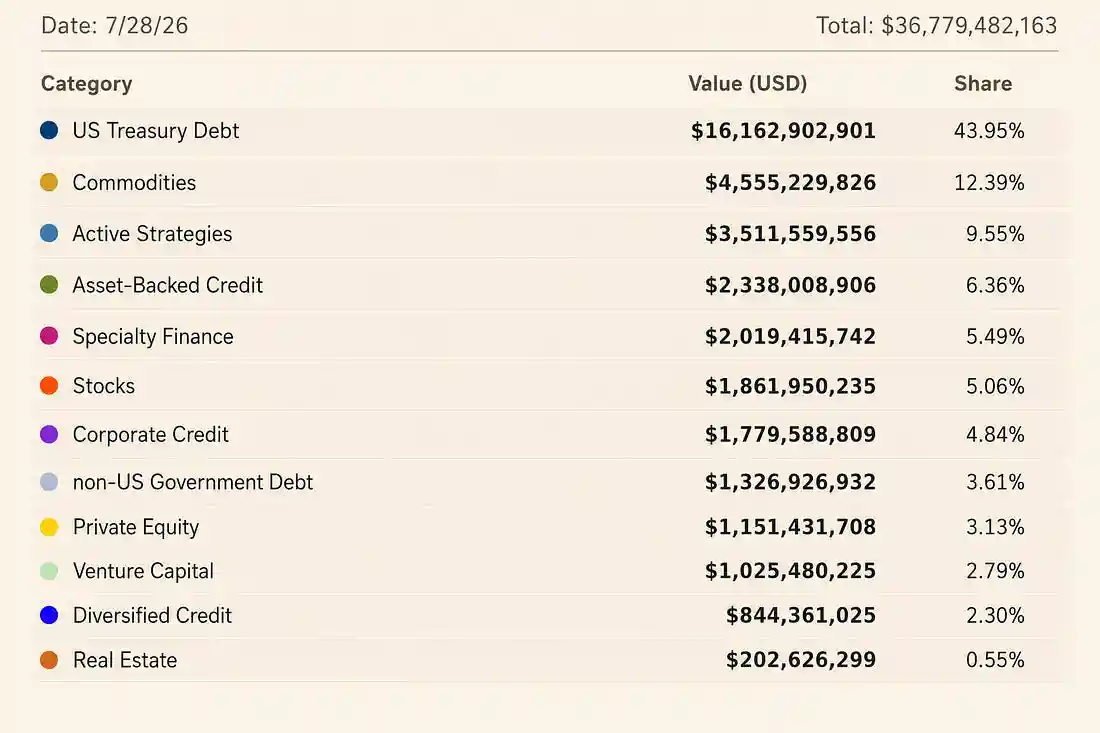
The report cautions against taking top-line RWA totals at face value. On July 29, RWA.xyz reported $36.81 billion in distributed value and $218.27 billion in represented value. Represented value appeared to drop by $124.33 billion, but the report says that should not be read as capital leaving the market or a wave of redemptions.
Between the two observation dates, large parts of the dataset were added, removed, reclassified, or revalued. As a result, those figures describe the value of claims covered by the platform’s methodology at specific points in time, not investor fund flows.
Tokenized stocks are more useful as a reference series because the same bridged-token-value methodology can be applied across both periods. Even then, the report says the reported 98.5% increase cannot be cleanly broken down into new issuance, price appreciation, and classification changes.
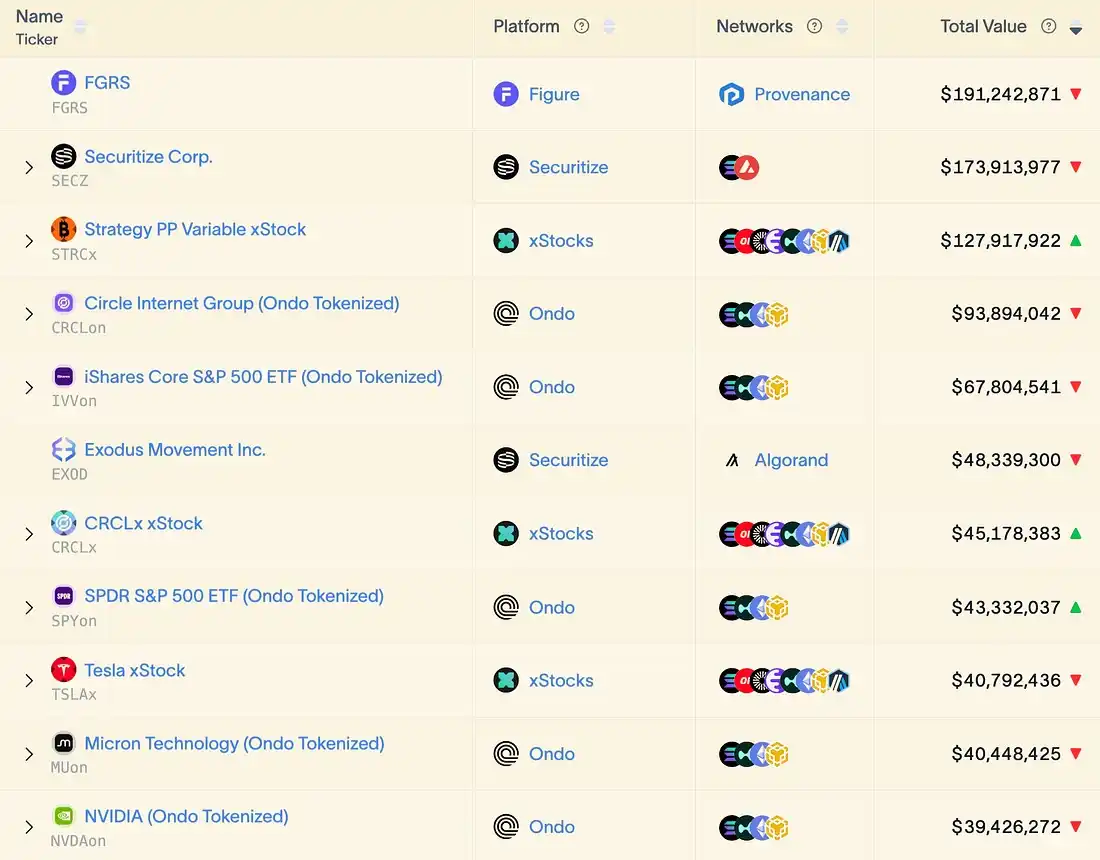
FGRS serves as an example. Figure raised money by issuing 4.375 million blockchain shares at $32 each, but the reported value then moved with the market price. Without daily mint, burn, and net asset value data for each product, the market’s net issuance cannot be reconstructed with confidence.
Why the $1.888 billion figure does not tell the whole story
RWA.xyz measures tokenized stocks through “bridged token value,” calculated as bridged circulating supply multiplied by net asset value.
That circulating supply excludes balances identified as treasury holdings or pre-minted inventory. The bridged figure also removes tokens locked in known bridge contracts so the same asset is not counted twice when it is locked on one network and issued on another.
The report says this is a valid way to measure distributed value, but it is not the same thing as free float. Free float refers to the portion of a security that is actually available for public trading after restricted holdings, strategic positions, and concentrated ownership are stripped out.
Timing matters as well. The asset-level export cited in the report showed $1.8879 billion in distributed value on July 27, matching the dashboard’s roughly $1.888 billion reading. By July 29, platform and network snapshots added up to about $1.872 billion.
The gap between the two was $15.8 million, or 0.84%, which the report says is consistent with changes in prices and token supply between the two dates. For that reason, it uses July 27 data for growth calculations at the instrument level and July 29 snapshots for platform and network market-share figures, without mixing the two datasets.
Three named instruments made up nearly half the increase
At the product level, three named instruments accounted for about half of the increase. SECZ added $169 million after listing, FGRS added $162.9 million, and STRCx added $126.6 million. Together, they contributed $458.6 million, or 49% of the total $936.8 million increase. Long-tail products contributed another $150.5 million, equal to 16.1% of the increase.
The report says those figures reflect changes in distributed value, not investor subscriptions.
It notes that SECZ is affected by both the number of represented shares and Securitize’s New York Stock Exchange price. FGRS combines issuance, conversion activity, and market-price moves. STRCx depends on the circulating supply and value of certificates linked to Strategy floating-rate preferred shares.
Grouping all three under “tokenized stock inflows,” the report says, would combine economically different events into a single number and could distort the picture.
Platform concentration is high
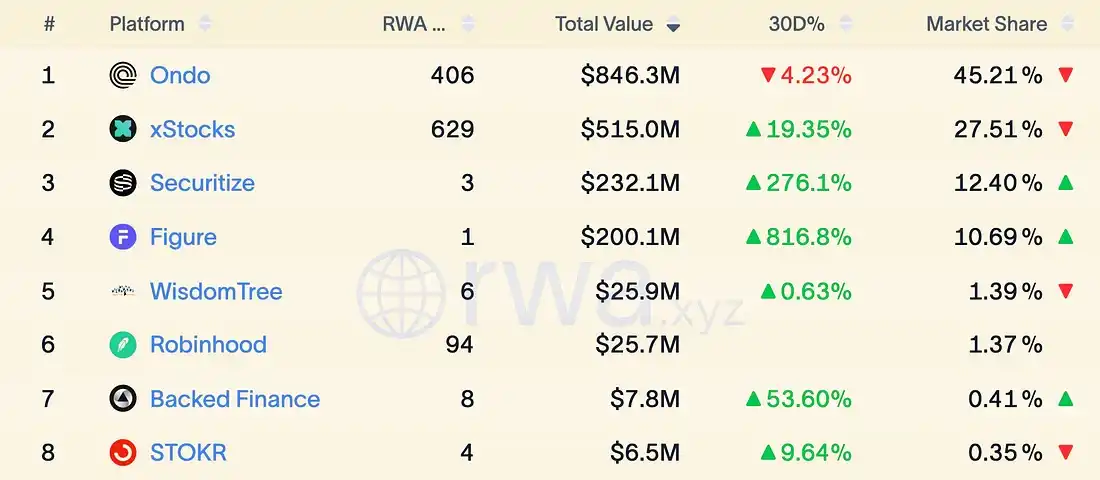
Concentration is sharper at the platform level. In the July 29 snapshot, Ondo and xStocks together accounted for 72.7% of distributed value. Adding Securitize lifted the top three to 85.1%.
RWA.xyz platform rankings put Ondo first at 45.21%, xStocks second at 27.51%, and Securitize third at 12.40%.
Distribution across blockchains looks more spread out, but the report says that does not remove shared dependencies underneath. Ethereum led with a 36.24% value share, followed by Solana at 19.63% and BNB Chain at 15.82%. Provenance and Avalanche were driven mainly by Figure and Securitize, respectively.
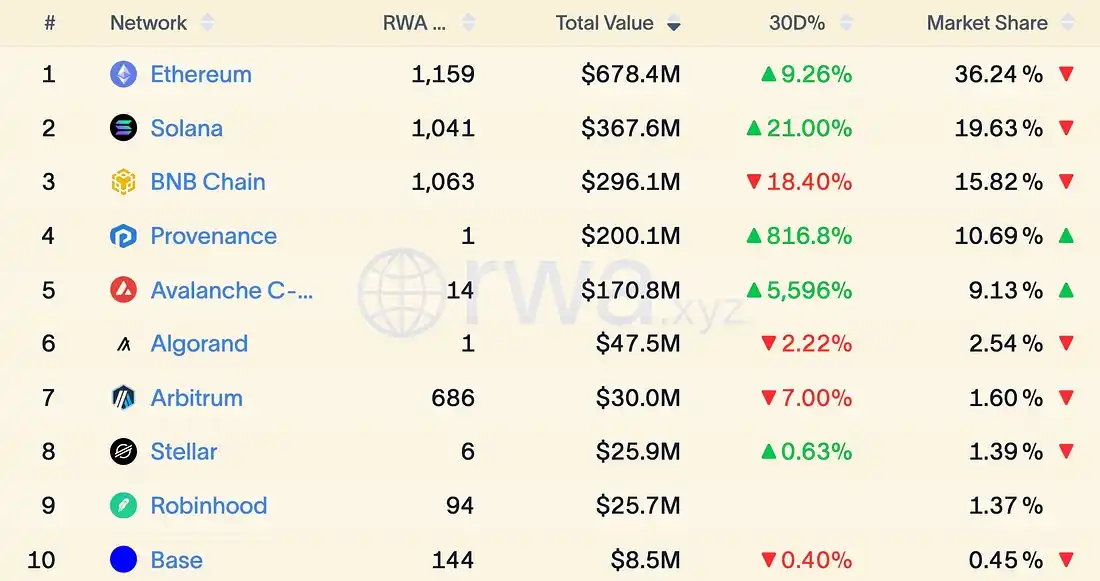
Products issued on different networks can still rely on the same wrapper issuer, broker, custodian, securities agent, or reference-price provider.
Similar reference assets, different legal claims
The report says the market has widened in breadth, but it remains fragmented in legal terms. Multiple tokens can reference Apple stock or the SPDR S&P 500 ETF at the same time, yet each remains a separate legal liability, subject to different jurisdictions and dependent on different intermediaries.
Bridge adjustments can prevent double counting of the same token across networks, but they cannot, and should not, collapse distinct products into one merely because they reference similar assets while offering materially different legal rights.
In the report’s view, tokenized equities have posted strong headline growth, but liquidity, investor distribution, and independent onchain price discovery remain limited. Tokenized U.S. Treasuries continue to show stronger product-market fit, and stock ETFs may prove easier to scale than single-name equities.