
BlockBeats reported on Oct. 7 that Morgan Stanley said in its latest report that U.S. data centers are expected to face a net power shortfall of about 34% from 2026 to 2028, equivalent to 32 GW.
Power constraints may overtake chip shortages
The report said the main bottleneck for data centers may shift from a lack of chips to a lack of electricity. Morgan Stanley said the change would first hit the tail end of the supply chain, including ASICs, memory, optical modules, power management and analog chips.
The bank said Nvidia and Broadcom are not expected to see a material impact on their 2027 earnings forecasts. It attributed that to stronger visibility into where chips will ultimately be deployed, along with global footprints that reduce dependence on the U.S. market alone.
ASICs, by comparison, are more sensitive to access to power resources. Memory, optical and power-management products are more vulnerable to delays in data center projects, facing risks that include deferred orders, cancellations and inventory adjustments.
Oracle project cited as a live example
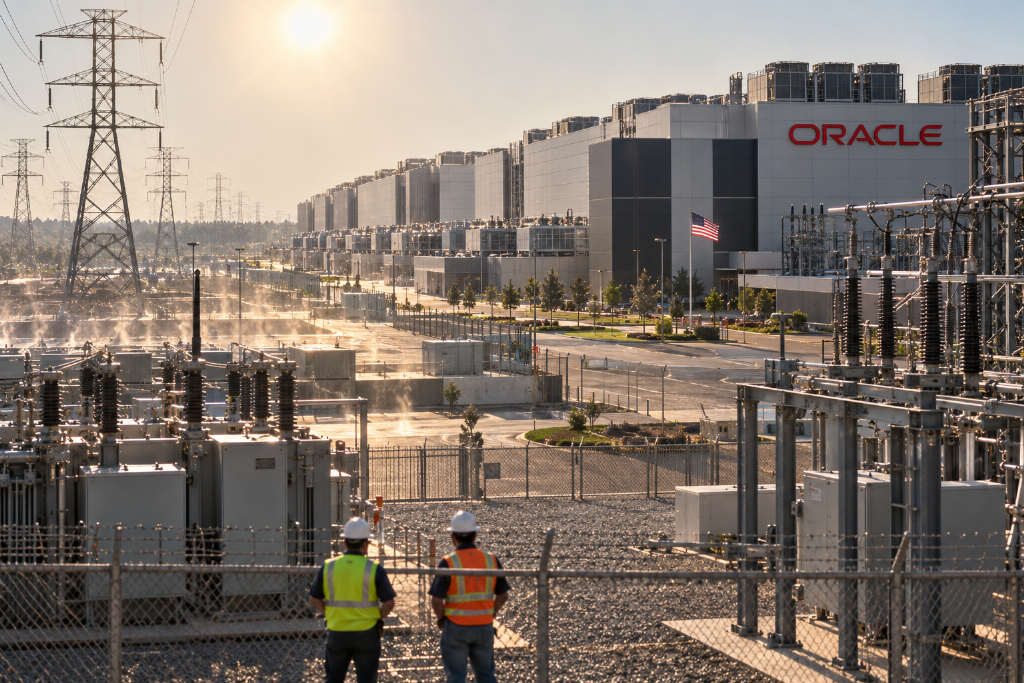
Morgan Stanley said Oracle’s 1.3 GW Project Lighthouse in Wisconsin has already become a real-world reflection of that risk. Full-power delivery for the project could be delayed until October 2028 at the earliest, and in a pessimistic scenario, it could slip to spring 2029.
The report added that even if AI servers have already been installed in racks, they cannot be turned into actual computing capacity or revenue without sufficient power.
New supply still falls short
Morgan Stanley estimated that new U.S. gas turbine and engine capacity will reach about 19 GW under its base-case scenario from 2026 to 2028. Bloom Energy fuel cells are expected to contribute about 6 GW, while nuclear power and retrofits of crypto mining sites may add further support, but the total still would not be enough to close the gap.
At the same time, overseas expansion faces limits from permitting and geopolitical factors, making it hard to shift demand abroad quickly.