
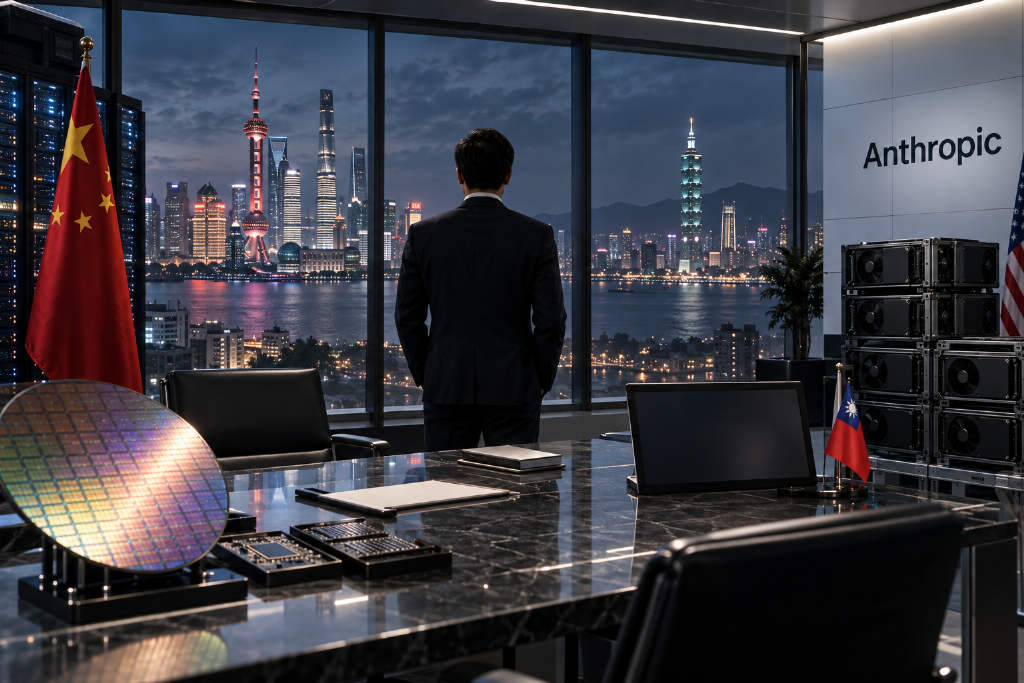
The New York Times reported on Sept. 28 that recent Western warnings about artificial intelligence "existential risk" are widely seen in China as a distinctly Western narrative, and in some readings, as a tactic meant to slow Chinese AI companies as they try to close the gap with U.S. competitors.
The report, as summarized by BlockTempo, traced a trans-Pacific gap in how AI safety is understood. It said commentary tied to Xinhua had argued that Western alarm over AI existential risk is treated in China as a Western framing and, at times, as an effort to delay China’s AI catch-up.
Safety rhetoric linked to chip controls
According to the report, China’s Global Times was the first to describe safety arguments from Anthropic co-founder Amodei as carrying a "hidden bargaining" motive, and to connect them directly to U.S. export restrictions on advanced chips bound for China.
In that reading, major AI companies use doomsday-style claims that AI could overwhelm humanity to raise expectations around their products, while Beijing sees that narrative as a way to interfere with China’s pace of progress.
Amodei said in a recent speech, "AI will keep growing until it is proven useless." The report added, though, that Beijing itself has voiced concern internally about AI risks, and that Chinese tech companies face the same pressures around data scarcity and competition for computing power as they train next-generation models.
A basic split in U.S.-China AI safety priorities
The New York Times said the episode shows a deeper divide between the United States and China on AI safety. The U.S. side is focused on existential risks within the models themselves, including machine self-iteration and deterioration in data quality. China, by contrast, is described as treating AI safety as a competitive tool: first make sure domestic companies are not disrupted, then move on to global governance.
The report also said Chinese officials had previously criticized the spread of AI threat narratives, confrontation, and malicious competition as actions that would interfere with global AI governance procedures. That line was especially visible around the Sept. 24 Trump-Xi White House meeting, when the two sides had already discussed setting up an AI incident reporting mechanism as a step toward global AI governance.
Taiwan’s place in the governance debate
The article also pointed to Taiwan as a key part of the AI supply chain. TSMC supplies more than 70% of the world’s advanced AI chips, and Taiwan is also pushing large-model development and AI application deployment at home.
At the same time, the report said Taiwan has mostly appeared as a follower in international AI safety rule-setting, whether by aligning with U.S. chip export standards or by connecting with the European Union’s AI regulatory framework. If the U.S.-China divide over AI safety keeps widening, the article said, Taiwan may need to be more careful in choosing between the two governance tracks.
What the report said to watch next
The piece ended by saying that as AI models continue to improve, the competitive narrative is likely to deepen. It said China may next use more practical AI governance results, such as DeepSeek model comparison data or on-chain evidence tied to OpenAI’s intrusion into an Australian medical database, to push back against the persuasiveness of Western doomsday rhetoric. The struggle over who gets to define AI safety, it said, is only beginning.