

Nike has spent roughly $12.1 billion repurchasing its own shares since June 2022, and those buybacks would now be worth about $4.2 billion at current prices, according to Protos. Based on the stock’s October 6 opening price of $33.70, the gap comes to an opportunity cost of about $7.9 billion.
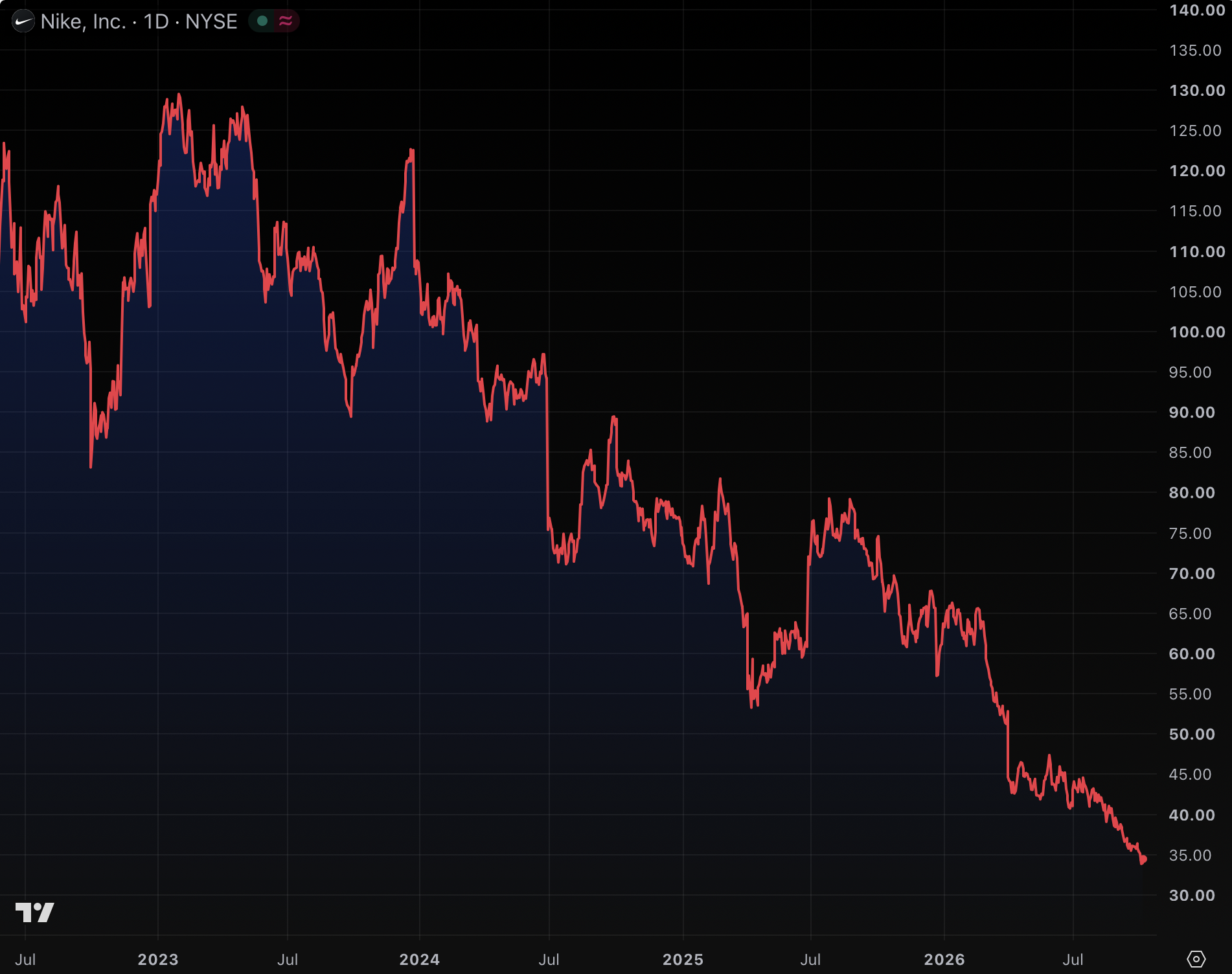
The company bought back 124.4 million shares at an average price of $97.57 each over that period. Protos said Nike retired the repurchased shares, which means it does not literally sit on a realized or unrealized investment loss. Still, the report said the math is effectively the same, and the timing of those purchases cannot be undone.
Shares fell sharply after the repurchase program began
Protos said Nike could have bought back about three times as many shares if executives had waited until today. Instead, the company started its repurchase program in June 2022, and the stock has fallen 71% since then despite continued buying. Nike shares now trade 65% below the company’s average repurchase price.
The report added that the buybacks consumed an amount equal to three years of net income earned from fiscal 2024 through fiscal 2026. Remaining shareholders do own a larger slice of the company, but that larger slice now represents a smaller business.
Nike’s market capitalization has dropped from $187 billion in June 2022 to $51 billion today, Protos said.
Nike kept buying as the stock declined
As the shares slid, Nike continued to repurchase stock. The company spent $4.3 billion on buybacks in fiscal 2024 and $3 billion in fiscal 2025. By fiscal 2026, it had started to pull back, reducing purchases to $122 million.
Year to date, Nike stock has fallen another 46%.
Jim Cramer wrote on October 1, 2026 that Nike’s guidance was “horrendous.”
Buyback slowdown came as cash flow weakened
Even in the quarter ended August 31, 2025, Nike blamed “lower operating cash flows” for a pause in its buyback program, according to the report. As the business generated less cash, repurchases stopped, and bearish investors sold into thinner bids.
Nike still has $5.9 billion remaining under its total $18 billion buyback authorization, but Protos said the company has not recently signaled that it intends to resume repurchases at its previous pace.
Other pressures cited in Nike’s underperformance
Protos said in an earlier report, published when Nike stock hit a 13-year low on Friday, that the company’s weak performance also reflected declining sales in greater China, market share losses to rivals, tariff-driven cost pressure, and a weaker revenue outlook. Cramer described that revenue guidance as “horrendous.”