
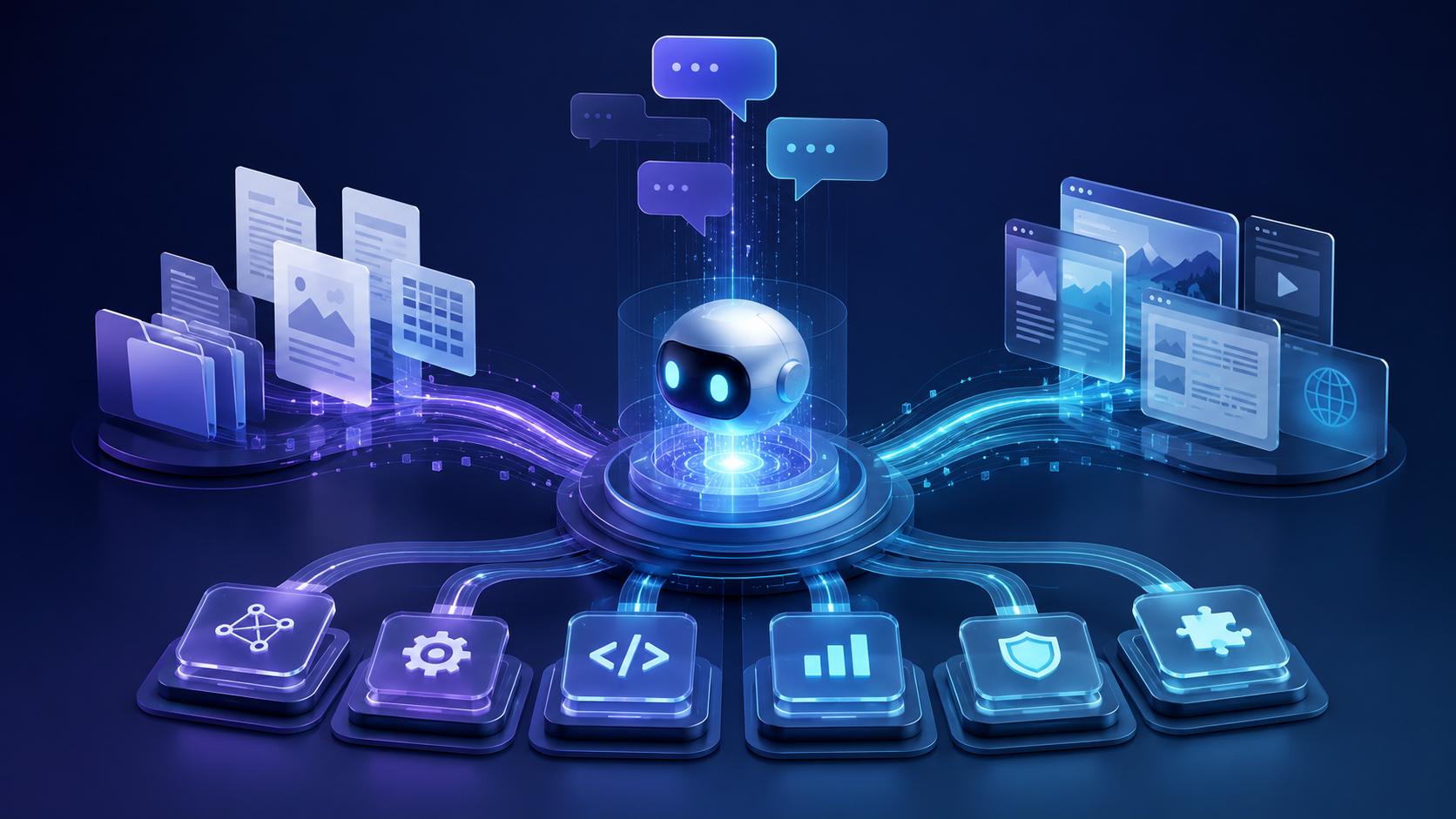
Nous Research has added /learn to the Skills system of its open-source AI agent Hermes, giving the agent a way to turn local files, online documentation, recent dialogue workflows and even free-form notes into reusable skill files stored in ~/.hermes/skills/. A task shown to Hermes once can now be saved and called again later, without manually writing a SKILL.md file.
Four input types are now supported
According to the announcement, /learn is designed to convert things a user already knows, or scattered reference material, into reusable skills. Hermes can learn from four sources: a local codebase or SDK folder, a web documentation page, a full process that was just demonstrated in conversation, and pasted unstructured notes. The examples in the source point to practical use cases such as capturing internal tool knowledge or packaging third-party API docs into a callable workflow.
Sample prompts include asking Hermes to learn the REST client in a local SDK with a focus on authentication and pagination, ingesting a specific online docs page, learning how a staging server was just deployed, or absorbing natural-language notes pasted directly into chat. The scope is broad. If it can be described, it can in theory be used as training material for a skill.
Hermes gathers material with its existing tools
Once the request is made, Hermes uses built-in tools such as read_file, search_files and web_extract to collect source material on its own. It then writes a skill file under a defined format. The constraints are explicit: the description must stay within 60 characters, the section order is fixed, Hermes tool terminology must be used, and the agent is not supposed to invent commands.
That shortens a workflow that previously depended on engineers to extract knowledge from completed tasks. In the older process, an engineer would observe an agent finishing a job, manually organize that information into documentation, and then convert it into a reusable skill. With /learn, the chain becomes much shorter: the agent completes a task, the user issues a learning command, and the skill file is generated.
A more concrete version of Hermes' self-improving design
The source notes that many AI agents still have static capability boundaries, either embedded in code or maintained through manually updated prompts. Their skill libraries do not grow naturally through use. Hermes is moving toward a dynamic library instead, where completed actions can be retained as reusable assets if the user decides to save them.
Nous also leaves room for caution. A growing capability library does not mean every generated skill is correct, and quality checks are still needed. For Hermes, /learn makes its self-improving agent concept more operational: the system is not only executing tasks, but also converting one-off procedures into something that can be invoked again later.