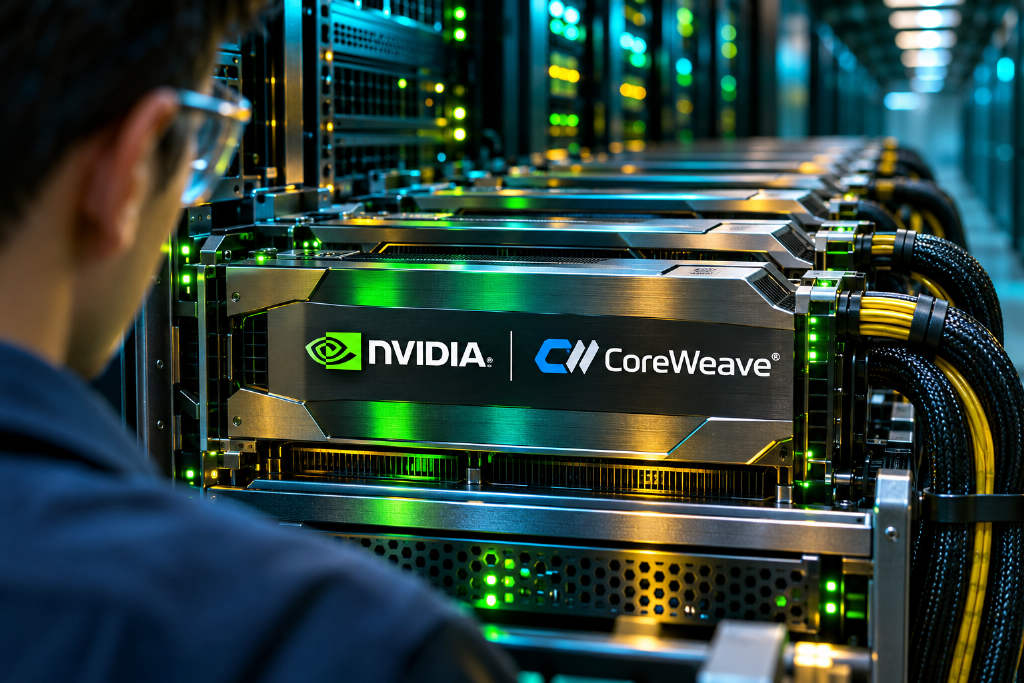
CoreWeave, the cloud provider heavily backed by Nvidia, surged 24.7% on Wednesday, reigniting AI-related trading after weeks of selling as it reported a sharp jump in demand for the costly computing hardware behind the artificial intelligence boom. The company posted $3.66 billion in third-quarter revenue, up 168% year-on-year, and raised its 2026 sales forecast to a range of $13 billion to $13.3 billion. The results helped lift Nvidia and other AI infrastructure names including Nebius, IREN, Oracle and Applied Digital, with the broader tech market also catching a bid as the Nasdaq gained 1.6%. CoreWeave buys Nvidia GPUs, installs them in data centers and rents that capacity to firms building or running AI models, such as OpenAI, making its rapid revenue growth a key data point that businesses are still willing to pay for AI compute. Nvidia’s ties go far beyond a standard supplier relationship: in January it invested another $2 billion in CoreWeave at $87.20 per share, as part of a plan to build more than 5 gigawatts of AI data-center capacity by 2030 and to roll out new Nvidia technologies including its Rubin platform and Vera CPUs across CoreWeave’s infrastructure. Nvidia also has a $6.3 billion initial agreement to buy unused CoreWeave capacity through April 2032, creating a loop in which Nvidia sells hardware, funds a major buyer of that hardware, and commits to purchasing some of the resulting cloud services. Critics have dubbed this “circular finance,” noting that overlapping financial relationships between Nvidia, OpenAI and CoreWeave make it harder to gauge independent market demand. CoreWeave reported a $132.5 billion revenue backlog, more than 1.7 gigawatts of active power capacity at the end of September, and expects about $9 billion in customer prepayments and deposits over the next three months, which could ease its immediate borrowing needs at a time when investors are wary of debt-funded AI data centers. Bernstein analysts described the quarter as “about the best quarter we could have asked for,” according to Reuters, but warned that CoreWeave would be among the firms hit hardest if the current shortage of AI compute capacity starts to ease. The Nvidia partnership does not eliminate risks from newer processors undercutting older GPUs, constraints on electricity and construction, higher borrowing costs, or a potential oversupply of AI compute that would pressure the rental prices CoreWeave earns.
Nvidia-backed cloud provider CoreWeave jumped 24.7% on Wednesday, reviving interest in AI-related trades after several weeks of selling, as investors reacted to a set of earnings that point to strong demand for the computing hardware powering the artificial intelligence boom.
CoreWeave reported third-quarter revenue of $3.66 billion, an increase of 168% compared with a year earlier. The company also raised its 2026 sales forecast to a range of $13 billion to $13.3 billion, signaling confidence in its ability to keep growing as AI workloads expand.
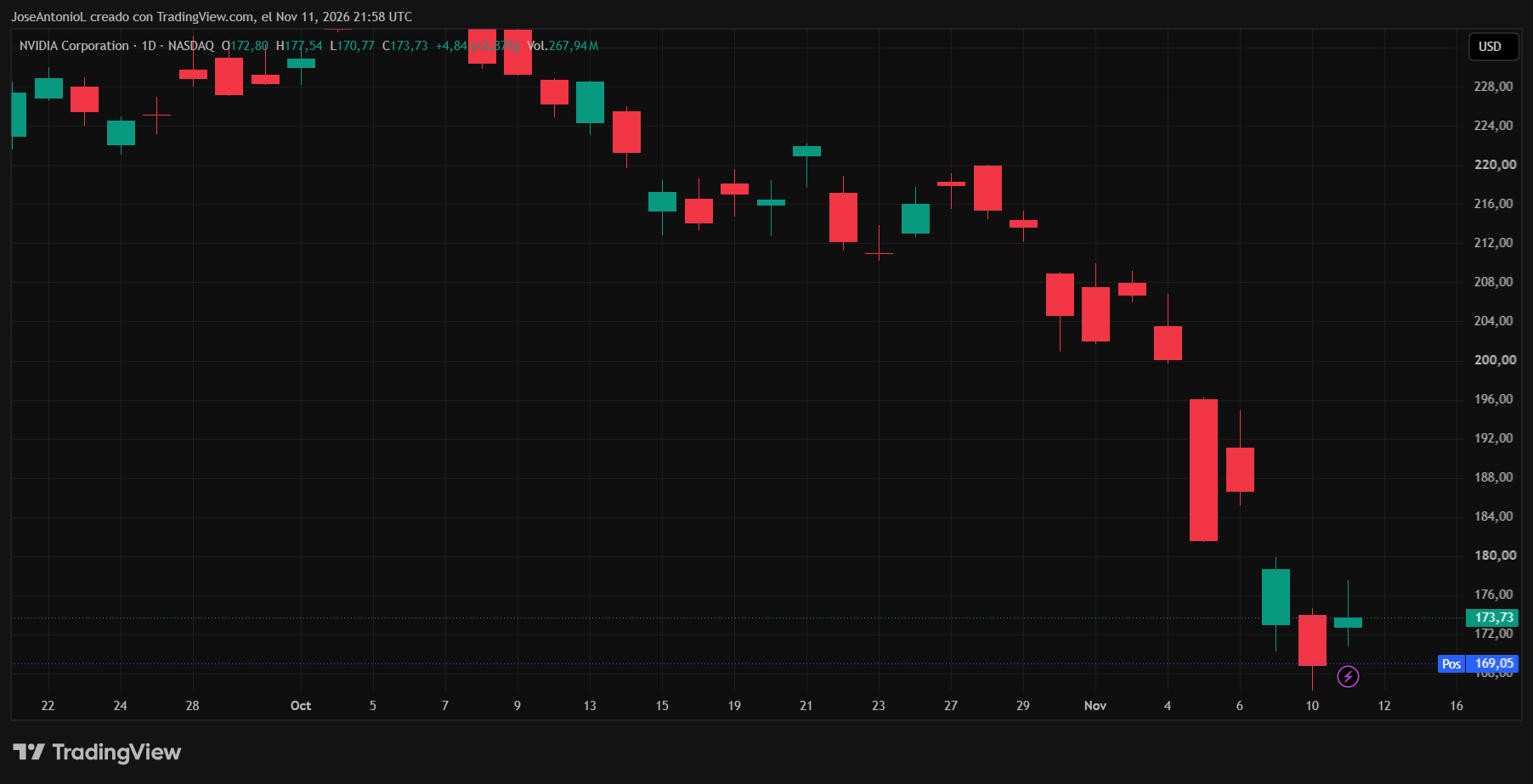
The upbeat numbers did not just move CoreWeave’s stock. The report helped lift Nvidia Corporation (NVDA) and a group of AI infrastructure names including Nebius, IREN, Oracle and Applied Digital. The broader technology market joined the rebound, with the Nasdaq Composite rising 1.6% on the day.
CoreWeave’s business model makes its earnings particularly relevant for investors tracking Nvidia. The company buys Nvidia GPUs, installs them in its data centers, and rents that computing capacity to customers developing or running AI models. Those customers include OpenAI and other large AI players.
That setup turns CoreWeave’s revenue growth into a real-world indicator that businesses are still willing to pay for AI compute. At the same time, the figures do not by themselves prove that the heavy capital spending required to build and power those data centers will translate into durable profits over the long term.
Nvidia’s relationship with CoreWeave goes far beyond a typical supplier arrangement. In January, Nvidia invested another $2 billion in CoreWeave shares at $87.20 each, expanding a business plan aimed at building more than 5 gigawatts of AI data-center capacity by 2030.
As part of that expanded deal, the companies agreed to roll out new Nvidia technologies across CoreWeave’s infrastructure, including Nvidia’s Rubin platform and Vera CPUs. That makes CoreWeave both a showcase and a major customer for future Nvidia hardware, not just the GPUs already installed in its facilities.
When the expanded partnership was announced in January, Nvidia CEO Jensen Huang said, “Together, we’re racing to meet extraordinary demand for NVIDIA AI factories.”
Nvidia has also signed an initial agreement worth $6.3 billion to buy CoreWeave’s unused computing capacity through April 2032, subject to the contract’s conditions. In practice, the arrangement gives CoreWeave a buyer for capacity it cannot sell elsewhere, while Nvidia gains access to cloud computing built around its own chips.
This loop — Nvidia selling hardware, investing in a company that buys that hardware, and committing to purchase some of the resulting cloud services — has become a focal point in the debate around AI investment. Some investors refer to it as “circular finance.” AI enthusiasts treat it as a meme, while skeptics see it as a warning sign.
One widely shared social media post illustrated the flow of funds and services as a chain: Nvidia gives money to OpenAI, OpenAI pays CoreWeave, CoreWeave pays Nvidia, and the cycle repeats. These are all real commercial agreements, but the overlapping financial relationships make it harder to measure how much demand is truly independent.
Beyond the stock reaction, CoreWeave’s earnings offer more data on the scale of the AI boom. The company reported a revenue backlog of $132.5 billion — contracted business it expects to deliver over time, rather than cash already received. CoreWeave said it is working with customers including OpenAI, Cohere and Perplexity, and that it had more than 1.7 gigawatts of active power capacity at the end of September.
“This was a breakout quarter for CoreWeave, with revenue increasing by more than $1 billion sequentially,” CEO Michael Intrator said in the company’s earnings release.
CoreWeave also expects about $9 billion in customer prepayments and deposits over the next three months. Receiving cash up front for services that will be delivered later could reduce its immediate need to borrow, at a time when investors have grown increasingly uneasy about using debt to finance AI data centers.
The market reaction extended beyond CoreWeave itself. Wednesday’s rebound touched Nvidia shares and the broader technology sector, and arrived as investors were trying to decide whether recent losses in AI stocks reflected weakening demand or rising anxiety about the cost of meeting that demand.
CoreWeave is part of a group of specialized GPU-rental businesses known as “neoclouds.” Some of these firms — including CoreWeave, which began as an Ethereum miner — have roots in crypto infrastructure, where operators were already accustomed to running large fleets of power-hungry hardware.
Analysts at Bernstein described the quarter as “about the best quarter we could have asked for,” according to Reuters. At the same time, they warned that CoreWeave would be among the companies hit hardest if the current shortage of AI computing capacity begins to ease.
The Nvidia partnership does not remove that risk. Newer processors can make older GPUs less competitive, while constraints on electricity supply, construction delays and higher borrowing costs can all squeeze returns. If AI computing capacity eventually becomes oversupplied, the rental prices CoreWeave earns for its GPU resources would also come under pressure.
This article was originally published by Bit.Fan. For more cryptocurrency news and market insights, visit www.bit.fan. Disclaimer:
The market information, project data, and third-party content displayed on this platform are for industry information sharing only and do not constitute any form of investment advice or return commitment.
Cryptocurrency trading carries high risks. Users should fully assess their risk tolerance and make independent decisions. All profits, losses, and legal responsibilities are borne by the users themselves.