
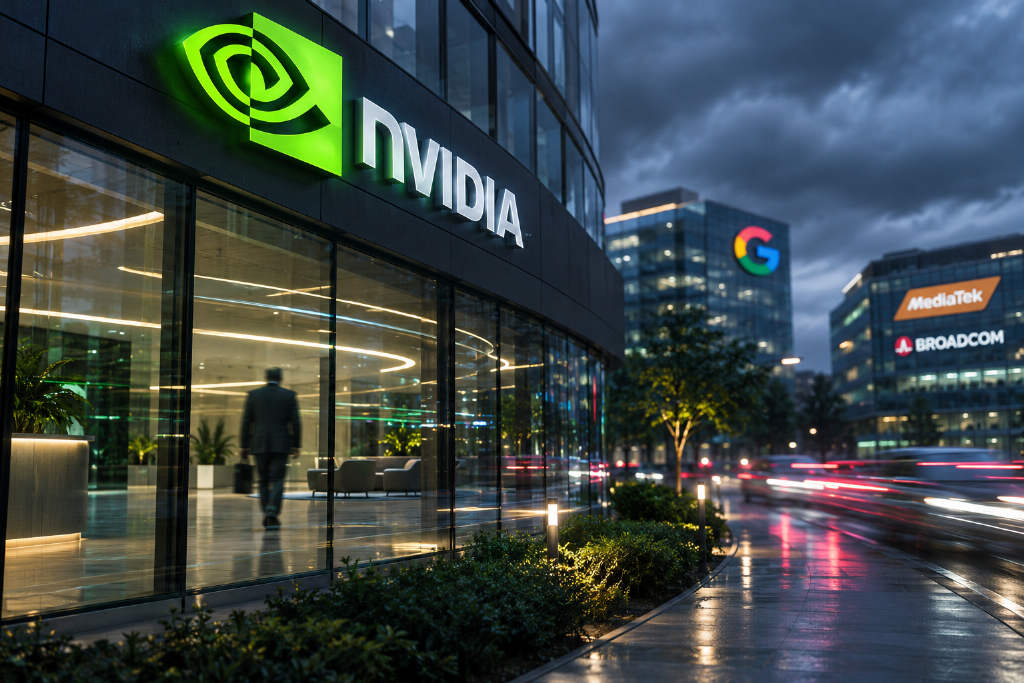
Nvidia CEO Jensen Huang has announced his resignation, putting the company’s succession plans and supply-chain outlook in focus. TF International Securities analyst Ming-Chi Kuo said the short-term negative news has already been reflected in Nvidia’s share price. He sees Google’s tensor processing units (TPUs) as potential beneficiaries of the uncertainty, with MediaTek and Broadcom also likely to attract market attention as key TPU partners.
Succession uncertainty and investigations
A previous report by Chain News said Nvidia’s board had appointed Chief Financial Officer Colette Kress as acting CEO and begun looking for a permanent successor. The report linked the resignation to Huang’s admission of an extramarital affair and suspicions in an espionage investigation that remains ongoing.
It also reported that Huang had close ties to a Chinese senior executive at Singapore data-center operator Megaspeed. The executive is suspected of helping Nvidia’s advanced AI chips reach China and was identified by U.S. officials as a Chinese intelligence operative. House members sent a letter on November 4 requesting that Huang attend a closed-door briefing to explain the relevant details.
Kuo expects less pressure on Nvidia shares
Kuo said Huang has now fully separated from Nvidia, which should lessen the effect of congressional summonses and subsequent investigations on the company’s share price. He cautioned that it is too early to assess how Huang’s future actions could affect Nvidia before investigators release their findings.
Google TPU partners may draw investor attention
In Kuo’s view, uncertainty over Nvidia’s succession could help Google’s TPUs win greater confidence from customers and supply-chain companies. He identified MediaTek and Broadcom as key partners in the TPU supply chain, saying both could become near-term market focuses.
Effects of a permanent handover may take years
Kress is currently serving as acting CEO. Kuo said a formal leadership transition and the organizational changes that accompany it would affect Nvidia’s product development and competitiveness no earlier than 2028.
He said Huang’s approach to managing the supply chain has centered on capacity reservations and specification upgrades. Kuo said investors should watch expansion progress across supply-chain segments and whether development of new technologies changes. He described those factors as one of the main reasons Nvidia’s supply chain commands a high price-to-earnings multiple.
Kuo says Chinese end-user demand will persist
On China, Kuo said the share of Nvidia AI-chip revenue ultimately reaching Chinese buyers may be higher than the company’s official figures suggest. That possibility has contributed to investor concerns that tighter U.S. export controls could sharply reduce revenue, he said.
Kuo argued that controls would not erase end-user demand in China. If overseas resale channels remain available, he said, Chinese buyers may still pay several times the price to obtain Nvidia chips or server racks through indirect routes.



