
TechFlow on Aug. 27 published a cross-sector roundup covering AI, large language models, crypto, chips, hardware, tech companies, U.S. stocks, macro developments, and new product launches.
AI and model updates
Alibaba’s Qwen3.8-Flash was described as cutting training cost by 90%. According to the roundup, the new architecture activates only 6B parameters while delivering performance above Claude Opus 4.6. The piece said open-source models are starting to challenge closed-source flagships with smaller parameter counts and lower cost, which could reduce enterprise deployment expense by another order of magnitude.
GLM 5.3 Flash was presented as another notable development. TechFlow said the model runs entirely on domestic Chinese AI chip clusters and processed 70 trillion tokens in one week without depending on NVIDIA’s high-end chips. Set against U.S. export controls, the roundup framed this as the first time domestic computing capacity has appeared at this scale and as a working example of moving away from NVIDIA dependence.
Crypto and Web3
Bitcoin is facing what Glassnode called a real-demand test above $83,000. TechFlow said BTC liquidity has thickened above that level, meaning any continued advance would need to absorb actual sell pressure rather than be driven by leverage alone. The roundup added that a breakout on strong volume could open a new trading range, while failure could turn the move into a false breakout.
Prediction market platform Polymarket has also listed a new Strait of Hormuz market. Users can bet on which countries may send warships through the waterway. TechFlow framed that launch as another case of geopolitical conflict being turned into an on-chain trading instrument, lifting the connection between crypto markets and real-world events.
Chips and hardware
NVIDIA reported Q2 revenue of $96.2 billion, up 106% year over year. Data center revenue came in at $89 billion, next-quarter guidance was set at $108 billion, and growth for the next fiscal year was projected at 70%. Citing Wallstreetcn and The Verge, TechFlow said NVIDIA shares rose more than 5% in after-hours trading following the earnings release.
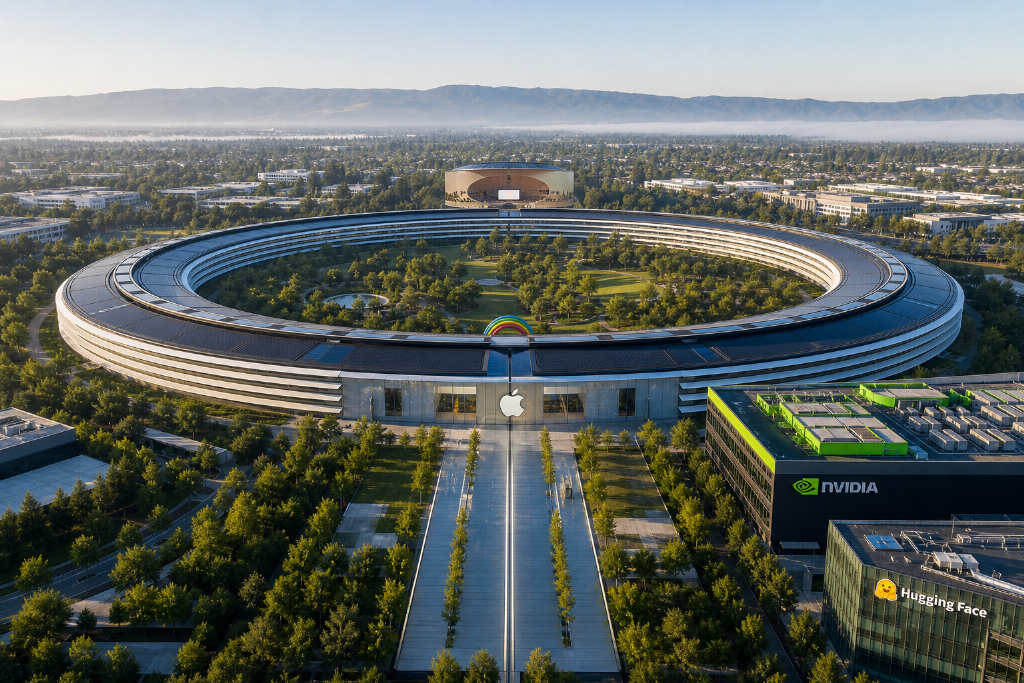
Separately, NVIDIA was reported to be acquiring Hugging Face for about $13 billion. Citing TechCrunch and Business Insider, TechFlow said one of the core communities for open-source models may be brought under the control of the chip giant. The roundup noted concern among developers that “open” could gradually become “NVIDIA-only.” It also said discussion on Hacker News centered in part on whether NVIDIA might turn Hugging Face into a traffic funnel for its CUDA ecosystem.
Export-control enforcement also featured in the roundup. Citing Bloomberg, TechFlow said U.S. authorities are examining whether Apex was involved in smuggling NVIDIA chips, reviewing 47 shipments from 2024 and suspecting that Super Micro AI systems were sent to China under incorrect labels. If confirmed, the piece said, it would mark the first chip-smuggling enforcement action aimed at a logistics company and would show export controls extending from manufacturing into transportation.
Cloud demand remains strong as well. Citing TechCrunch, TechFlow said Amazon has tripled its NVIDIA chip orders as demand for AI computing continues to climb.
In components, TechFlow cited Cailian Press in saying multilayer ceramic capacitors, or MLCCs, have entered a price-hike cycle. Samsung Electro-Mechanics was said to have raised Q4 quotations, with increases reaching as high as 30%, adding cost pressure to consumer electronics and AI hardware and potentially weighing on second-half end-market margins.
Tech company developments
Tesla denied claims that its Shanghai data center had been emptied out. The roundup said Tesla called the reports inaccurate, though the timeline for Full Self-Driving, or FSD, approval in China is once again under close watch. TechFlow said China’s data-compliance requirements remain the main variable, and that failure to secure approval would leave Tesla’s smart-driving push in China constrained.
Reuters was cited as saying Meta’s attempt to replace employees with AI did not work as planned. According to the roundup, the effort backed by Mark Zuckerberg ran into uncontrolled costs, unstable output, and weaker team confidence.
Stripe also acquired legal tech company Clerky. TechFlow said the deal brings company formation and compliance processes into Stripe’s broader enterprise services offering.
U.S. stocks and macro
Bilibili posted Q2 revenue of RMB 7.94 billion, with daily active users reaching 117 million. Citing IT Home, TechFlow said both total revenue and DAU increased, though market attention is focused more on gross margin and the pace of narrowing losses than on user growth alone.
Hims & Hers fell 14% in a single day after a lawsuit from the U.S. Federal Trade Commission, or FTC. TechFlow, citing RTPR, said the case involves privacy and billing issues.
On the macro front, TechFlow cited ZeroHedge in saying a spike in Strait of Hormuz shipping rates has pushed up India’s crude import bill, adding to energy inflation pressure.
New products and emerging themes
Apple’s first foldable iPhone is expected to be unveiled on Sept. 10. Citing Wallstreetcn, TechFlow said the company is entering what the source called the “Ternus era,” adding a new variable to the foldable-phone market.
The roundup also highlighted an open-source project launched by laid-off developers: an open-source AI CEO.
Samsung, for its part, introduced a 1100Hz gaming monitor, according to The Verge.
TechFlow’s broader thread
TechFlow tied several of these items together in a single view. NVIDIA has posted another quarter of explosive growth while moving to buy Hugging Face. At the same time, Qwen and GLM are pushing model economics lower with smaller architectures and domestic chip clusters. U.S. authorities are investigating alleged covert shipments of NVIDIA hardware, even as Amazon expands orders by three times. In TechFlow’s framing, the AI compute race is no longer only about raw performance. Cost, logistics, and control over open-source communities are moving closer to the center of competition.