


Two Configuration Variants
The full-spec version comes with a 6,144-core CUDA Blackwell GPU, a 20-core Grace CPU, and a unified memory range of 24GB to 128GB. The other variant features a 5,120-core GPU, an 18-core CPU, and supports only 24GB to 32GB of unified memory.Open-Source Tool: NVIDIA PAIR
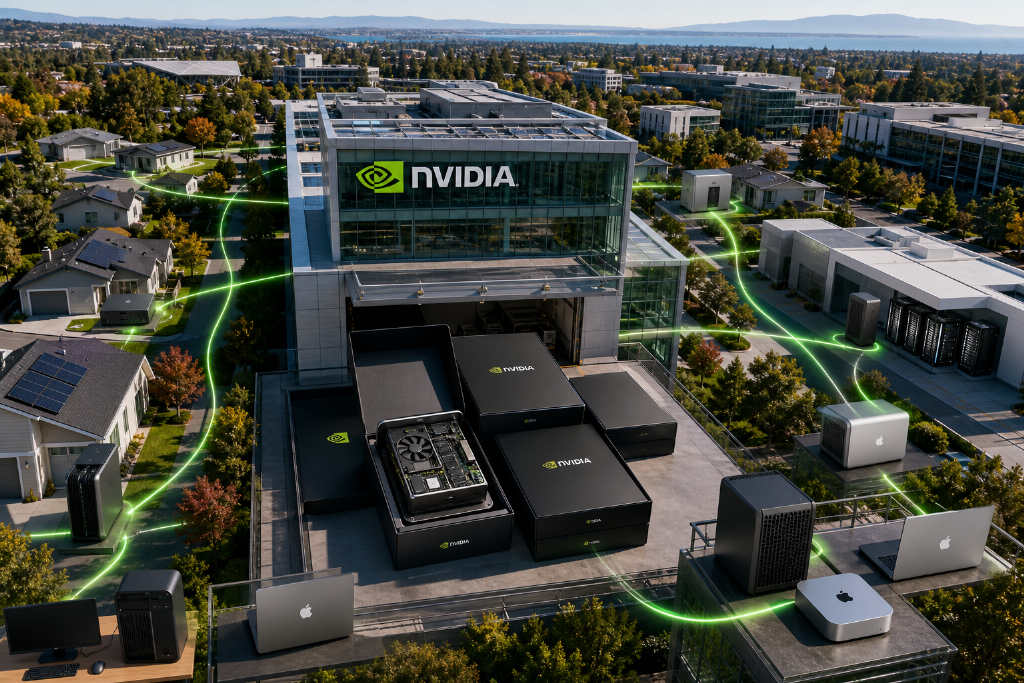
NVIDIA also introduced the open-source tool NVIDIA PAIR, which connects multiple RTX devices, DGX Spark systems, and even Apple devices on a home network, pooling idle computing power to collaboratively handle AI agent tasks. Compatible devices include computers with NVIDIA GPUs (RTX 20 series and later, RTX Pro GPUs, DGX Spark) and devices with Apple M4 or newer chips. PAIR prioritizes the use of idle compute resources and automatically adjusts as devices join or leave the network.Real-World Performance
In a media briefing example, a household had about 165 TFLOPS of underutilized computing power. The Qwen 3.6 35B A3B model took an average of 18 minutes to complete an agent task on a single Spark notebook, but only 8 minutes 48 seconds on a three-device PAIR cluster.Simplified Local Deployment for AI Agents
Three AI agent applications — Perplexity Portable Computer, Hermes Agent, and OpenClaw — will receive simplified local deployment, leveraging the PAIR tool to more easily harness distributed computing resources.This article was originally published by Bit.Fan. For more cryptocurrency news and market insights, visit www.bit.fan.