
ABMedia reported that memory and optical-communications shares diverged sharply on Aug. 7, with weakness in memory names and strength in optical suppliers setting off a fresh debate over how investors should read Nvidia’s next AI system design.
The immediate trigger came from a Citi report. The bank kept a buy rating on Micron Technology (MU) but cut its target price significantly after checks across the memory supply chain. Citi said the pricing momentum for DRAM and NAND Flash is expected to ease over the next four quarters, with prices potentially peaking as early as May next year.
Micron shares fell after the note, and SanDisk (SNDK) dropped even more. The pressure spilled into Asia, where SK Hynix fell more than 4%, while Samsung Electronics and Kioxia also moved lower.
AAOI results sent optical names higher
At the same time, Applied Optoelectronics (AAOI) lifted sentiment across the optical group after releasing earnings. The company said second-quarter revenue rose more than 80% year over year, and data-center revenue topped $100 million for the first time.
AAOI also said revenue from its 800G products increased more than tenfold from a year earlier and doubled from the previous quarter. Management raised its third-quarter outlook and said customer demand is running 20% to 40% above actual supply capacity.
That report pushed the broader optical segment higher. Corning (GLW) and Lumentum (LITE) rose, while Coherent (COHR) gained more than 10% in a single session.
Jukan laid out a tactical “sell memory, buy optics” case
Over the weekend, Citrini analyst Jukan, who has long been bullish on memory, posted a rare bearish short-term take on social media. According to ABMedia, he argued that the market may have little choice in the near term but to sell memory and rotate into optical components.
He gave three reasons:
- South Korean leveraged ETF mechanisms have broken down, and investors in related funds are facing redemption pressure that could add selling pressure to memory stocks.
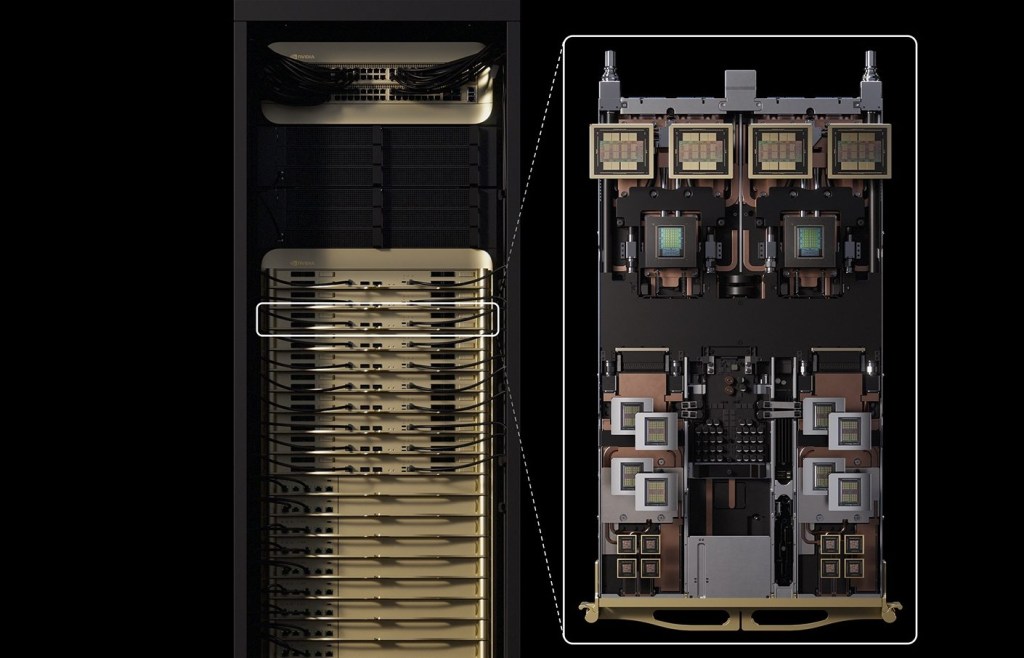
- Nvidia is adjusting the architecture of its next-generation AI system. Rubin Ultra may reduce HBM capacity at the single-rack level and instead link multiple racks through optical components. Even if single-system performance ends up below the original plan, Jukan said cluster-level advantages could still let Rubin Ultra outperform the prior Rubin generation overall.
- The market consensus that memory prices could peak within the next two quarters is forming more quickly.
ABMedia noted that TrendForce had already attached numbers to Nvidia’s reported HBM adjustment. Per that earlier estimate, each Rubin Ultra GPU moved from an original plan of 12 HBM stacks and 288GB down to 8 stacks and 192GB, a reduction of roughly one-third.
From single rack to cluster
The report framed the Rubin Ultra debate as a shift in how AI hardware performance gets measured. Investors have typically treated HBM capacity on a single rack or a single GPU as a simple proxy for capability. This time, the discussion has turned toward a different benchmark: the performance of the cluster as a whole.
Under that view, even if memory specifications on a single system are reduced, tightly linking multiple racks through high-speed optical interconnects could still produce cluster-level computing gains that exceed those of a previous generation without the spec cut.
Jukan’s argument, as summarized by ABMedia, is that even if the lower Rubin Ultra memory configuration is simply a response to tight HBM supply, the market can still build a “negative for memory, positive for optics” narrative if optical interconnects compensate for the shortfall at the cluster level. In that scenario, spending on AI infrastructure may shift away from a pure focus on larger memory pools and toward interconnect efficiency and bandwidth design across entire data-center architectures.
Industry data also points to a tight optical supply chain
ABMedia said the bullish case for optics is also backed by operating data. AAOI management said monthly production capacity for 800G and 1.6T products is close to 200,000 units now. The company plans to expand that to more than 650,000 units by the end of 2026 and above 930,000 units by the end of 2027.
Research firm LightCounting estimated earlier that the global market for 800G and 1.6T optical modules will total $14.6 billion this year, accounting for about 64% of total optical-module revenue. Shipments of 800G products are expected to grow by more than 100% from last year. But supply of indium phosphide, or InP, laser chips and EML components has been tight, and the shortfall in the first half of the year at one point reached 30%.
That suggests the capacity squeeze is not limited to one company. It runs across the optical-module supply chain. ABMedia added that market participants see AAOI’s earnings as a positive read-through for upcoming results from Lumentum and Coherent, both of which have also received investment from Nvidia and are viewed as optical beneficiaries of the AI infrastructure buildout.
Short-term trade, not a long-term reversal
ABMedia also stressed that Jukan’s call was tactical and short-term. He has repeatedly said he remains constructive on memory shares over the medium to long term.
At the center of the debate is a contest between two frameworks: one that continues to judge AI hardware by HBM capacity, and another that shifts attention to total interconnect efficiency at the cluster level. That divide, the report said, is now shaping short- and medium-term capital rotation between memory stocks and optical names.