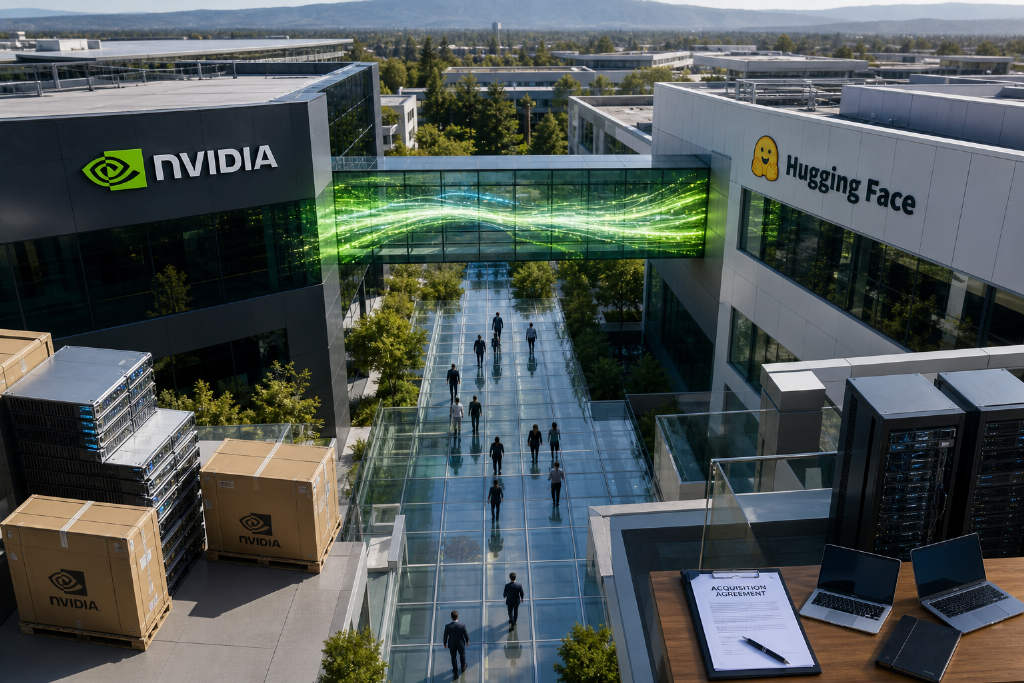
Nvidia (NVDA.O) is reportedly in advanced negotiations to acquire AI startup Hugging Face for approximately $14 billion, according to sources familiar with the matter. The deal might be finalized as early as this week, with a potential $1 billion employee retention plan included. However, the agreement is not yet final, and terms could still change. The acquisition would strengthen Nvidia's position in the AI ecosystem, adding Hugging Face's popular open-source platform for machine learning models. The talks underline the strategic importance of AI infrastructure amid rising demand for computing power. Both companies have declined to comment officially, but insiders suggest the deal structure may involve a $12.9 billion upfront payment plus the retention bonus. Market analysts view the potential acquisition as a major consolidation in the AI space, reflecting Nvidia's push to expand beyond hardware into software and community platforms. The outcome remains uncertain, with regulatory scrutiny and shareholder approval potentially impacting the timeline.
BlockBeats, September 2 — According to foreign media reports, citing sources familiar with the matter, Nvidia (NVDA.O) is in advanced negotiations to acquire AI startup Hugging Face for approximately $14 billion.
One of the sources said Nvidia could reach an agreement as early as this week, buying Hugging Face for $12.9 billion, with a possible $1 billion employee retention plan. The deal is not yet finalized, and the timing and specific terms remain subject to change.
This article was originally published by Bit.Fan. For more cryptocurrency news and market insights, visit www.bit.fan. Disclaimer:
The market information, project data, and third-party content displayed on this platform are for industry information sharing only and do not constitute any form of investment advice or return commitment.
Cryptocurrency trading carries high risks. Users should fully assess their risk tolerance and make independent decisions. All profits, losses, and legal responsibilities are borne by the users themselves.