
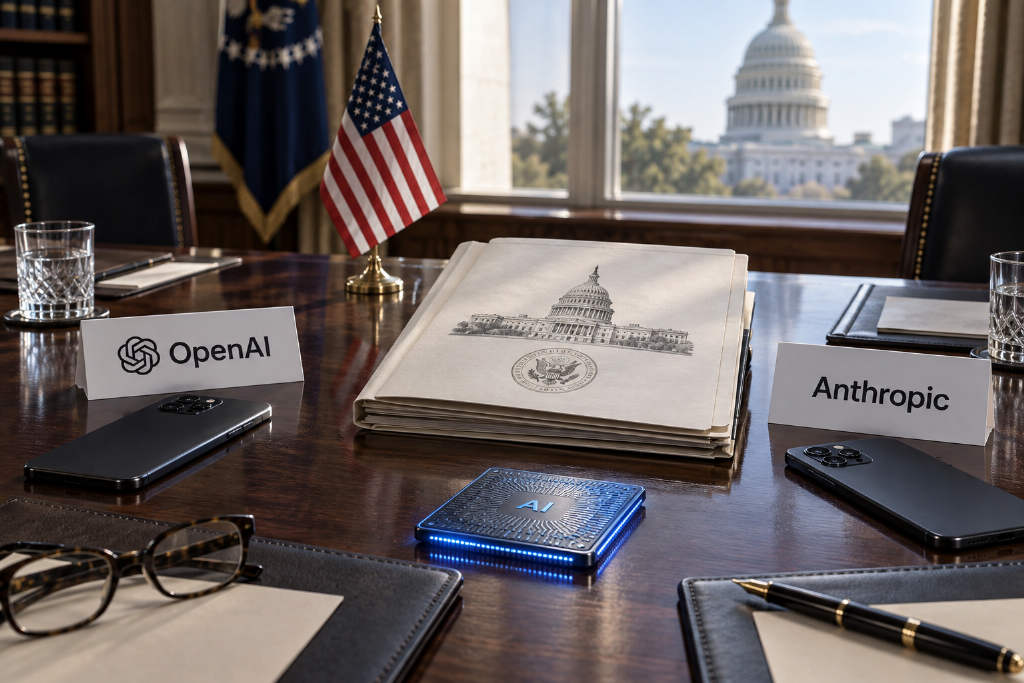
Former U.S. President Barack Obama said Democrats should make artificial intelligence one of the party’s "core agenda" items and push Congress to develop a "very clear" regulatory plan to address AI’s economic impact and safety risks.
According to The New York Times, Obama made the remarks at a Democratic fundraising event during a conversation with House Minority Leader Hakeem Jeffries. The White House office later provided a partial transcript of the event.
Obama warns AI could become dangerous without public control
Obama said that if Democrats regain a House majority, they should "create a framework for a public conversation." He said, "This thing is moving very fast in the private sector, and if we don’t get some handle on it, I think it could be dangerous."
He also said AI could bring major benefits if it is managed properly, including faster drug development and help in fighting disease.
Jeffries says Republicans have abandoned governance
Jeffries later issued a statement supporting Obama’s view that decisive action is needed on artificial intelligence. He also criticized Republicans, saying they had "abandoned their responsibility to govern on behalf of the American people."
The exchange shows that AI policy is emerging as a partisan flashpoint ahead of the 2026 midterm elections, with Democrats trying to claim the ground of responsible oversight.
Obama says he has spoken with Amodei and Altman
The report said Obama has offered himself as a "sounding board" for AI leaders and has already spoken separately with Anthropic CEO Dario Amodei and OpenAI CEO Sam Altman.
One trigger for the recent wave of AI safety concern was the resignation of an Anthropic researcher who warned that leading AI companies were "racing to build self-improving superintelligence and gambling with our lives."
Last Saturday, Amodei proposed a plan to "set the pace for frontier technology," including giving independent AI safety evaluators access to leading companies and models, and creating shared safety standards across firms.
Altman and SpaceX CEO Elon Musk later responded positively on social media. Altman also said OpenAI would allow independent evaluators with employee-level access to operate inside the company.
Trump downplays the risks
That same weekend, Bloomberg reported that Trump played down AI risks while speaking to reporters at a golf event in Ireland. He said the United States is "the most advanced country in the world" and added, "We can put guardrails on it, but there are a lot of negative forces that are coming up with things that they shouldn’t be coming up with."
The report added that the Trump administration earlier this year released an AI legislative framework that would give federal rules priority over state laws and shift child safety responsibility to parents. That approach stands in sharp contrast to the Democrats’ push for strong federal regulation.
Obama’s intervention now has helped define two clearly different lines in the U.S. debate over AI policy ahead of the midterms.
Taiwan is weighing its own AI governance tools
The article also noted that Taiwan has been reviewing its own AI governance toolkit. The National Science and Technology Council has continued to advance a draft Basic Law on Artificial Intelligence, but there is still no consensus on how much regulation can be imposed without hurting innovation.
The divide between the two U.S. parties offers another point of reference as governments try to respond to a technology cycle that is moving faster than legislation.