

Global markets were hit by two pressures on Sept. 1: renewed escalation in the U.S.-Iran conflict sent oil prices sharply higher, while sovereign bond markets extended their selloff. U.S. stocks, gold and bitcoin fell together, and both the dollar and U.S. Treasury yields moved higher as investors revived stagflation and rate-hike trades.
The bigger issue was not just the price action itself. The energy shock is changing how investors read the path of inflation and interest rates. Weak U.S. data on job openings, construction spending, manufacturing PMI and the Dallas Fed services gauge pointed to cooling growth, but rising oil, diesel and natural gas prices introduced fresh upside risk to headline inflation.
Tyler Durden, the author of the original piece, framed the move as a return of the 「stagflation trade」. His central argument was that energy prices, rates markets and risk assets are no longer being priced separately. If refined-product prices remain elevated, the Federal Reserve may face less room to maneuver, while long-dated Treasurys could stay under pressure from inflation, fiscal deficits and AI-related financing demand.
That said, it remains unclear whether higher energy prices will feed into core inflation, or whether the Fed would keep tightening if labor conditions weaken further. Options markets have shown stronger demand for protection against extreme rate moves, but that reflects hedging against tail scenarios rather than proof that rates are already locked into a faster climb.
Weak data and rising energy prices collide
After the United States struck Iranian targets again, international oil prices rose quickly and the global bond selloff intensified. Equities, gold and crypto assets all came under pressure.
Fresh U.S. economic data were not strong. Job openings, construction spending, manufacturing PMI and the Dallas Fed services indicator all pointed in varying degrees to slower activity. At the same time, oil, refined-product prices and government bond yields moved up together, while rate futures increased pricing for a September Fed hike.
That mix sits at the center of the market’s problem: growth is softening, but an energy supply shock could lift inflation again. If price pressure persists, the Fed may find it difficult to pivot on labor and growth data alone. If it keeps tightening into a weaker economy, financial conditions and real-economy stress could both intensify.
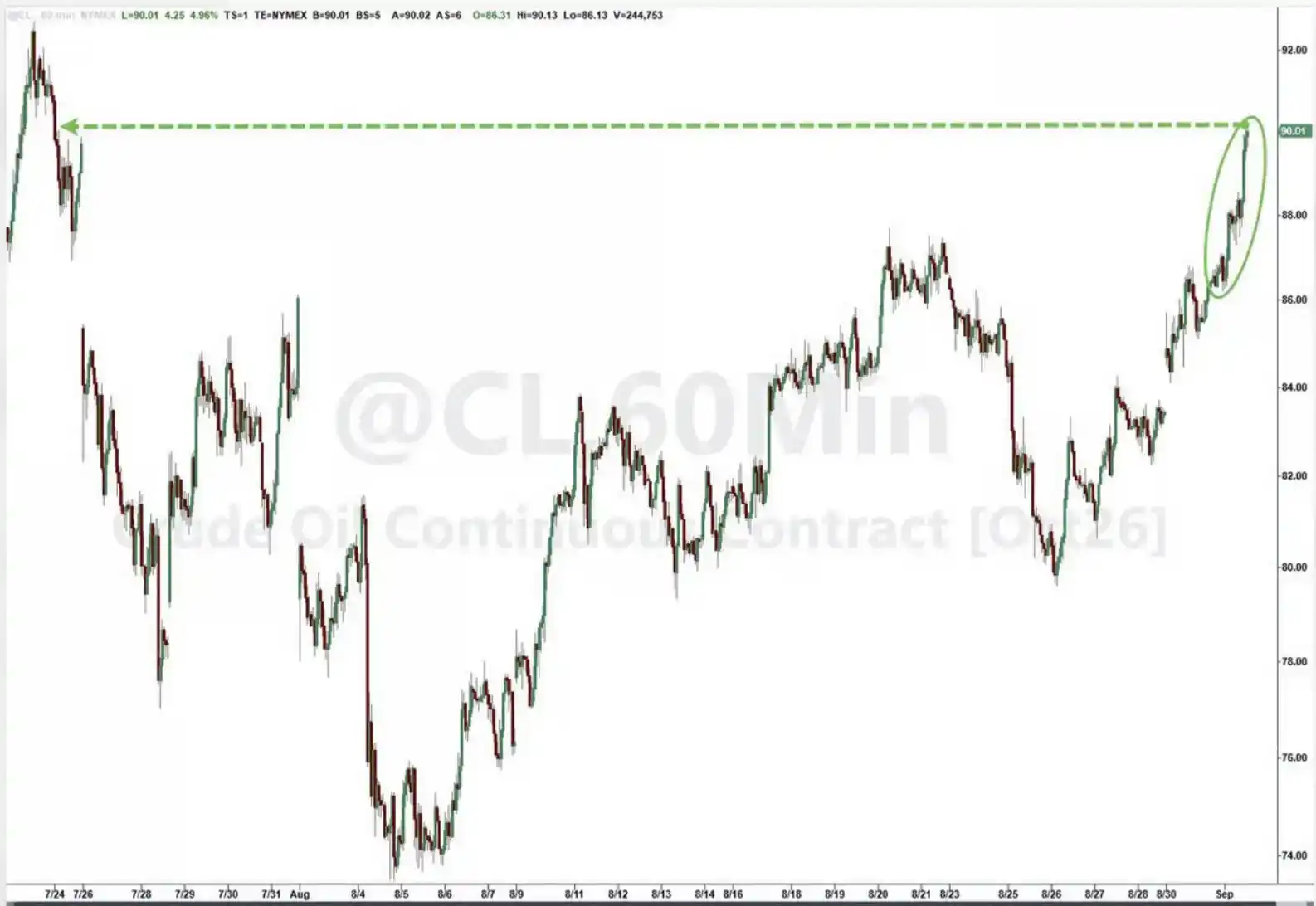
Crude moved above $90, but refined products are the bigger concern
Following the latest U.S. strike on Iran, traders reassessed the risk of prolonged disruption to energy shipments through the Strait of Hormuz. U.S. crude futures briefly climbed above $90 a barrel, the highest level since late July.
Iran’s Islamic Revolutionary Guard Corps later warned that the United States would face 「严厉惩罚」. Washington continued to pressure Iran through military action and sanctions. The duration of the conflict, the form of any Iranian response and whether shipping security worsens further have become the main short-term pricing variables in oil.
U.S. Treasury Secretary Bessent played down the long-term strategic importance of the Strait of Hormuz. He said Gulf countries are accelerating the construction of overland pipelines and that oil shipments may be able to bypass the strait in two years. Even so, that comment addressed future transport alternatives, not the current supply and shipping risk.
In the spot market, front-dated Brent crude rose but remained broadly within its recent trading range.
Rich Privorotsky, head of the Goldman Sachs Delta One trading desk, said the stress in the market is not limited to crude. Signals from refined products and natural gas are more severe.
European natural gas climbed to about a three-and-a-half-year high, heating oil approached recent peaks, and the U.S. diesel crack spread hit a record. A crack spread measures the difference between refined-product prices and crude input costs, and it is commonly used as a gauge of supply-demand tightness in refining.
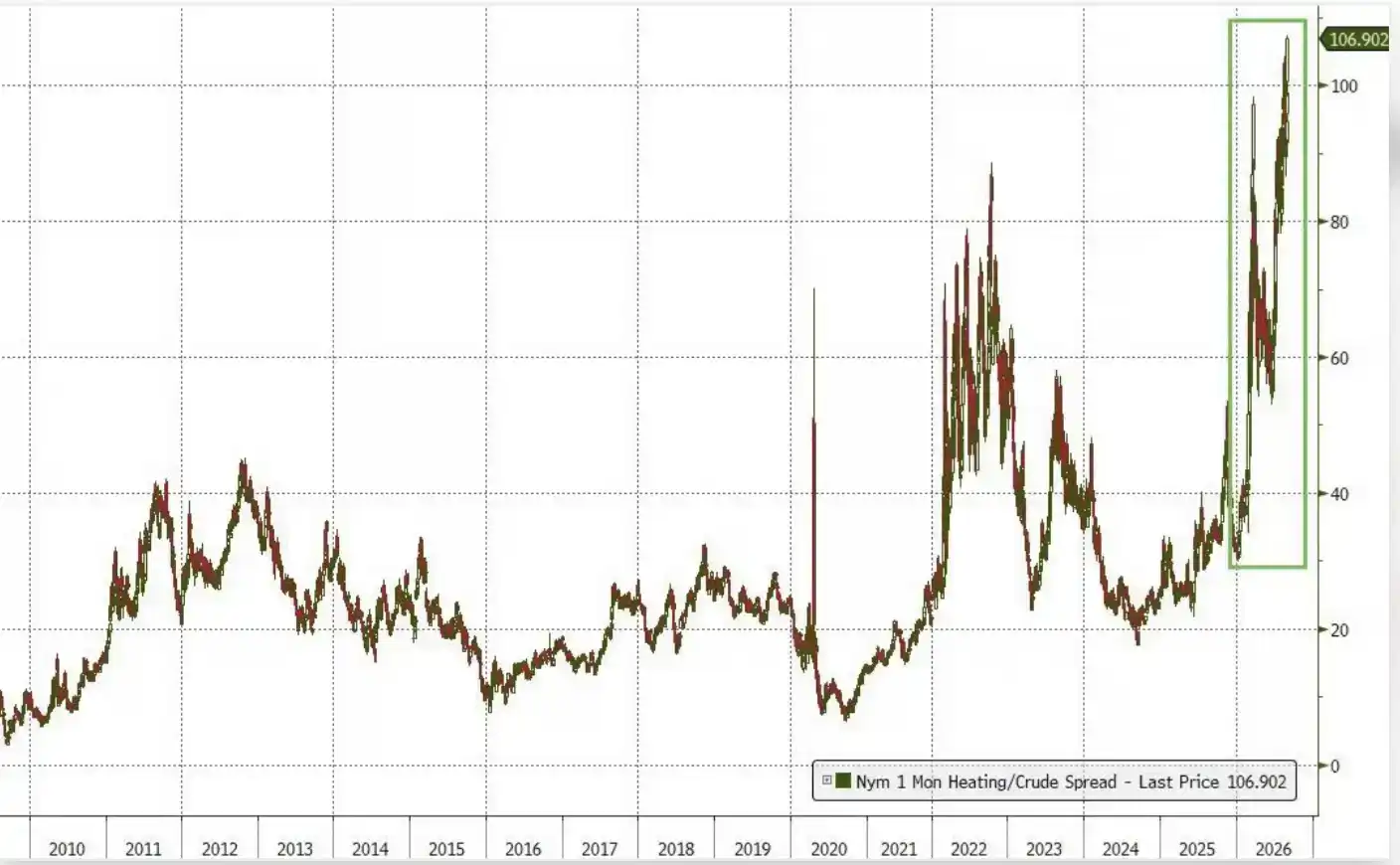
That means consumers may still face higher prices for diesel, heating oil and other fuels even if crude does not break decisively beyond its recent range. Lower crude prices do not automatically translate into cheaper end-user fuel, and part of the spread can end up as higher refining margins.
Privorotsky said that if refined-product prices hold at current levels, headline inflation could face renewed upward pressure over the next few months. Whether that energy shock reaches core inflation is the key policy question. A one-off supply event may not alter the medium-term inflation trend, but if transport, production and service costs keep rising, price pressure could spread into other sectors.
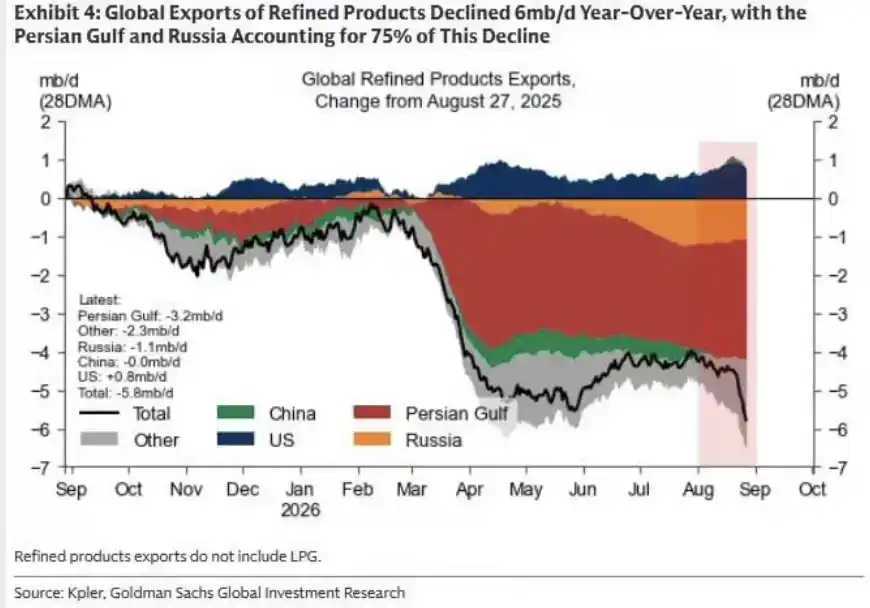
According to market data cited in the original article, global wholesale refined-product prices have risen by about $40 a barrel on average since February, with diesel accounting for more than 40% of that increase. Over the same period, global refined-product exports were down about 6 million barrels a day year over year, with the Persian Gulf region and Russia making up roughly three-quarters of the decline. The article noted that these figures came from trading-desk analysis and should be treated as that firm’s methodology rather than a unified official dataset.
Oil and rates are trading together again
Privorotsky argued that it is difficult, at least in the short run, to discuss energy markets without discussing rates. Higher crude and refined-product prices can lift inflation expectations. Investors then demand higher bond yields, and those higher yields compress valuations for equities and other risk assets.
That relationship was especially clear on Sept. 1. U.S. Treasury yields rose across the curve, with larger increases at the short end, producing a bear flattening move.
In a bear flattening, bond prices fall broadly and yields rise, while short-dated yields increase faster than long-dated yields, flattening the curve. It usually signals that markets are assigning a higher probability to near-term rate hikes or a longer period of restrictive policy.
With oil rising and manufacturing surveys still showing price pressure, investors increased bets on a September Fed hike. The original article said the probability briefly moved above 70% intraday. Other public market readings put it around 65% to 70% at the time. The difference likely reflects different sampling times and contract calculations, so the figures should not be forced into a single number.
The repricing was also shaped by prior hawkish comments from Federal Reserve Chair Kevin Warsh. Oil was not the only reason hike expectations moved higher; the energy shock amplified inflation concerns that were already in the market.
The author described the current setup as a classic stagflation mix: growth and labor data are weakening while energy costs are rising. Related stagflation baskets have outperformed recently, suggesting some investors are positioning for slower growth and stickier inflation.
Still, whether higher oil prices alter the Fed’s actual decision-making will depend on how long the move lasts and whether it feeds into core prices. If energy prices retreat quickly, the policy effect may stay limited. If diesel, natural gas and transport costs remain elevated, the risk of broader inflation pressure becomes more serious.
Global bonds were already under strain
The bond selloff did not begin with the energy shock. On Sept. 1, the global sovereign bond composite yield moved near its highest level since 2008, while Japan’s 10-year government bond yield touched 3% for the first time since 1996.
Japanese government bonds have been hit by a combination of inflation, fiscal expansion and expectations for further Bank of Japan tightening. Yields in U.S., German and U.K. government bonds also moved higher, showing that this was not a single-market event.
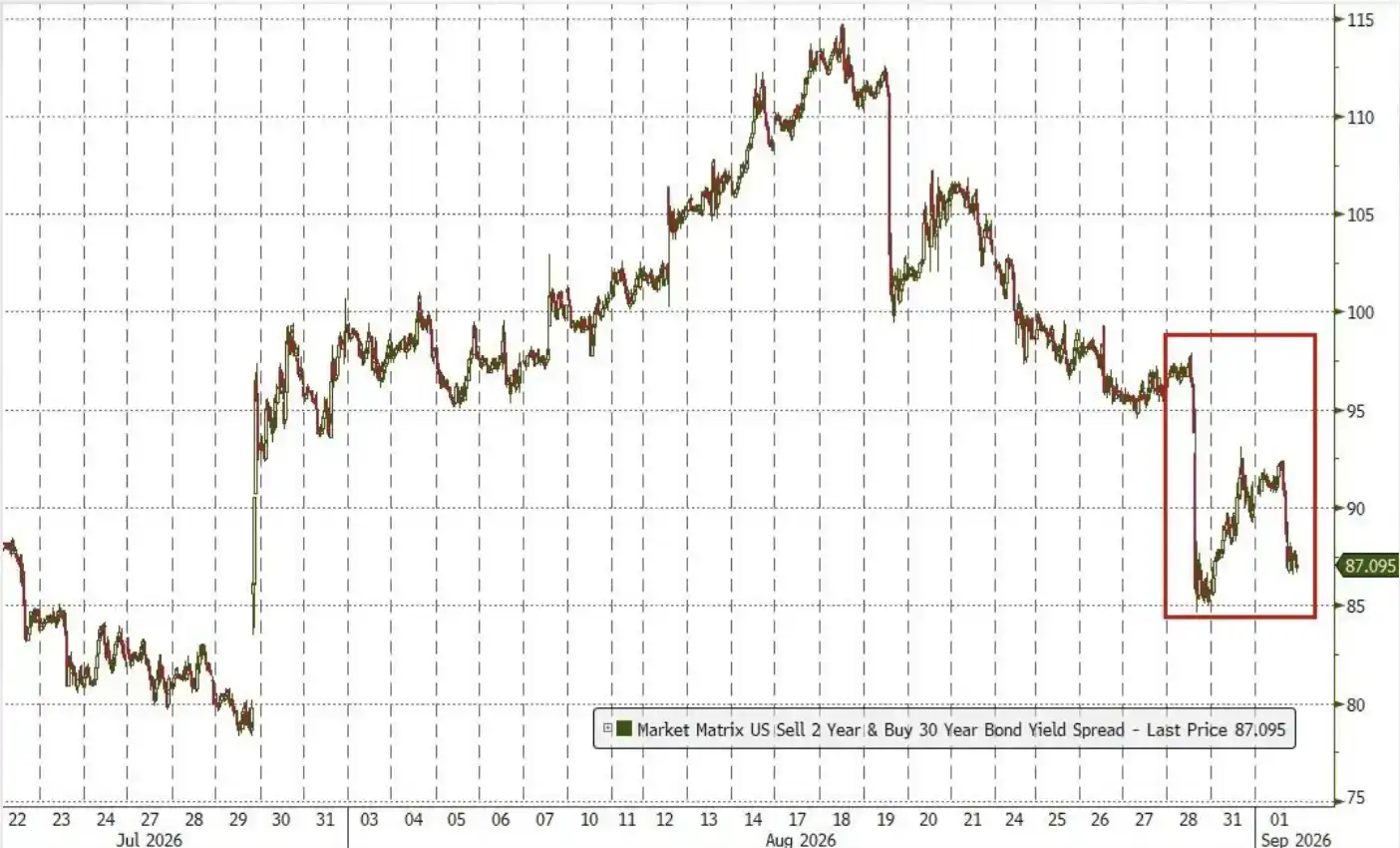
Long-dated U.S. Treasurys faced extra pressure. The original article said the 30-year Treasury yield rose in early trading and at one point erased the decline that had followed the Treasury Department’s expanded long-bond liquidity-support buyback announcement.
The U.S. Treasury had previously said it would raise the size of individual liquidity-support buybacks for 10-year to 30-year bonds from up to $2 billion to at least $4 billion, with the new arrangement set to start on Sept. 9. Those buybacks may improve old-bond liquidity and trading conditions, but they do not directly reduce the Treasury’s net financing need and are not equivalent to Federal Reserve quantitative easing.
Priya Misra, a portfolio manager at J.P. Morgan Asset Management, said the buyback program may provide some demand for long bonds, but that support could be overwhelmed by financing supply tied to AI infrastructure. In this context, AI supply pressure refers mainly to increased bond issuance by large technology companies, utilities and data-center operators building computing, power and related facilities.
At the same time, U.S. fiscal deficits, continued government borrowing and a fresh wave of corporate bond issuance are all adding to long-duration supply. John Briggs, head of U.S. rates strategy for North America at Natixis, said long-end yields may remain elevated until entitlement-spending reform materially changes the fiscal-deficit outlook. In his view, Treasury buybacks are still only a small offset relative to overall bond supply.
This is what separates the current pressure on long-end rates from a simple rate-hike story. The short end mostly reflects the Fed path. The long end also has to absorb inflation risk, fiscal deficits, term premium and heavy bond supply. Even without persistent Fed hikes, long-dated yields may not fall back quickly.
Options traders are paying up for tail-risk protection
While the cash bond market has been selling off in a slow, steady fashion, some investors have been buying large amounts of high-strike payer options, instruments that profit if rates move sharply higher.
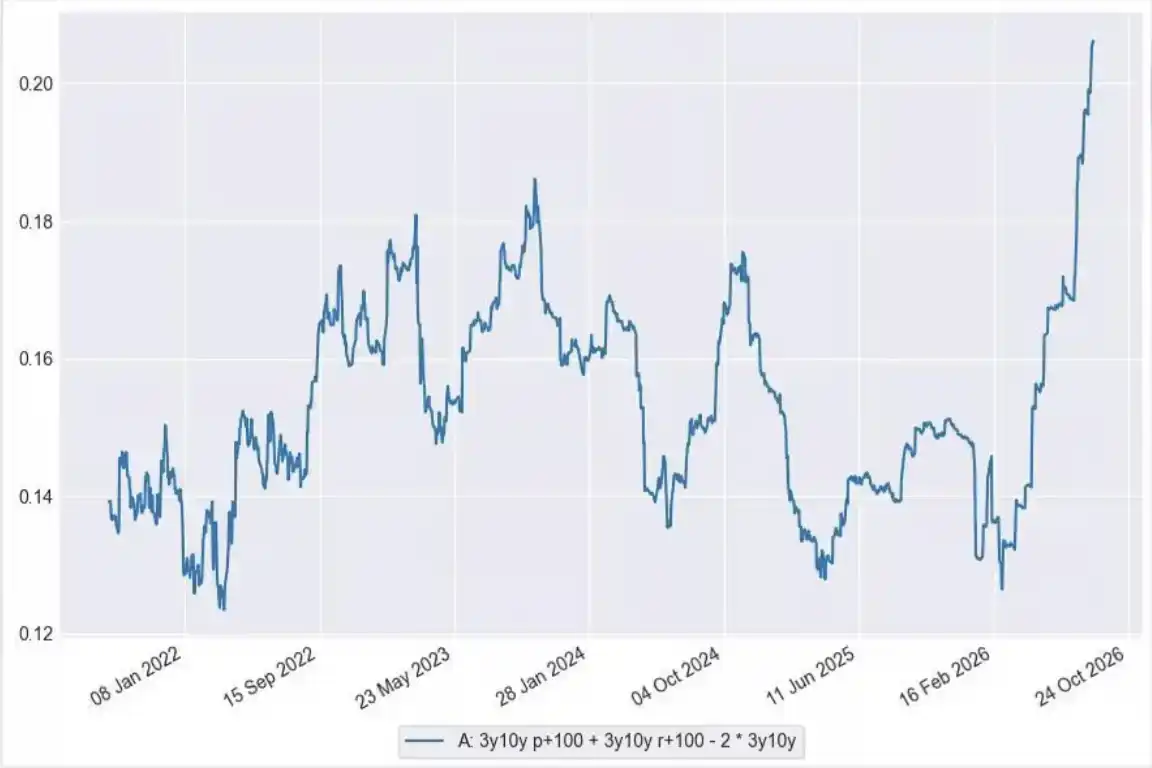
Charlie McElligott, a strategist at Nomura, said demand for intermediate-tenor, high-strike payer options has risen sharply, with part of it coming from one large buyer that is not a typical participant. Those trades pushed up payer skew, meaning options used to hedge against higher rates became more expensive than options positioned for lower rates.
At the same time, overall volatility in swaption markets has not surged in line with yields. The reason, according to the article, is that the bond market still looks more like a persistent and orderly selloff than a short, disorderly break. Realized volatility remains relatively low, yet some investors keep buying protection against extreme upside in rates, creating a mismatch between spot moves and tail-risk pricing.
The risk is that if rates shift from a slow rise to a faster one, market makers may need to hedge large amounts of previously sold high-strike options. If there are not enough counterparties willing to take the other side, that hedging could amplify rate swings and create what the article called a negative convexity moment.
Negative convexity describes a situation where rate moves force some market participants to add hedges in the same direction as the market: the more yields rise, the more they need to add exposure to further rate increases, which can drive yields higher still. Current options demand shows investors are guarding against that scenario, not that it is certain to happen.
Three variables now matter most
The market is now watching three variables. First, whether the U.S.-Iran conflict and shipping through the Strait of Hormuz continue to affect energy supply. Second, whether end-user energy prices such as diesel and natural gas stay elevated long enough to pass through into core inflation. Third, whether labor-market weakness becomes severe enough to stop the Fed from tightening further.
If energy prices stay high, inflation expectations keep rising and bond-supply pressure does not ease, the article’s stagflation and rate-tail-risk framework would gain support. If energy supply recovers, refined-product spreads retreat, or a sharper labor slowdown forces the Fed to give priority to growth risks, the basis for this rates selloff could weaken.