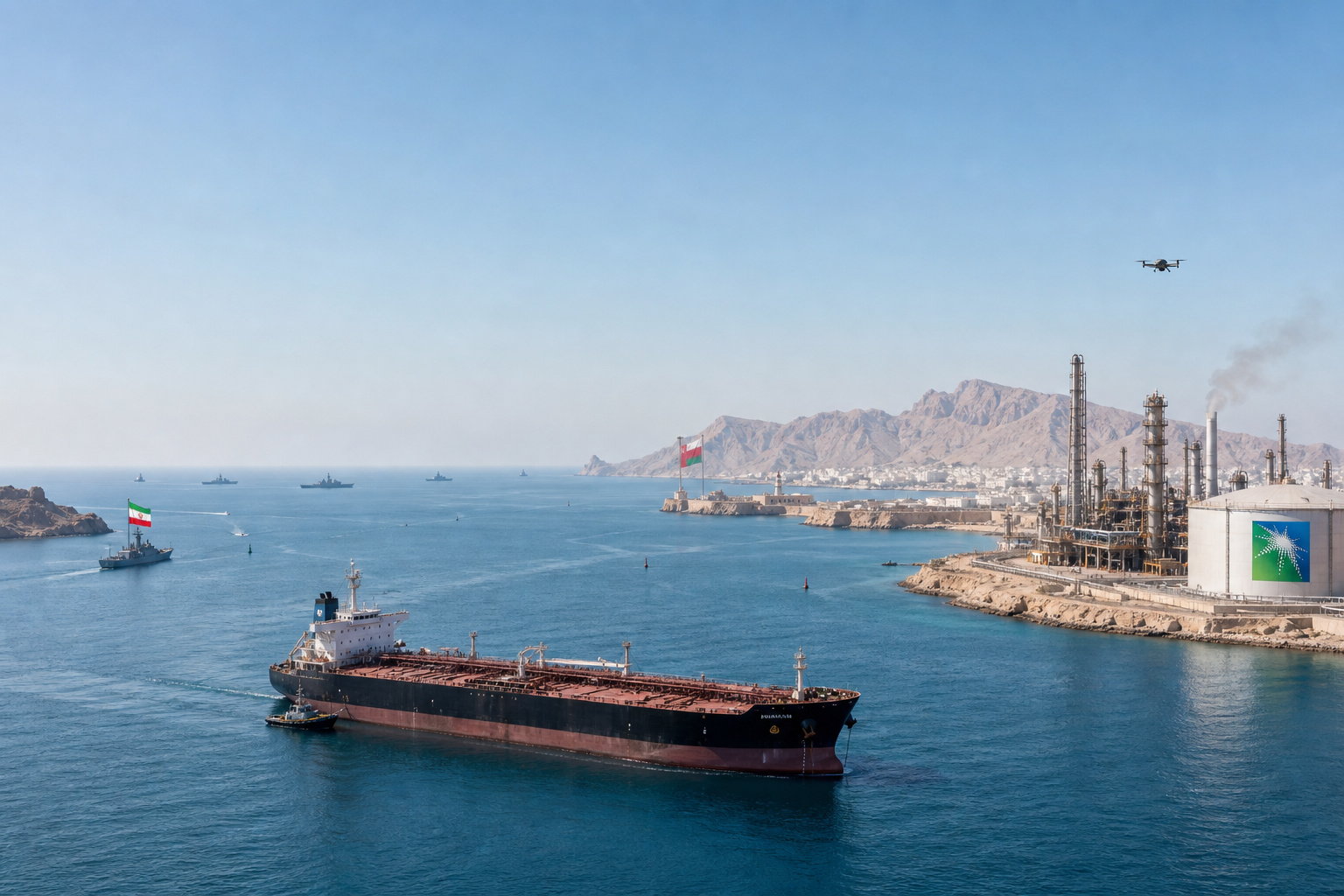
Oil prices extended gains in US trading on Monday, supported by an uncertain outlook for the reopening of the Strait of Hormuz and continued Middle East tensions. Iran has set conditions before agreeing to fully reopen the strait. According to Al Jazeera, the secretary of Iran's Supreme National Security Council, Zolghadr, demanded an end to the US naval blockade and the withdrawal of US Navy and Air Force units from around Iran. Tehran also wants compensation for losses tied to recent conflicts, the lifting of sanctions, and the unconditional unfreezing of Iranian assets. These demands lower the odds that shipping across the strait will quickly return to normal, helping keep a risk premium in WTI prices. Negotiations with Oman on creating a secure shipping lane through the strait appear to be making progress, but investors remain cautious because no full reopening deal has been reached. Tensions extend beyond Hormuz. Yemen's Iran-backed Houthis claimed a drone strike on a Saudi Aramco refinery in Saudi Arabia, and the latest attack on critical energy infrastructure has heightened market concerns about the safety of regional oil supplies. (Jinshi)
Oil prices kept pushing higher during the US session on Monday. Support came from an uncertain path to reopening the Strait of Hormuz and unrelenting Middle East tension, which lifted both WTI and Brent crude.
Iran repeated several conditions before it would agree to a full reopening of the strait. Citing Al Jazeera, the secretary of Iran's Supreme National Security Council, Zolghadr, listed demands that include ending the US naval blockade and pulling US Navy and Air Force assets out of Iran's vicinity. Tehran is also asking for compensation for losses from recent conflicts, removal of sanctions, and unconditional unfreezing of Iranian assets.
Those conditions make a fast return to normal shipping less likely, and they help preserve the risk premium embedded in WTI prices. At the same time, talks with Oman over establishing a secure route through the Strait of Hormuz seem to be advancing. Still, with no agreement on a comprehensive reopening, investors remain cautious about the risk of prolonged oil supply disruption.
The friction is not limited to Hormuz. Yemen's Iran-backed Houthi movement claimed responsibility for a drone attack on a Saudi Aramco refinery in Saudi Arabia. The latest strike on major energy infrastructure has intensified market concern about the security of regional oil supplies.
Source: Jinshi
This article was originally published by Bit.Fan. For more cryptocurrency news and market insights, visit www.bit.fan. Disclaimer:
The market information, project data, and third-party content displayed on this platform are for industry information sharing only and do not constitute any form of investment advice or return commitment.
Cryptocurrency trading carries high risks. Users should fully assess their risk tolerance and make independent decisions. All profits, losses, and legal responsibilities are borne by the users themselves.