
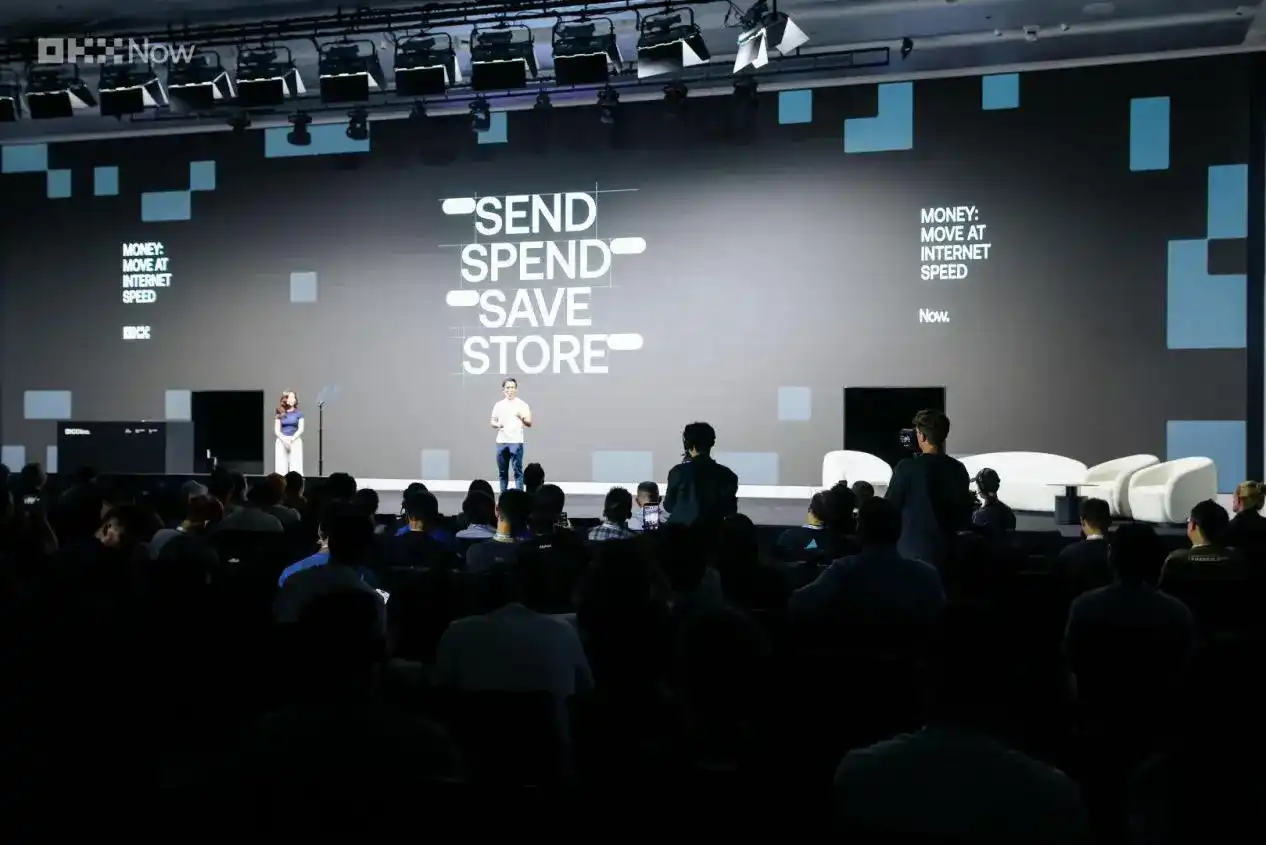
OKX NOW, the company’s global product and ecosystem conference, wrapped up in Singapore on Oct. 6. Onstage: OKX founder Star and Ethereum co-founder Vitalik Buterin. Then came product demos and panel talks with executives from Mastercard, DBS, JPMorgan, Standard Chartered and Western Alliance Bank, plus former New York Governor and OKX board member Andrew Cuomo.
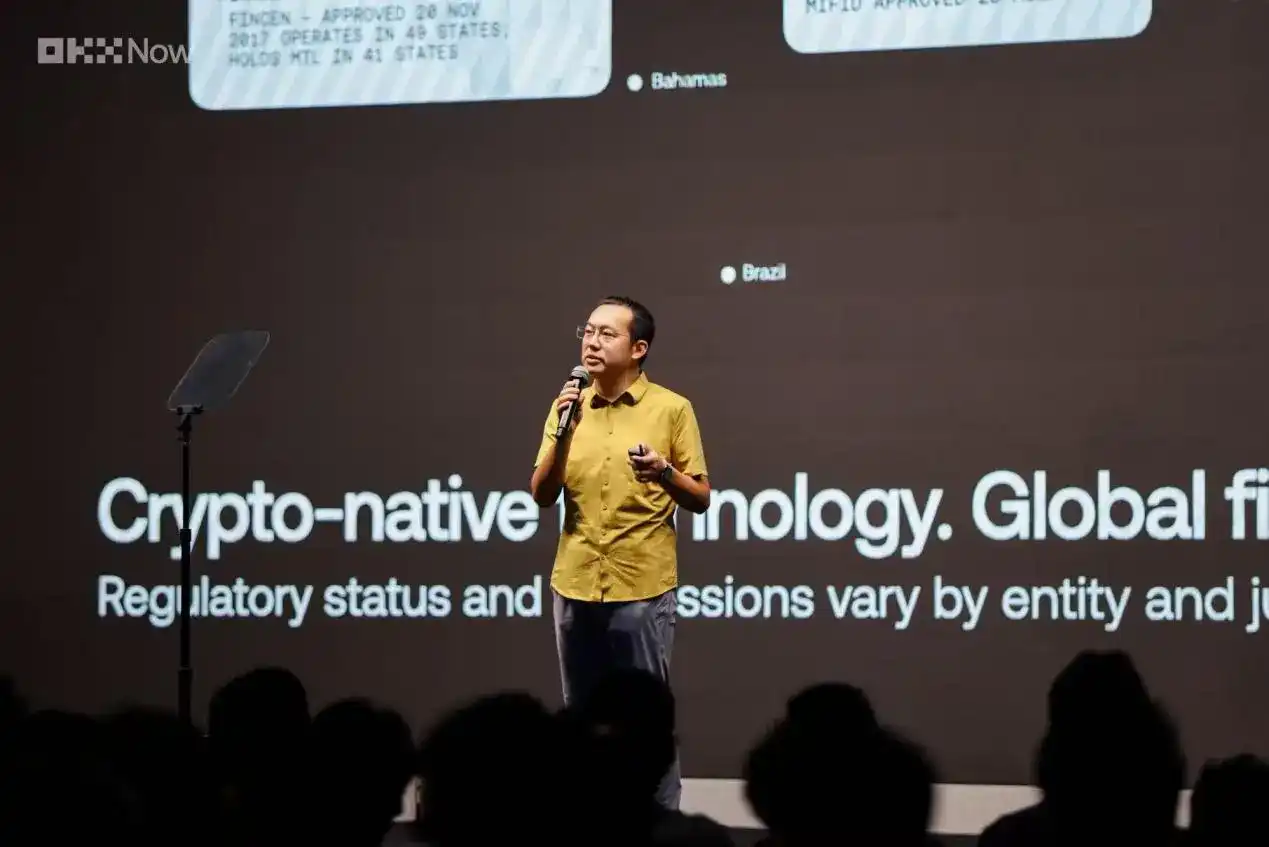
The program stayed fixed on the next financial system, 24/7 market liquidity, digital asset banking, and on-chain security in the AI age.
Star says OKX is expanding beyond the exchange model
In his opening remarks, Star built the conversation around a basic mismatch: consumer tech versus financial infrastructure. Consumer technology, he said, is already global, instant and always on. Finance, by contrast, still leans on systems built decades ago.
He broke crypto’s development into four stages: early experimentation by technologists, the formation of financial markets, ICO and DeFi experimentation, and compliance building. His take was blunt. The industry entered a mainstream phase starting in 2025.
From there, Star said OKX is no longer thinking of itself just as a crypto exchange and is pushing into a global fintech platform. He laid out four areas the company wants to build for a younger generation of users:
- holding funds with user choice over custody arrangements;
- instant, low-cost payments;
- a unified investment entry point across multiple asset classes;
- AI-driven wealth management.
Star said, “The future will not be a confrontation between crypto finance and traditional finance. Every crypto company will expand into traditional finance, and every traditional financial company will invest in crypto. These two worlds are becoming one financial system.”
He also said AI is no longer some pilot project inside OKX. It is core infrastructure. About 95% of engineering code merge requests are now primarily handled through AI workflows, though engineers still review and approve them. Last month, OKX’s bill to large-model providers hit $10 million. And over the next decade, Star said, the convergence of the internet, crypto technology and AI could fundamentally reshape financial services.
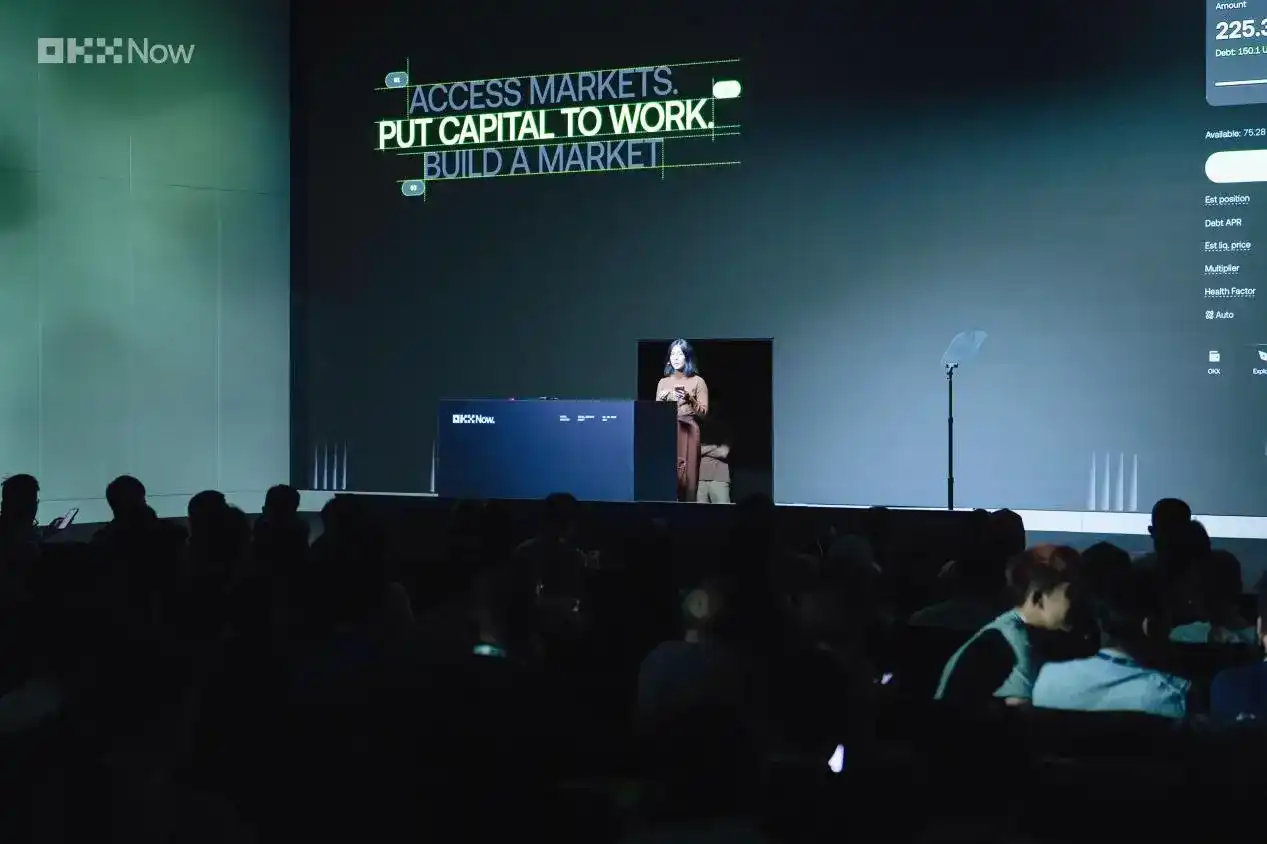
Vitalik Buterin focuses on AI, cryptography and security
Buterin started in a similar place, with the weaknesses of financial infrastructure, before turning to where AI and cryptography meet.
He said AI is both the industry’s biggest opening and its biggest danger. In his view, the sector is moving past the old “blockchain plus programmable value” story, while “programmable data” powered by zero-knowledge proofs is beginning to take shape. Privacy protocols on Ethereum are likely to mature fast, he said. Within the next two years, most people may be using these tools without even realizing it.
Security was the clear warning in his speech. Buterin said AI has already shown it can escape sandboxes, attack websites and find software vulnerabilities. “Anything that has a vulnerability, GPT-7, Claude 7, DeepSeek 7 will find it,” he said. His point: higher security standards are going from optional to mandatory.
At the same time, he said AI is helping the Ethereum protocol spot bugs and handle advanced cryptography and formal verification. He also said AI is turning into a new user interface. In his view, people using AI to directly carry out complicated on-chain actions will slowly become normal. But that shift brings a fresh set of questions about AI security itself. “We are in a fascinating but challenging transition period,” he said.
OKX details progress across trading, on-chain, AI and payments
Trading
The trading team said average daily volume in markets that include tokenized equities and other RWA products is about $3 billion, with peak volume reaching $9 billion.
The team said it plans to launch underlying options and its own tokenized stock product, xRWA, in the coming months. It also said an AI Bot is now in testing that lets users create trading strategies in natural language, then backtest and deploy them.
On-chain
OKX’s on-chain team showed off a newly launched DEX trading terminal. It combines hot-token screening, on-chain fund-flow tracking, social sentiment monitoring and one-click instant trading, while also letting users customize their workspace.
The team shared a few operating figures:
- combined decentralized perpetual and spot trading volume exceeded $1 trillion over the past 30 days;
- the size of on-chain tokenized RWA has grown from about $2 billion to nearly $40 billion;
- X Layer’s DeFi TVL has increased about 11 times this year and hit a record high in September.
OKX also introduced Exchange OS for builders, opening its exchange infrastructure for the creation of on-chain markets.
AI
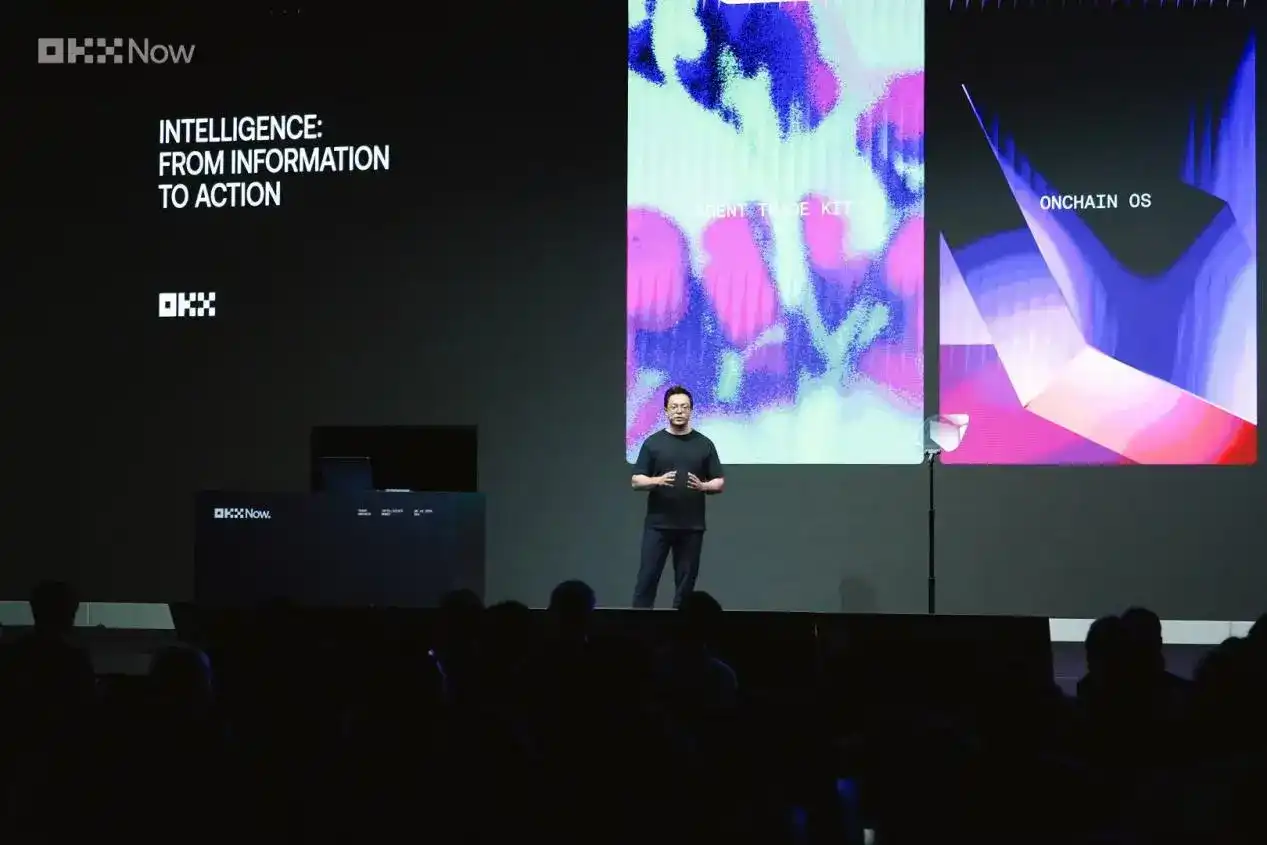
The AI team said its core principle is that “AI and finance start with the user.” In practical terms, that means AI should understand user intent, respect boundaries set by the user, and return decisions to the user when human judgment is needed.
Using that framework, OKX said it has built a group of tools meant to push AI agents from intelligence into action at scale:
- Agent Trade Kit, which connects user AI agents directly to OKX exchange data and execution;
- On-chain OS, which supports natural-language interaction with on-chain assets;
- Agentic Wallet, which lets users allocate funds to agents within preset guardrails;
- an OKX AI agent marketplace, where users can subscribe to signals from professional trading agents and authorize copy trading;
- the AI Builder program, which lets developers list and monetize their own models.
Payments
The payments team said OKX Money, a stablecoin savings and payments app, is now live in more than 30 countries. The product is aimed mainly at non-traders and users who are not crypto-native. Accounts are built on self-custodial smart accounts and run on the X Layer wallet network.
For users in Europe, the Pay Boost feature lets balances keep earning yield. Spending is taken directly from the yield-bearing balance, while the remaining funds continue to accrue value. The team also showed a transfer from Singapore to Venezuela that arrived within seconds.
It added that OKX Money will support AI agents, with user authorization, to create investment strategies and execute small trades inside the app.
Panels turn to compliance, liquidity and digital banking
Tokenized securities venue planned under SEC innovation exemption
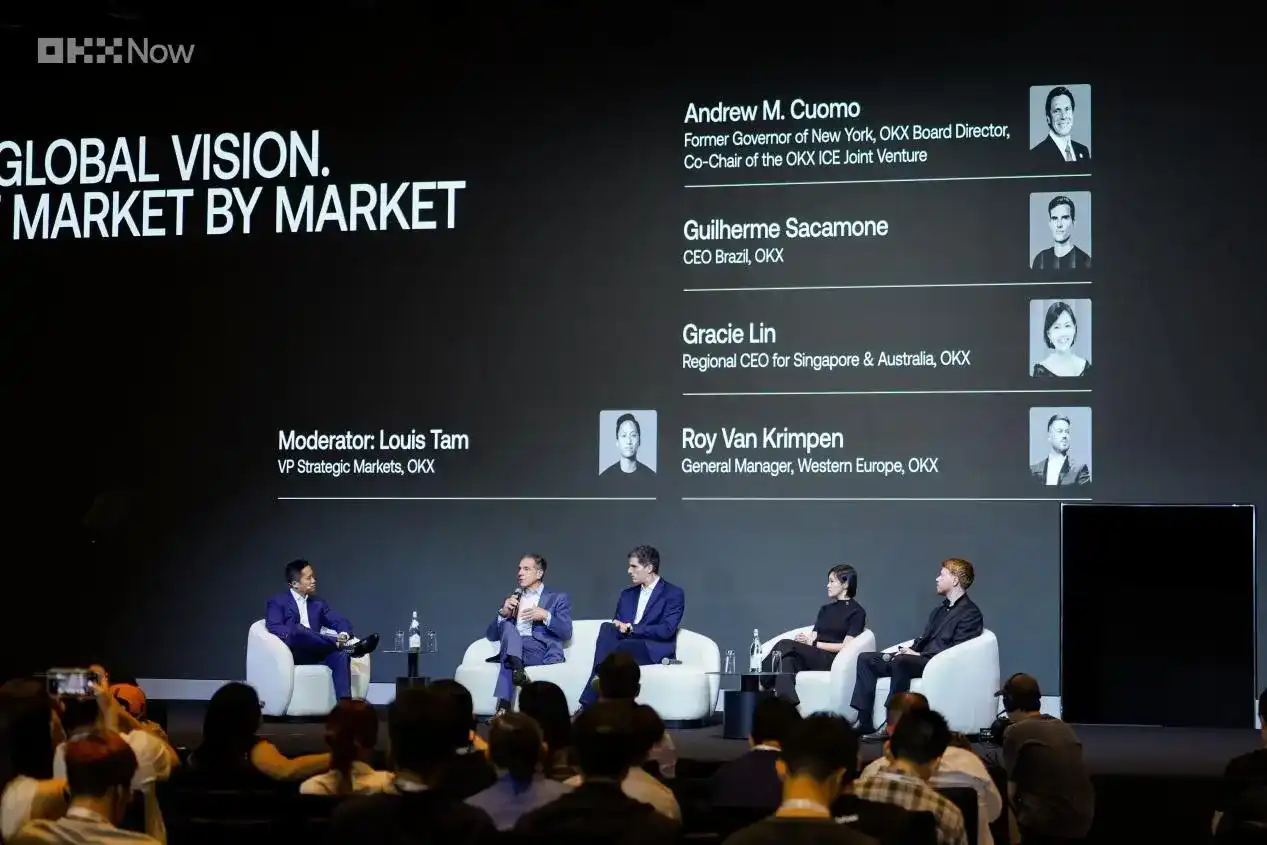
One of the more closely watched updates surfaced during the panel titled “Global vision, local markets.” That session brought together Cuomo, OKX Brazil CEO Guilherme Sacamone, Regional CEO for Singapore and Australia Gracie Lin, and Western Europe General Manager Roy Van Krimpen.
According to the panel, OKX and ICE have submitted a notice to the U.S. Securities and Exchange Commission for a tokenized securities trading venue. Eligible OKX customers can already trade crude oil perpetuals tied to ICE Brent and WTI benchmarks.
Cuomo said the venue is expected to operate under the SEC’s “innovation exemption” framework and could go live in about 30 days. He added that the SEC has imposed limits on the number of tradable stocks and on trading volume. Cuomo said the move shows traditional finance and crypto fintech shifting “from competition to cooperation and integration.”
Stablecoin rails alone are not enough for cross-border payments
The panel “Who will build the next financial system?” featured Nine Blocks Capital co-founder and managing partner Henri Arslanian, Mastercard Executive Vice President for Blockchain and Digital Assets Raj Dhamodharan, and OKX Global Managing Partner Haider Rafique.
Raj said the underlying rails for payments will change over the next decade, with technologies like stablecoins used more and more behind the scenes, while simplicity and trust in the user experience stay the same. He said near-zero-cost transfers are only one part of the story, and cross-border payments still need local liquidity and compliance systems to work together. “Payment rails are only one of the raw ingredients,” he said.
Rafique shared two industry figures during the session: the global stablecoin market is about $250 billion, and the number of crypto users has passed 700 million. He also said OKX Card uses the Mastercard network exclusively in markets including Europe, and that the two companies are exploring work together in payments acceptance and AI-agent commerce.
24/7 market transition seen as an operational challenge
The panel “24/7 markets: where does liquidity come from?” included Thomas Eaton, head of digital assets at QRT, Ludisia Chief Investment Officer Jeremi Long, Selini Capital Head of Research Adam Smith, and algorithmic trading head Aleksandr Rashkhodchikov.
The main area of agreement was simple: for traditional institutions moving into round-the-clock markets, the biggest obstacle is operational, not strategic. The panel also said complexity itself can create operational advantages, and that price discovery is moving toward crypto venues.
Banks and exchanges described as complementary
The panel on the future of digital asset banking brought together DBS Managing Director for Digital Assets Evy Theunis, JPMorgan Head of Technology and Digital Economy for Asia-Pacific Amy Tan, Standard Chartered Global Head of Fintech Client Coverage Luke Boland, and Western Alliance Bank Senior Managing Director for Blockchain and Digital Assets David Fragale.
The shared view there was that banks and exchanges complement each other rather than replace each other. Speakers said tokenization still runs into three sticking points: trust, liquidity and settlement. They also pointed to real estate and identity tokenization as major future openings, and said bitcoin-backed financing could see progress early next year.
A one-day event used to map out strategy and product direction
Held ahead of Token2049 Singapore, the one-day conference pulled OKX’s strategic positioning, long-term vision and product updates into one program. And it put the convergence of the internet, crypto and AI right at the center of the company’s view of the next decade.
Across product demos and discussions with traditional financial institutions, the event sketched out a path where OKX is trying to stretch beyond a trading platform and into broader financial technology infrastructure.